
How Academic Researchers Partner With Community Health Programs for Field Studies
A deep dive into the collaborative models, benefits, and challenges of partnerships between academic researchers and community health programs for field studies.
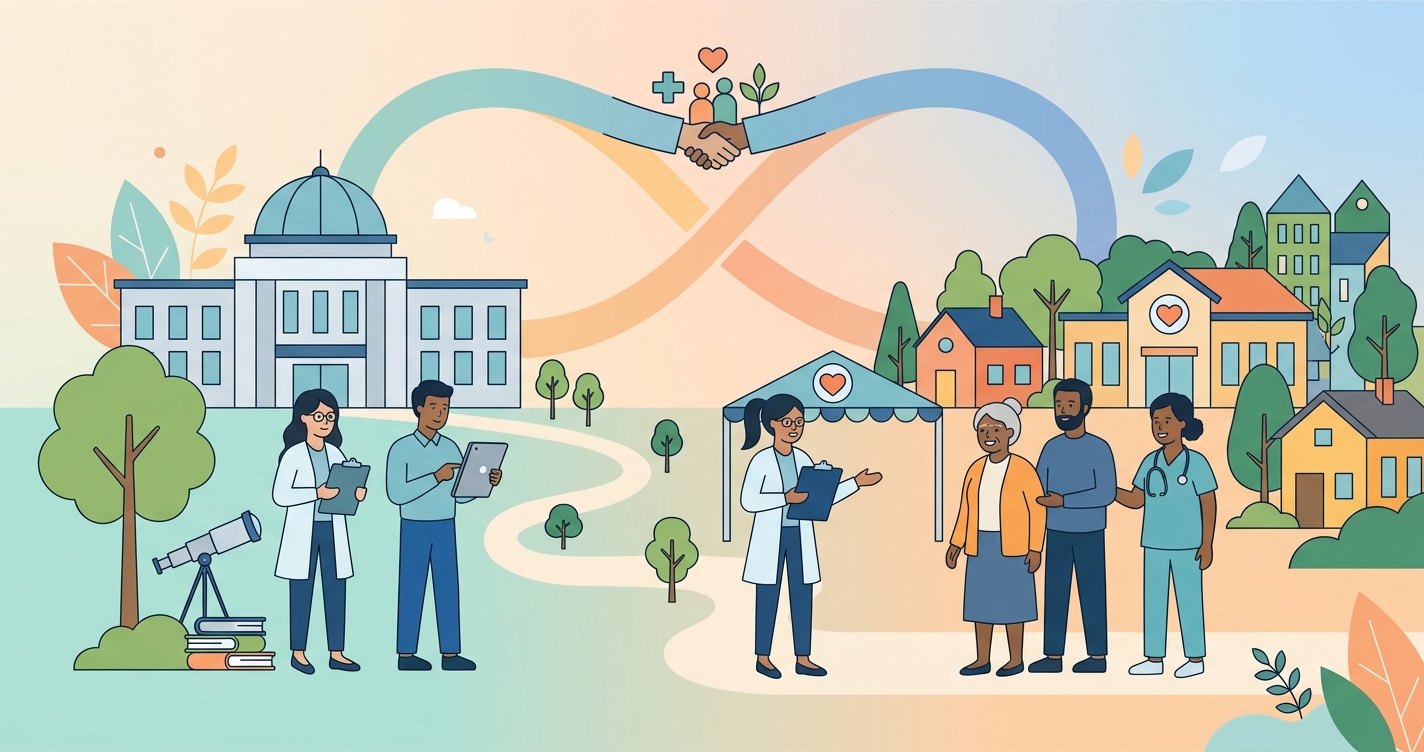
Academic researchers and community health programs have historically operated in distinct orbits, each with its own goals, methodologies, and incentives. However, the growing consensus is that the most impactful and sustainable health interventions emerge when these two worlds converge. For academic researchers, community health programs are no longer just sites for data collection but essential partners in designing and implementing research that has a real-world impact. This shift is redefining the landscape of global health, making the partnerships between academic researchers community health programs field studies a critical area of focus.
"Community-based participatory research (CBPR) is an approach to research that is 'community-based' and 'participatory.' 'Community-based' means that the research is conducted in and with the community of interest. 'Participatory' means that community members are meaningfully involved in all phases of the research process, from conception to dissemination." - (Israel et al., 1998)
The evolution of collaborative field studies
The traditional model of field research, where academics would enter a community with a predefined research question, collect data, and leave, is increasingly being replaced by more collaborative approaches. This evolution is driven by a recognition of the limitations of the old model, which often failed to address the actual needs of the community and rarely resulted in sustainable health improvements. Today, the most effective academic researchers community health programs field studies are built on a foundation of mutual trust, respect, and shared goals.
This collaborative turn is embodied in methodologies like Community-Based Participatory Research (CBPR). CBPR is a partnership approach to research that equitably involves community members, organizational representatives, and academic researchers in all aspects of the research process. The goal is to combine the knowledge and action of all partners to address health disparities and improve community health.
| Feature | Traditional Research | Community-Based Participatory Research (CBPR) |
|---|---|---|
| Primary Goal | To generate new knowledge and publish findings. | To generate knowledge and action to improve community health. |
| Role of Community | Subjects of research. | Active partners in all phases of the research. |
| Research Agenda | Determined by the academic researcher. | Co-developed by researchers and community partners. |
| Data Ownership | Typically owned by the researcher or institution. | Shared ownership between researchers and the community. |
| Outcomes | Academic publications, presentations. | Publications, policy changes, community programs. |
Core principles of successful partnerships
Building and sustaining effective partnerships between academic researchers and community health programs requires a commitment to a set of core principles. These principles help to ensure that the collaboration is equitable, productive, and mutually beneficial.
- Establish Trust and Mutual Respect: This is the bedrock of any successful partnership. It involves open communication, transparency, and a willingness to understand and value each other's perspectives and contributions.
- Shared Vision and Goals: From the outset, partners should work together to define a shared vision for the project and establish clear, mutually agreed-upon goals.
- Equitable Power-Sharing: Decision-making power should be shared among all partners. This means that community partners have a real say in the research design, implementation, and dissemination of findings.
- Build on Community Strengths: Effective partnerships recognize and build upon the existing strengths and resources within the community.
- Commitment to Long-Term Partnership: Sustainable change takes time. Both academic and community partners should be committed to a long-term relationship that extends beyond a single research project.
Industry Applications
The application of these collaborative models is particularly relevant in the context of mHealth and other digital health interventions in low- and middle-income countries.
Case study: mhealth deployments in east africa
In several East African countries, academic researchers have partnered with local community health worker (CHW) programs to study the effectiveness of mobile health technologies. These partnerships have been instrumental in designing and deploying mHealth solutions that are culturally appropriate and responsive to the needs of the community. The research, in turn, provides valuable evidence for scaling up successful interventions.
Improving maternal health outcomes in uganda
Partnerships between academic institutions and community-based organizations in Uganda have led to innovative approaches to improving maternal health. By involving pregnant women and local health workers in the research process, researchers have been able to develop and test interventions that address the specific barriers to care in these communities.
Enhancing chronic disease management in rural areas
In many rural areas, access to care for chronic diseases is limited. Collaborative field studies have been used to develop and evaluate community-based models for chronic disease management, often using digital tools to support patient self-management and connect them with healthcare providers.
Current research and evidence
The evidence base for the effectiveness of community-academic partnerships is growing. A systematic review published in the American Journal of Public Health found that community-based participatory research is associated with a range of positive outcomes, including improved health behaviors, better health outcomes, and increased community capacity.
Researchers like those at Michigan State University's Charles Stewart Mott Department of Public Health have championed a "community-powered" public health model. This approach, co-developed and co-led with community partners in Flint, Michigan, demonstrates how academic institutions can fundamentally reorient their work to be in service of community-led solutions, particularly in marginalized communities that have historically been the subjects of research rather than its drivers.
The future of academic-community collaboration
The future of partnerships between academic researchers community health programs field studies will likely be shaped by several key trends. One is the growing movement to "decolonize" global health research, which calls for a fundamental shift in power dynamics and a greater emphasis on local leadership and ownership. Technology will also play a crucial role, As a subject of research. As a tool for facilitating collaboration and communication between partners. As these trends continue to evolve, the principles of CBPR and other collaborative approaches will become even more critical to the success of global health initiatives.
Frequently asked questions
What are the main benefits of academic-community partnerships in research? These partnerships lead to more relevant and impactful research by ensuring that it addresses the real needs of the community. They also build community capacity, promote health equity, and can lead to more sustainable health interventions.
What are some of the challenges in these collaborations? Challenges can include differences in timelines, priorities, and communication styles between academic and community partners. Building trust and sharing power can also be complex and time-consuming processes.
How can academic researchers find community partners? Researchers can start by connecting with local health departments, community-based organizations, and advocacy groups. Attending community meetings and events is also a good way to build relationships and identify potential partners.
What is the role of funding in these partnerships? Adequate and flexible funding is crucial. It is important to ensure that community partners are compensated for their time and expertise. Grant proposals should be developed collaboratively and include budgets that reflect the true costs of a participatory research process.
Circadify is actively working in this space, developing technologies and methodologies that facilitate more effective and equitable partnerships between academic researchers and community health programs. To learn more about our research and collaborations, visit our blog at circadify.com/blog.