
What Is a Health Technology Impact Evaluation? Methods for Field Programs
A research-style analysis of health technology impact evaluation methods for field programs, tailored for public health institutions and grant-making bodies.
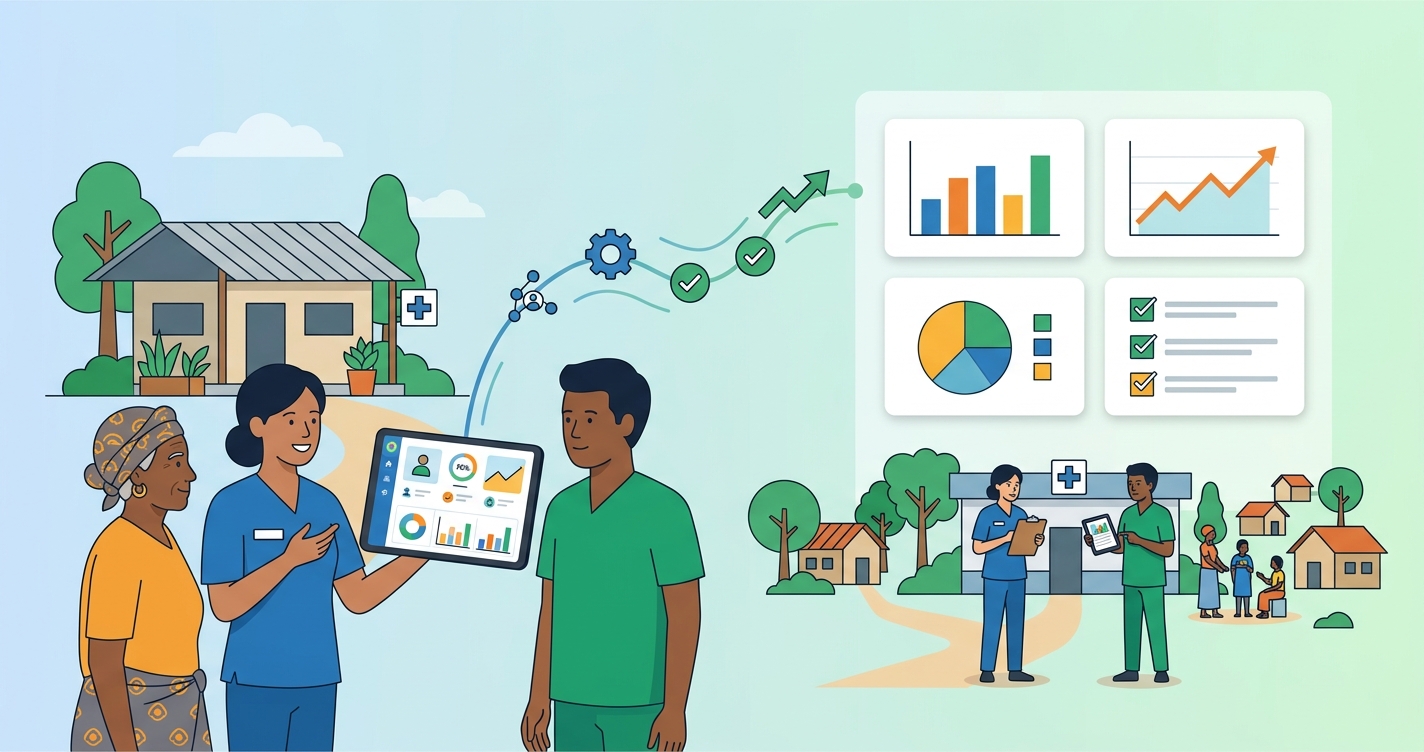
Health technology impact evaluation methods for field programs are not just about proving a technology works; they are about understanding how, where, and for whom it works within the complex realities of community-based health systems. As digital health interventions become more prevalent in low- and middle-income countries (LMICs), the methodologies for their evaluation must also evolve. Traditional, lengthy, and resource-intensive evaluation frameworks often fall short in settings where agility and rapid learning are critical. For academic researchers, public health institutions, and grant-making bodies, selecting the right evaluation method is critical to ensuring that technology investments translate into meaningful and sustainable health outcomes. This requires a shift from simply measuring clinical efficacy to holistically assessing system-wide effects, equity implications, and the contextual factors that drive success or failure in the field.
"Digital health interventions, when integrated effectively, can be a powerful tool for strengthening health systems. The key is a robust evaluation framework that considers the local context and is adaptable to the real-world challenges faced by frontline health workers." - Dr. Alain Labrique, Director of the Department of Digital Health and Innovation, World Health Organization (2023)
Understanding the scope of health technology impact evaluations
A health technology impact evaluation in a field program context is a systematic process used to assess the effects and outcomes of a specific health technology or digital intervention. Unlike traditional clinical trials that are conducted in highly controlled environments, field evaluations are designed to measure impact in real-world settings, where a multitude of variables can influence the results. These evaluations are essential for providing evidence to guide policy decisions, optimize program implementation, and justify resource allocation.
The core of any health technology impact evaluation is to answer key questions: Did the technology lead to the desired health outcomes? Was the intervention cost-effective? Did it improve access to care for the target population? Did it have any unintended consequences? The methods used to answer these questions vary widely, each with its own set of strengths and limitations. A comprehensive evaluation will often employ a mix of methodologies to triangulate findings and provide a more complete picture of the technology's impact. The choice of methodology is often dictated by the specific research questions, the available resources, and the characteristics of the program and its environment.
Comparing evaluation methodologies
Selecting the appropriate methodology is a critical first step in designing a health technology impact evaluation for field programs. The choice often involves a trade-off between the rigor of the evidence and the feasibility of implementation. Below is a comparison of common evaluation methodologies used in global health.
| Methodology | Description | Strengths | Weaknesses | Best For |
|---|---|---|---|---|
| Randomized Controlled Trials (RCTs) | Participants are randomly assigned to an intervention group or a control group. | - High internal validity.- Considered the "gold standard" for establishing causality. | - Expensive and time-consuming.- Can have low external validity.- May not be ethically or practically feasible in all settings. | Testing the efficacy of a new clinical intervention in a controlled setting. |
| Quasi-Experimental Designs | Similar to RCTs but without random assignment. Comparison groups are created using statistical methods. | - More feasible and less expensive than RCTs.- Higher external validity than RCTs. | - Lower internal validity than RCTs.- Susceptible to selection bias. | Evaluating the impact of a program or policy when randomization is not possible. |
| Pre-Post Studies | Data is collected before and after the implementation of the intervention to measure changes over time. | - Simple and low-cost to implement.- Useful for demonstrating trends. | - Cannot establish causality.- Susceptible to confounding factors. | Assessing the short-term effects of an intervention in a single population. |
| Rapid Assessment Methods | A variety of methods, including qualitative approaches and mixed-methods, designed for quick evaluation. | - Fast and low-cost.- Provides timely feedback for program improvement. | - Lacks the rigor of more traditional methods.- Findings may not be generalizable. | Gaining quick insights into the feasibility and acceptability of a new intervention. |
Industry Applications
Guiding national digital health strategies
- Ministries of Health in countries like Rwanda and Uganda use impact evaluation data to inform their national digital health strategies. Evidence from field programs helps them prioritize investments and scale up successful interventions.
Securing funding from grant-making bodies
- Organizations seeking funding from large donors, such as the Global Fund or Gavi, must provide rigorous evidence of their programs' impact. Well-designed evaluations are crucial for demonstrating value and securing financial support.
Optimizing program implementation
- NGOs and other implementing partners use rapid assessment methods to get real-time feedback from the field. This allows them to make timely adjustments to their programs and improve the effectiveness of their interventions.
Current research and evidence
The field of digital health evaluation is constantly evolving, with researchers and practitioners developing new methodologies to better capture the complexities of real-world implementation. A 2019 report by the World Health Organization (WHO) titled "WHO guideline: recommendations on digital interventions for health system strengthening" provides a comprehensive overview of the evidence for a range of digital health interventions. The report emphasizes the need for evaluations to go beyond measuring health outcomes and also consider factors such as feasibility, acceptability, and cost.
Researchers from institutions like the Johns Hopkins Bloomberg School of Public Health and the London School of Hygiene & Tropical Medicine are at the forefront of developing and testing new evaluation methods. Their work has highlighted the importance of using mixed-methods approaches that combine quantitative data on health outcomes with qualitative data on the user experience. A 2021 study published in The Lancet Digital Health by Dr. Patricia Mechael and colleagues demonstrated the value of using a "realist evaluation" approach to understand how and why a digital health intervention works in a particular context.
The future of health technology impact evaluation
The future of health technology impact evaluation methods for field programs will likely be characterized by a greater emphasis on a few key areas. First, there will be a move towards more adaptive and iterative evaluation designs that allow for real-time learning and program improvement. Second, the increasing availability of real-world data from digital health platforms will enable more sophisticated and timely evaluations. Finally, there will be a growing recognition of the need to integrate equity considerations into all aspects of the evaluation process, from the design of the intervention to the interpretation of the findings. As the field of digital health continues to mature, so too will the methods we use to evaluate its impact, ensuring that technology is harnessed in a way that is both effective and equitable.
Frequently asked questions
What is the main difference between an impact evaluation and monitoring?
- Monitoring is the ongoing process of collecting data to track the progress of a program, while an impact evaluation is a more rigorous assessment designed to determine the causal effects of the program on specific outcomes.
How do you choose the right evaluation method for a given program?
- The choice of method depends on several factors, including the research question, the available resources, the timeline, and the ethical considerations. It is often best to consult with an evaluation expert to determine the most appropriate design.
What are some of the ethical considerations in conducting impact evaluations in low-resource settings?
- Key ethical considerations include ensuring that the evaluation does not create an undue burden on participants, protecting the confidentiality of data, and ensuring that the benefits of the research are shared with the community.
The challenges of selecting and implementing appropriate health technology impact evaluation methods for field programs are significant, but so are the potential rewards. By investing in rigorous and context-appropriate evaluations, the global health community can ensure that digital health technologies live up to their promise of improving health for all. Circadify is actively working in this space, contributing to the evidence base for contactless health monitoring in community settings. To learn more about our research and collaborations, please visit our research page at circadify.com/blog.