What Community Health Data Reveals About Population Health
Community-level data is moving from a niche reporting tool to a core asset in understanding population health. We explore the data, the systems, and the outcomes.
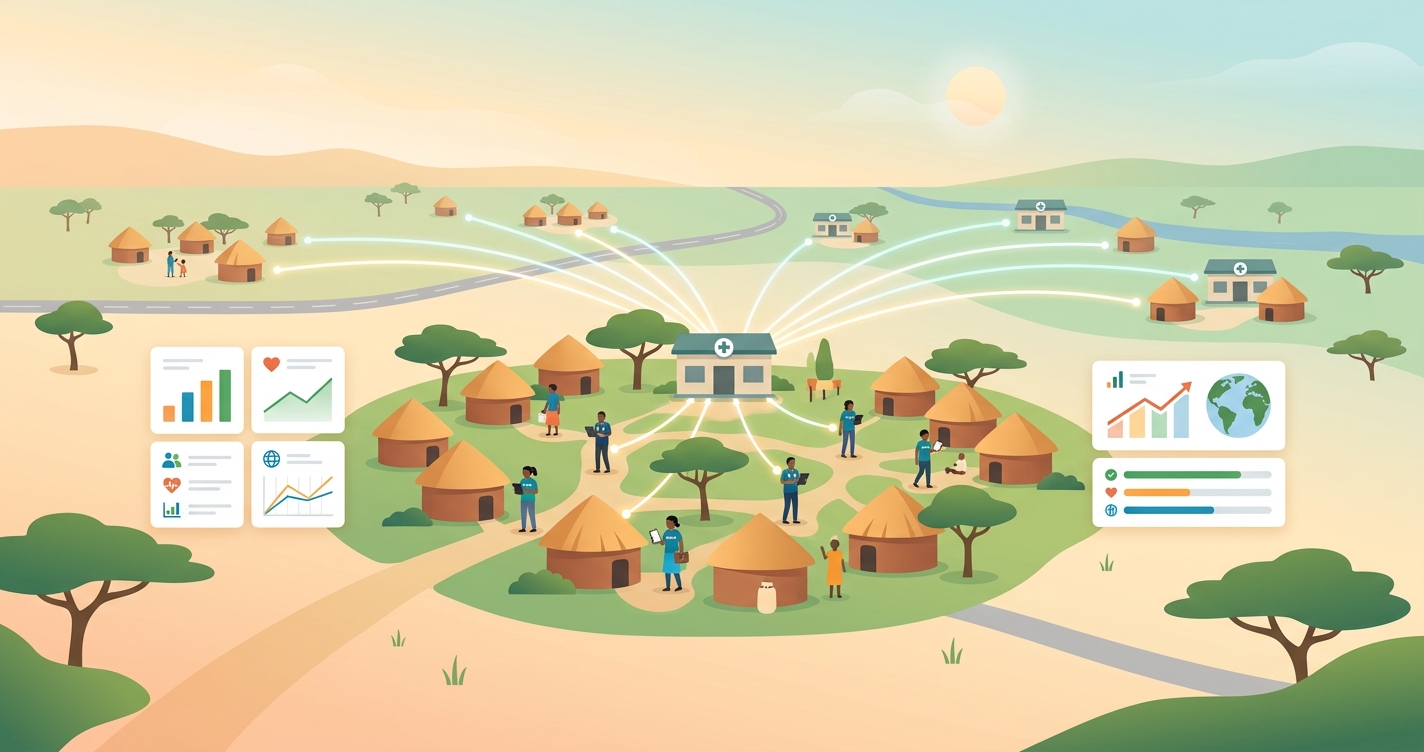
Community health data, collected in villages, outreach campaigns, and frontline health posts, is rapidly evolving from a niche reporting tool into a core asset for understanding population health. Where national-level statistics provide a broad overview, granular, community-sourced data reveals the specific, actionable trends that drive effective public health programs. It is at this local level, where health behaviors are formed and interventions are delivered, that the most meaningful insights for program design and resource allocation are found. This shift is not just about collecting more data, but about collecting the right data and connecting it to decision-making processes at every level of the health system.
"The use of community-level data has been shown to improve the targeting of health services by up to 30% and to increase the cost-effectiveness of interventions by identifying disparities that would be missed in national-level surveys." - World Health Organization, 2023.
The granularity advantage in population health analysis
The core value of community health data population health analysis lies in its granularity. While a national survey might show a stable prevalence rate for hypertension, community data can pinpoint specific clusters where rates are rising, identify the demographic profiles of those most at risk, and correlate these findings with local determinants of health, such as the availability of fresh food or the prevalence of sedentary occupations. This level of detail allows for a more surgical approach to public health, moving beyond broad-based campaigns to targeted, community-specific interventions.
For researchers and public health institutions, this data is invaluable for understanding the real-world effectiveness of health programs. A study by researchers at the University of Nairobi (2022) analyzing data from community health worker screenings in Kenya found that specific, localized health education messaging led to a 15% greater uptake of prenatal services compared to generic, nationwide campaigns. The data revealed nuances in local dialects and cultural beliefs that were critical to crafting effective messages. This demonstrates how community data bridges the gap between policy and lived experience, ensuring that interventions are not just evidence-based in theory, but effective in practice.
| Data Source Type | Granularity | Update Frequency | Actionability for Local Programs |
|---|---|---|---|
| National Census Data | Low (District/Region) | Decennial | Low |
| National Health Surveys | Medium (Regional Clusters) | 2-5 Years | Medium |
| Hospital Information Systems | High (Facility-Level) | Daily/Weekly | Medium |
| Community Health Data | Very High (Household/Individual) | Real-Time/Daily | High |
This granular data, often collected by community health workers (CHWs) using digital tools, provides a dynamic view of a community's health status. It allows for the tracking of individuals and households over time, creating a longitudinal record that is essential for understanding the progression of both communicable and non-communicable diseases.
Industry Applications
The application of community health data extends across the public health ecosystem, from academic research to governmental policy and program implementation.
Academic research and field studies
For academic researchers, access to high-fidelity community health data is a game-changer. It enables:
- Real-World Evidence (RWE): Studying health outcomes in naturalistic settings, outside the controlled environment of a randomized controlled trial (RCT).
- Social Determinants of Health (SDOH): Quantifying the impact of non-clinical factors like education, income, and environment on health outcomes.
- Intervention Research: Rapidly iterating and evaluating the effectiveness of new health interventions and technologies.
Public health institutions and ministries of health
Governments and public health bodies use this data to:
- Resource Allocation: Directing funding, personnel, and medical supplies to the areas of greatest need.
- Early Warning Systems: Detecting and responding to disease outbreaks before they become epidemics.
- Policy Formulation: Designing evidence-based health policies that are grounded in the realities of community life.
Grant-making and donor organizations
Funders rely on community health data to:
- Measure Impact: Assessing the effectiveness of their investments and holding implementing partners accountable for results.
- Identify Funding Gaps: Pinpointing underserved populations and health needs that require additional support.
- Strategic Planning: Developing funding priorities that are aligned with the most pressing health challenges on the ground.
Current research and evidence
The body of evidence supporting the use of community health data is growing. A 2023 study published in The Lancet Global Health by researchers from Johns Hopkins University analyzed data from over 50 community health programs in sub-Saharan Africa. The study found that programs utilizing real-time data from CHWs were able to reduce child mortality by an additional 8% compared to programs relying on traditional, facility-based data. The key, according to lead author Dr. Alain Labrique, was the ability to "see and solve problems at the household level before they become critical."
Similarly, research from the INDEPTH Network, a consortium of health and demographic surveillance system sites across Africa and Asia, has demonstrated the power of longitudinal community data. Their work has been instrumental in tracking the epidemiological transition in low- and middle-income countries, showing the rising prevalence of non-communicable diseases like diabetes and cardiovascular disease in rural areas. This research, based on decades of continuous community-level data collection, has been critical in shifting global health priorities.
The future of community health data
The future of community health data lies in its integration and interoperability. As digital data collection becomes ubiquitous, the next frontier is connecting community-level data with facility-based electronic medical records (EMRs) and national health information systems (HIS). This integration creates a seamless "data-chain" from the household to the ministry of health, providing a holistic view of the patient journey and the health system as a whole.
Emerging technologies like artificial intelligence (AI) and machine learning (ML) will play a significant role in unlocking the predictive potential of this data. AI models can analyze vast, complex community datasets to identify subtle patterns and predict future health trends, enabling a more proactive and preventative approach to population health management. The World Health Organization's "Community Health Information System Roadmap" provides a framework for countries to build these integrated, intelligent systems for the future.
This integrated approach is the focus of organizations like Circadify, which are developing new methods to improve the quality and utility of data collected in community settings. By addressing the fundamental challenges of data capture and analysis at the frontline, the entire population health ecosystem can be strengthened. To learn more about emerging research in this space, visit our research hub.
Frequently asked questions
What is the difference between community health data and other types of health data? Community health data is collected at the household or individual level within a community, often by non-clinical staff like community health workers. It focuses on a broader range of health and social determinants, whereas other data, like hospital records, are typically facility-based and focus on clinical episodes.
How is community health data collected ethically? Ethical collection requires informed consent, data privacy and security measures, and community ownership. Best practices involve engaging community leaders, being transparent about how data will be used, and ensuring that the community benefits from the insights generated.
What are the biggest challenges in using community health data? The main challenges include data quality and standardization, the need for trained data collectors and analysts, a lack of interoperability between different data systems, and ensuring the long-term sustainability of data collection efforts.