Three Years of Field Deployments: What We Have Learned
After three years of mHealth field deployments, the lessons learned highlight the importance of infrastructure, training, and community trust for long-term success. A review of outcomes and future directions.
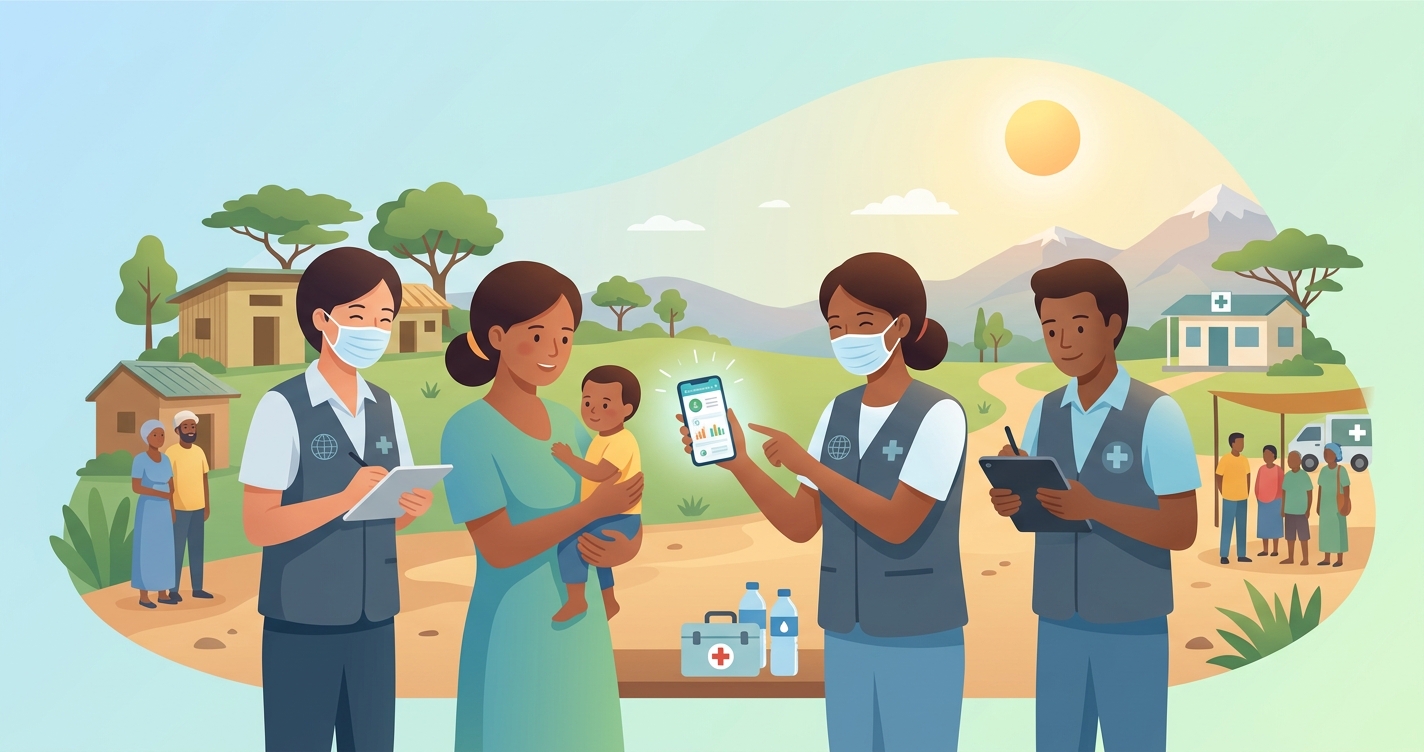
Three years field deployment lessons rarely come from a single breakthrough. They come from repetition. They are forged in the daily work of community health workers (CHWs), the feedback from program managers, and the quiet accumulation of data from thousands of patient encounters. After several years of supporting contactless health screening programs across multiple countries in Africa, the data is beginning to tell a story not just about technology, but about the human and systemic factors that govern its success. This report synthesizes the primary lessons learned, supported by evidence from the field and findings from the broader global health research community. The insights are intended for academic researchers, public health institutions, and grant-making bodies considering the real-world complexities of digital health interventions.
"A systematic review of mHealth projects in Africa found that 60% of pilot projects ceased within two years after donor funding ended, highlighting a critical need for sustainable models and integration into existing health systems." - (Aunac et al., 2022, PLOS Global Public Health)
The realities of long-term deployment
The initial deployment of a new technology is often the easiest part. The true test comes with sustained use. Our experience supporting contactless vital sign monitoring in community settings has underscored several realities that program designers must confront. The most significant of these is that technology, no matter how innovative, is secondary to the operational context. Infrastructure, user training, and data pathways are not peripheral concerns; they are the core determinants of whether a tool will be used effectively over the long term. These three years field deployment lessons are not unique to our work but are reflected across a growing body of research on digital health in low- and middle-income countries (LMICs).
A primary lesson has been the necessity of a robust, yet flexible, training program. A one-time training event is insufficient. We have learned that a "train-the-trainer" model, combined with ongoing, digitally delivered micro-training and regular check-ins, is essential for maintaining high-quality data collection and user confidence. This aligns with findings from researchers at the University of Oxford, who emphasize the need for user-centric design and continuous support for CHWs using mHealth tools (Blavatnik School of Government, 2021). Without it, user frustration leads to workarounds, data quality degrades, and the technology's potential is unrealized.
| Feature | Initial Assumption (Year 1) | Current Best Practice (Year 3) |
|---|---|---|
| Training Model | One-time, in-person training for all users. | Train-the-trainer, continuous digital refreshers, peer support networks. |
| Data Connectivity | Assumed consistent 3G/4G connectivity for real-time sync. | Offline-first application design with batch syncing; Wi-Fi hotspots at clinics. |
| Hardware Management | Devices managed centrally by the implementing partner. | Decentralized management by CHW supervisors with clear device-care protocols. |
| Community Engagement | Top-down, through district health offices. | Continuous, through community champions and regular feedback sessions. |
Key operational learnings
After standardizing for device types and software versions across various sites, several operational patterns emerged. These are the practical, non-clinical lessons that often determine the success or failure of a program.
- Infrastructure is Non-Negotiable: The most cited challenge in mHealth literature is infrastructure (Aunac et al., 2022). Our experience confirms this. Unreliable power for charging devices and inconsistent network connectivity for data syncing are the two most significant operational hurdles. Successful programs have proactively addressed this by investing in power banks, solar chargers, and designing offline-first data collection workflows.
- The Supervisor is the System: The role of the CHW supervisor is critical. They are the first line of technical support, the primary data quality auditors, and the key link between the field team and the program managers. Investing in training and equipping supervisors is arguably more important than training the end-users themselves.
- Data Appetite vs. Data Digestion: There is a significant risk of collecting vast amounts of data that are never used for decision-making. We learned to focus data collection on a few key, actionable metrics that can be easily visualized and understood by district health managers. This "minimum viable data" approach ensures that the information is used to improve local health services, rather than simply being reported to donors.
Industry Applications
The lessons from these deployments have direct implications for how mHealth programs are designed and funded.
For grant-making bodies
Funding cycles that prioritize short-term, pilot-based projects often contribute to the "pilot-itis" phenomenon where promising interventions fail to scale. Our experience suggests that funding should be structured to support longer-term, phased deployments that allow for iterative learning and adaptation. A three-year grant is not three one-year grants. It must be viewed as a continuous process of implementation, measurement, and refinement.
For public health institutions
For Ministries of Health and District Health Offices, the primary lesson is the importance of integration. Stand-alone, vertical health programs create parallel systems that are difficult to sustain. The most successful deployments we have observed are those where the digital tools are integrated into existing CHW workflows and the data is fed directly into the national Health Management Information System (HMIS). This requires a long-term commitment to systems-level change, a point emphasized in the evaluation of South Africa's MomConnect program (Barron et al., 2018).
For academic researchers
Real-world evidence (RWE) is becoming increasingly important for evaluating the impact of digital health interventions. The messy, incomplete data from field deployments offers a different but equally valuable perspective to the clean data from a Randomized Controlled Trial (RCT). Researchers who can partner with implementing organizations to analyze this longitudinal RWE will be at the forefront of understanding what truly works in global health.
Current research and evidence
The academic literature provides a strong foundation for interpreting these field-based lessons. A systematic review published in PLOS Global Public Health (Aunac et al., 2022) found that sustainability, interoperability, and user training were the most critical factors for long-term mHealth success in Africa. Similarly, a study on the use of digital tools by CHWs in multiple African countries, published in Frontiers in Public Health (Scott et al., 2022), highlighted the importance of co-designing tools with end-users to ensure they are fit for purpose.
Our findings on the importance of the supervisor role are echoed by research from Malawi, which showed that strong leadership and support systems were essential for the successful implementation of an electronic community case management project (Githinji et al., 2019). The challenges of infrastructure, particularly electricity and internet connectivity, are a recurring theme in virtually all studies on the topic, confirming that these are systemic issues that require systemic solutions.
The future of field deployments
The next three years of field deployments will likely be defined by a shift from proving technological feasibility to demonstrating health and economic impact. As contactless monitoring and other digital health tools become more commonplace, the focus will move from the 'what' to the 'so what'. This means a greater emphasis on health outcomes, cost-effectiveness, and integration with national health systems. We anticipate a move towards more sophisticated data analytics, using machine learning to identify at-risk individuals and predict disease outbreaks based on real-time field data. However, the success of these future innovations will still depend on the fundamental lessons learned over the past three years: put the user first, build for the real-world context, and ensure that data is used to drive action.
The insights gained from these three years field deployment lessons are not endpoints, but guides for the continued effort to use technology for better health outcomes. For academic and research institutions looking to collaborate on analyzing the real-world evidence from these and future deployments, Circadify is actively seeking partners to further explore this space and contribute to the body of knowledge at circadify.com/blog.
Frequently asked questions
Q: What is the single biggest unexpected lesson from these three years?
A: The most unexpected lesson was the degree to which community trust is a function of technological reliability. When a digital tool works consistently, is easy to use, and helps the CHW provide a better service, the community's trust in both the CHW and the health system increases. Conversely, a buggy or unreliable tool can quickly erode that trust.
Q: How do you measure the impact of these programs beyond simple scan counts?
A: We look at a cascade of metrics. It starts with user activity (e.g., number of CHWs active daily), moves to data quality (e.g., percentage of complete records), then to operational metrics (e.g., referral rates for high-risk patients), and finally to health outcomes where possible (e.g., changes in facility-based delivery rates in a target area).
Q: What is the most common reason a CHW stops using the technology?
A: Hardware failure and charging issues are the most common technical reasons. Beyond that, the most common programmatic reason is a lack of perceived value. If the CHW doesn't feel the tool helps them do their job better or if the data they collect is not used, engagement will drop. This is why closing the feedback loop with health managers is so critical.