
How Technology Empowers Women Health Workers in Africa
A research-based analysis of how digital health tools are transforming the roles and impact of female community health workers across Africa.
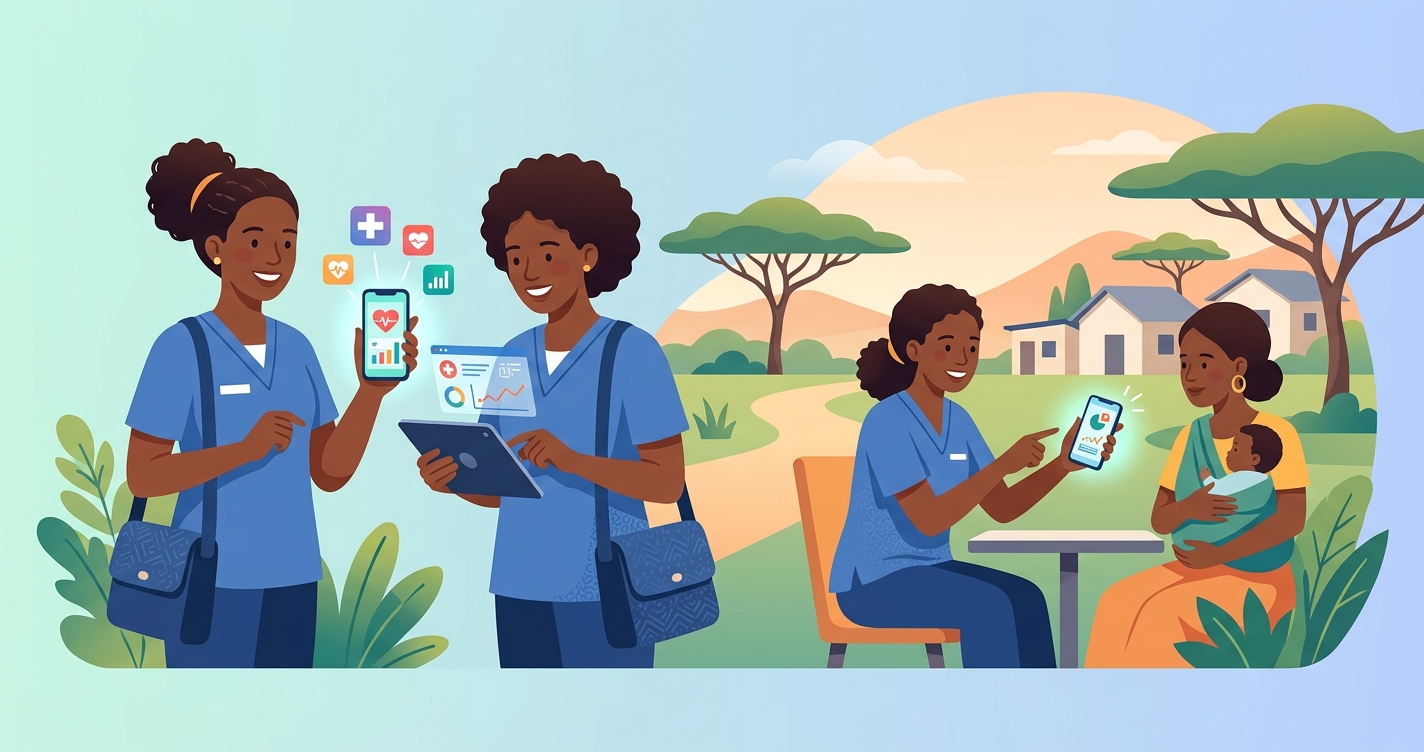
The backbone of community health in many African nations is its cadre of health workers, the majority of whom are women. These frontline professionals are essential for delivering primary care, conducting health screenings, and connecting communities to the formal healthcare system. The introduction of digital tools and mobile technology is not merely a workflow enhancement; it represents a significant shift in capacity, autonomy, and impact. As this digital transformation accelerates, understanding its specific effects on female health workers is critical for program design, investment, and achieving sustainable health outcomes on a continental scale. The way technology empowers women health workers in Africa is a key area of study for public health institutions focused on scalable, real-world results.
"Women are 70% of the health workforce, but hold only 25% of senior roles. In the digital health sector in Africa, this gap is even wider, with women holding less than 30% of leadership positions." - eHealth Africa, 2022
The digital transformation of community health work
The integration of technology empowers women health workers in Africa by fundamentally altering the nature of their work. Traditionally reliant on paper-based records, manual data aggregation, and infrequent in-person reporting, community health workers (CHWs) faced significant administrative burdens that limited their time for direct patient care. The advent of mobile health (mHealth) has introduced a new paradigm. Equipped with smartphones or tablets running specialized applications, female CHWs can now collect higher-quality data, receive real-time guidance, and manage patient follow-ups with greater efficiency. This shift from manual to digital processes reduces errors, speeds up reporting cycles, and provides health system managers with timely data for decision-making. More importantly, it equips the health workers themselves with tools that enhance their professional standing and effectiveness within the communities they serve.
| Feature | Traditional Health Worker Workflow | Technology-Enabled Health Worker Workflow |
|---|---|---|
| Data Collection | Paper forms, prone to errors and damage. | Digital forms on mobile devices with validation rules. |
| Patient Follow-up | Manual tracking in notebooks, difficult to manage. | Automated reminders and scheduling in-app. |
| Health Education | Relies on memory and printed, often outdated, materials. | Access to updated digital multimedia content (videos, audio). |
| Reporting | Manual aggregation and physical transport of reports. | Instantaneous, automated reporting to a central dashboard. |
The tools deployed are varied, but a few core types have proven most impactful:
- Data Collection Apps: Simple forms for registering households, conducting health screenings, and tracking patient visits.
- Decision-Support Tools: Applications that guide a CHW through diagnostic or referral protocols based on entered symptoms and measurements.
- Communication Platforms: Secure messaging systems that connect CHWs with supervisors, peers, and clinical experts for consultation.
- Educational Modules: In-app training materials that allow for continuous professional development on new health topics and protocols.
Industry Applications
The deployment of these technologies is not theoretical; it is generating measurable results in diverse settings across the continent. These applications demonstrate how targeted digital interventions can address specific public health challenges.
Enhancing maternal health outcomes
Mobile applications are proving particularly effective in improving maternal and child health metrics. In Burkina Faso, a project reported by 1worldconnected.org equipped health workers with a mobile application that increased their status and decision-making ability, contributing to a rise in assisted childbirths from 50% to 97.5%. Similarly, a time-series analysis in rural Malawi published in the International Journal of Women's Health (2022) found that the introduction of an mHealth app for CHWs was associated with a 22% increase in facility-based births.
Streamlining health surveillance
Real-time data from the field is a primary asset for effective public health surveillance. When CHWs use digital tools to record screening data, that information can be aggregated instantly to identify potential disease outbreaks, track non-communicable disease prevalence, and monitor progress toward public health goals. This capability allows District Health Offices and Ministries of Health to be more proactive and data-driven in resource allocation and emergency response.
Professional development and training
Technology provides a scalable channel for training and upskilling the health workforce. Instead of relying solely on periodic, costly in-person training sessions, health programs can push new content, guidelines, and refreshers directly to CHWs' devices. This ensures that health workers are operating with the most current information and can reinforce their knowledge at their own pace, leading to a more competent and confident workforce.
Current research and evidence
The evidence base for the impact of digital health on community health programs is growing. A 2023 scoping review by Gichoya et al. published in BMJ Global Health analyzed the state of digital health for CHWs in Africa, confirming the trend toward mHealth adoption for improving data management and service delivery. The review also highlighted the need for more robust research on the specific impact on CHWs themselves, including their empowerment and professional growth. Research from Ghana, Malawi, and Ethiopia has shown that over 97% of CHWs use their personal mobile phones for work-related tasks, a phenomenon termed "informal mHealth," which points to a clear demand from the ground up for digital tools. These studies underscore that while the technology itself is a powerful enabler, its successful implementation depends on a supportive ecosystem that includes training, technical support, and clear value for the end-user.
The future of technology for women health workers
The trajectory of technology in African healthcare suggests an even more integrated future. We are moving beyond simple data collection toward more sophisticated applications. The next five to ten years will likely see wider adoption of contactless health monitoring, where vital signs can be measured using the camera of a standard smartphone, reducing the need for dedicated hardware and further lowering barriers to screening. AI-powered decision support may soon assist CHWs in identifying complex cases that require urgent referral. As connectivity improves, the gap between the frontline community health worker and the tertiary hospital specialist will continue to shrink, creating a more cohesive and responsive health system. For women health workers, this future promises not just better tools, but a more central and respected role in the health of their communities.
Frequently asked questions
What are the biggest barriers to technology adoption for women health workers in Africa? The primary barriers include limited digital literacy, the cost of devices and data plans, and inconsistent network connectivity in rural areas. Program success often hinges on addressing these challenges directly through comprehensive training, providing necessary hardware, and choosing technologies that can function offline.
How does technology change a CHW's role in her community? Technology tends to elevate the professional standing of CHWs. Carrying a digital tool is often seen as a marker of professionalism and expertise, which can increase the community's trust and confidence in the health worker. It also empowers them with more information, enabling them to answer questions and provide guidance more effectively.
What kind of data do women health workers typically collect with these tools? Data collection is multifaceted. It includes basic demographic information, patient vital signs (like blood pressure and heart rate), malnutrition screening results, vaccination status, prenatal visit tracking, and referral information. This data provides a rich, real-time picture of community health needs.
The challenges facing community health programs in Africa are complex, but the strategic deployment of technology is a powerful lever for progress. As a company focused on making health screening more accessible and scalable, Circadify is actively engaged in developing and deploying technologies that address the needs of frontline health workers. To learn more about the research and evidence from field deployments, we encourage you to explore our work at circadify.com/blog.