School Health Programs Using Contactless Screening: How They Work
A research-style analysis of how school health programs are using contactless screening technologies to improve health outcomes for students globally.
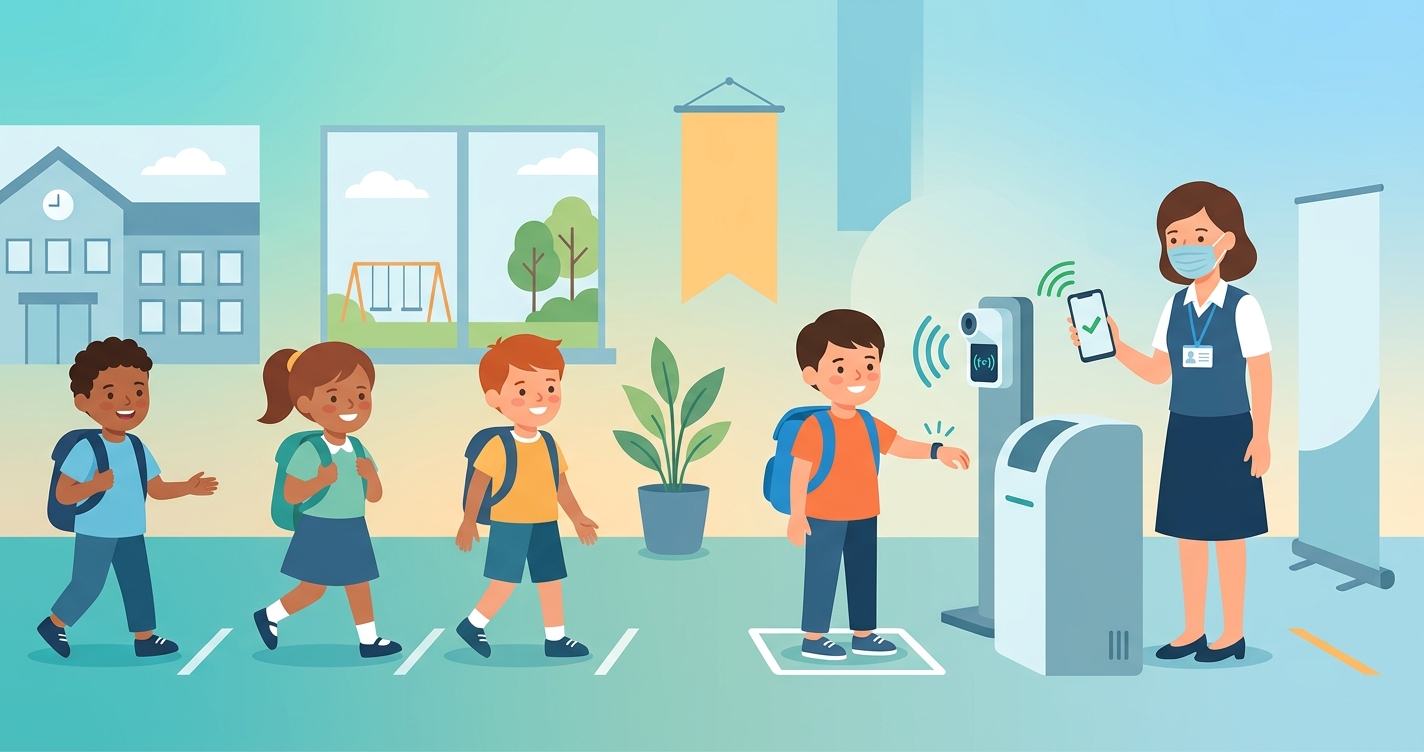
School health programs using contactless screening systems are getting attention for a simple reason: scale. Traditional school health screenings, while effective, are resource-intensive, requiring trained personnel, specialized equipment, and significant logistical coordination. This model faces challenges in low-resource settings and is difficult to scale for frequent, longitudinal monitoring. Contactless technologies, ranging from telehealth platforms to passive monitoring applications, present a new paradigm for capturing vital health data with minimal burden on students and staff. These approaches allow for more frequent data collection, earlier identification of potential health issues, and more efficient allocation of clinical resources, making them a subject of intense interest for public health institutions and academic researchers focused on child and adolescent health.
"Globally, it is estimated that 500 million school-aged children are at risk for or are suffering from a range of health problems. Regular health screenings and interventions at school can address many of these health issues effectively."
- World Health Organization, 2021
The mechanics of school health programs using contactless screening
At its core, a contactless health screening program in a school setting uses digital technology to gather health indicators without requiring direct physical contact by a healthcare professional or the use of traditional, contact-based clinical devices. This approach is not a single method but rather a category of tools and workflows designed to make health assessment more accessible, efficient, and scalable. The implementation of school health programs contactless screening can vary widely, from simple digital surveys to sophisticated video-based vital sign measurement.
The most common modalities include telehealth consultations, where students connect with healthcare providers remotely, and digital screening tools, such as online questionnaires or app-based assessments. A study published in The Journal of School Nursing by Gance-Cleveland and colleagues (2016) noted the significant growth in telehealth for school-based health centers (SBHCs), improving access to care for conditions like asthma and diabetes. Another approach involves using trained teachers or community health workers equipped with smartphones or tablets to administer digital health surveys or capture images for remote assessment, a method explored for early hearing loss identification in a 2021 study in the Journal of Hearing Science. These programs work by creating a digital-first pathway for triage, data collection, and referral, reserving hands-on clinical assessment for cases that truly require it.
Comparison of contactless screening modalities
| Modality | Description | Pros | Cons |
|---|---|---|---|
| Telehealth Consultations | Live video or audio calls connecting students with remote healthcare professionals (nurses, doctors, specialists). | - Provides direct access to clinical expertise.- Enables diagnosis and treatment for certain conditions.- Reduces need for off-site travel. | - Requires high-speed internet connectivity.- Dependent on provider availability.- Privacy and scheduling can be complex. |
| Digital Questionnaires | Students or staff complete online forms about symptoms, health history, and well-being (e.g., mental health, nutrition). | - Highly scalable and low cost.- Can screen large populations quickly.- Data is easily aggregated and analyzed. | - Relies on self-reported information, which can be subjective.- May not capture objective physiological signs.- Potential for survey fatigue. |
| Asynchronous Media Capture | Photos or videos are captured by on-site, non-clinical staff (e.g., teachers) and sent to a clinician for later review. | - Flexible, does not require real-time connection.- Useful for specialties like dermatology or wound care.- Reduces burden on clinical staff. | - Diagnostic accuracy can be limited by image quality.- Lacks the interactivity of a live consultation.- Requires clear protocols and training. |
| Automated Vitals Sensing | Emerging technologies using device cameras (rPPG) or other sensors to measure physiological signs like heart rate and respiration rate. | - Fully automated and requires minimal user action.- Enables objective, frequent data collection.- Can detect subtle changes over time. | - Technology is still evolving; accuracy can vary.- Environmental factors (lighting, motion) can impact results.- Requires careful validation and ethical consideration. |
Industry Applications
The applications for contactless screening in schools are broad, addressing key areas of student health and well-being.
Nutritional and growth monitoring
In many parts of the world, schools are frontline locations for monitoring childhood nutrition. Contactless methods can augment traditional measurements like weight and height. For example, systems can use simple 2D images from a smartphone to calculate anthropometric measures, flagging potential malnutrition or obesity without the need for calibrated scales or stadiometers at every location. This data, collected regularly, provides public health bodies with a near real-time view of nutritional trends across a region.
Vision and hearing screening
Traditional vision and hearing tests require specialized equipment and trained personnel. Smartphone-based applications are emerging that can perform preliminary screening. A 2021 study by P.R. Gunjawate and colleagues demonstrated that teachers could be trained to use a smartphone-based application to effectively screen for hearing loss in school children. These tools present auditory stimuli at different frequencies and levels, recording responses to identify students who need a full audiological exam. A similar model exists for vision, using apps to test for visual acuity, color blindness, and other common issues.
Mental and behavioral health
Digital questionnaires and mood-tracking apps are increasingly used to screen for mental and behavioral health issues. The "Digital Health Contact" (DHC) tool, evaluated by researchers at the University of Bristol (2022), is an online self-report tool designed for adolescents to identify unmet health and wellbeing needs. By providing a private, accessible way for students to report concerns, these tools can identify at-risk individuals who may not otherwise seek help, facilitating early intervention from school counselors or mental health professionals.
Current research and evidence
The evidence base for school health programs contactless screening is growing rapidly. Research is moving from small-scale feasibility pilots to larger evaluations of impact and cost-effectiveness. A key area of investigation is implementation science: understanding the factors that lead to successful adoption and integration into school workflows.
A scoping review published in PMC (2022) on telehealth in school services found that factors like provider training, reliable technology, and supportive policies were critical for success. The "Technology Enabled Remote Monitoring in Schools" (TERMS) project in the UK is another significant initiative, exploring the use of Bluetooth-enabled devices for remote health monitoring and providing valuable insights into the practical challenges and benefits. These studies consistently show that technology is only one part of the solution; trust, training, and clear communication are equally important. Research from institutions like the National Association of School Nurses has highlighted how telehealth, when properly implemented, Improves student health. Reduces absenteeism and emergency room visits.
The future of contactless screening in schools
The trajectory of contactless screening in schools points towards greater integration and automation. We anticipate a convergence of different modalities, where data from a digital questionnaire could trigger a request for a passive vital sign measurement, which in turn might lead to an automated recommendation for a telehealth consultation. The use of artificial intelligence (AI) and machine learning will become more prevalent, helping to analyze the vast datasets generated by these programs to identify subtle patterns and predict health risks before they become acute.
Furthermore, integrating data from school-based screenings with national or regional electronic health record (EHR) systems will provide a more holistic view of a child's health over time. This would enable seamless data sharing between schools, clinics, and public health authorities, creating a more responsive and efficient health ecosystem. As the technology matures and implementation models are refined, contactless screening has the potential to become a standard, indispensable component of school health services globally.
Frequently asked questions
-
What is the main advantage of contactless screening in schools?
-
The primary advantage is scalability. It allows health programs to reach more students, more frequently, with fewer resources than traditional, contact-based methods. This is especially crucial in large or geographically dispersed student populations.
-
Is contactless screening accurate?
-
The accuracy depends on the specific technology. Telehealth consultations are as accurate as the provider's ability to assess visually and aurally. Digital questionnaires depend on honest self-reporting. Emerging technologies like camera-based vital sign monitoring are undergoing rigorous validation, with studies showing increasing correlation with standard devices under the right conditions.
-
What are the biggest challenges to implementing these programs?
-
Key challenges include ensuring digital equity (access to devices and internet), protecting student privacy and data security, training for teachers and staff who may be involved, and integrating the new digital workflows into established school routines and healthcare referral pathways.
For academic and public health institutions interested in the latest research and field deployments of contactless health monitoring, Circadify is actively contributing to this space. You can follow our research and explore opportunities for collaboration at circadify.com/blog.