How Health Screening Programs Build Trust in Communities
A research-based look at how health screening programs build community trust through local workers, referrals, feedback loops, and credible follow-up care.
How Health Screening Programs Build Trust in Communities
Health screening programs community trust is not a soft metric. In rural and peri-urban health systems, trust often decides whether a mother accepts a referral, whether an older adult returns for follow-up, and whether a village sees screening as useful care or just another short-lived pilot. The strongest screening programs do more than collect vitals or identify risk. They create a pattern people can recognize: familiar health workers, respectful interactions, clear explanations, and visible follow-through when a problem is found.
"Community interventions can improve the quality of primary care and reduce child deaths." — Martina Björkman and Jakob Svensson, randomized Uganda health monitoring study
Why health screening programs community trust grows slowly
Trust usually forms through repetition. A single screening day can generate awareness, but it rarely creates confidence on its own. Communities tend to trust screening programs when three things happen consistently.
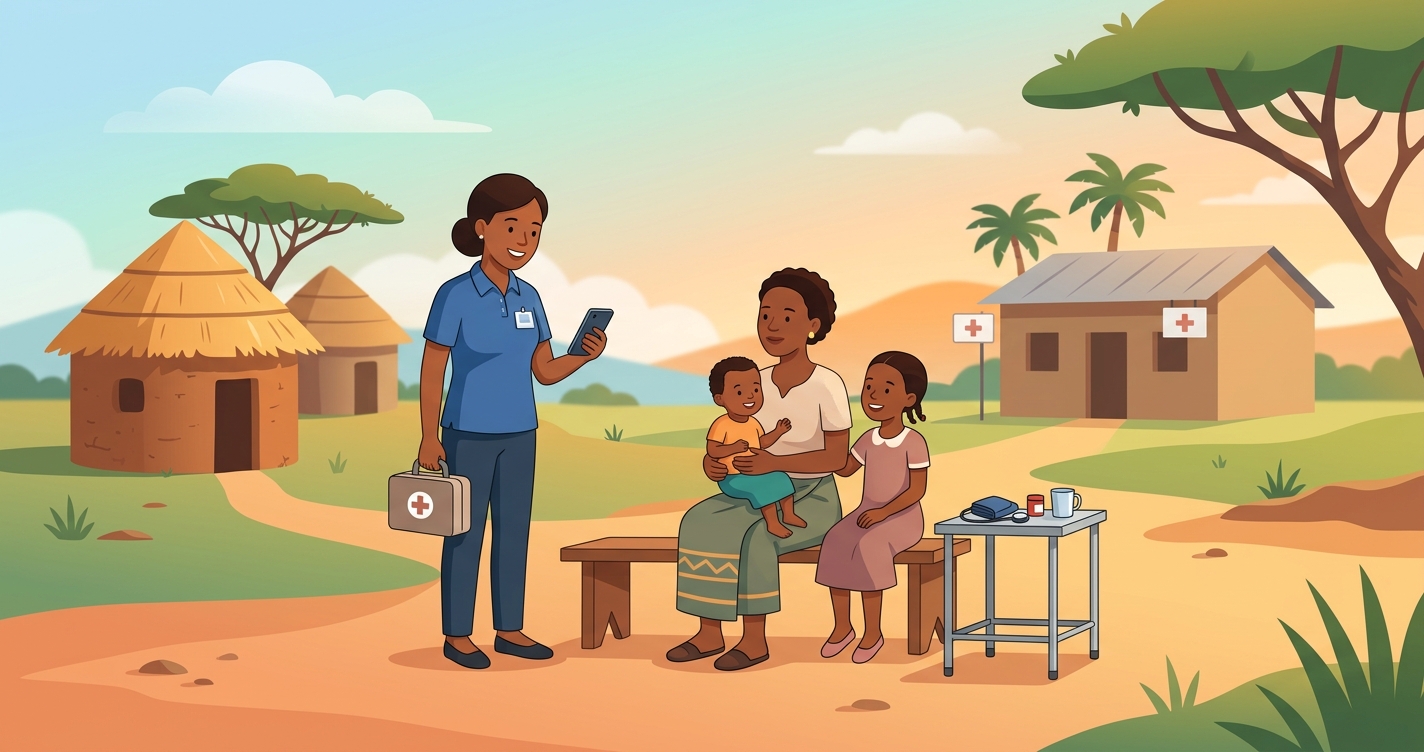
First, the people delivering the program already have social standing. In Uganda, Village Health Teams often begin with an advantage because they are known by name, live nearby, and understand the local context. That familiarity matters. It turns screening from an outsider activity into a community activity.
Second, screening has to lead somewhere practical. Andrew Marvin Kanyike and Andrew Mujuni, working with colleagues in Uganda and Washington University in St. Louis, found in their quasi-experimental study of hypertension screening in eastern Uganda that Village Health Teams could reliably conduct community-based screening, but referral completion remained a weak point. That finding is useful because it shows where trust can stall: people may accept the first interaction yet still hesitate if the path after screening feels costly, confusing, or distant.
Third, communities watch whether programs listen. A screening effort that explains results, returns with updates, and adapts to local feedback feels serious. One that appears once, gathers data, and disappears does not.
What tends to increase or weaken trust in screening programs
| Program element | What communities usually notice | Effect on trust |
|---|---|---|
| Local health worker involvement | Whether the screener is familiar and respected | Usually increases acceptance |
| Clear explanation of results | Whether people understand what the screening means | Increases confidence and follow-up |
| Reliable referral pathway | Whether the clinic visit after screening feels realistic | Increases credibility |
| Repeat visits and feedback | Whether the program comes back and shares outcomes | Builds long-term trust |
| Device or app reliability | Whether tools work consistently in front of patients | Trust drops quickly when tools fail |
| Visible fairness | Whether all households feel included | Prevents suspicion and resistance |
A useful way to think about this is that trust is built at the point where technical workflow meets social experience. Communities are not evaluating algorithms. They are evaluating whether the program behaves in a way that feels respectful, useful, and dependable.
- People trust screening more when the worker can explain both the purpose and the next step.
- Trust rises when referrals feel connected to real care, not just paperwork.
- Programs gain legitimacy when community members see the same workers return over time.
- Trust can erode fast if technology fails publicly or if referrals lead nowhere.
Industry applications in field programs
Community health worker-led screening
A lot of trust work happens before a scan starts. Training local workers changes how screening is received because the interaction already sits inside an existing relationship. That is one reason the Village Health Team model remains so important in Uganda. Screening programs delivered through known community workers usually face less suspicion than programs led only by visiting teams.
That pattern also appears in qualitative work. In Joseph Okello Mugisha and Janet Seeley’s study on training Ugandan Village Health Teams to use a smartphone-guided intervention for hypertension and diabetes referrals, workers described digital support as a way to reach "a higher standard" in their own practice. That phrase matters. When frontline workers feel more prepared and more credible, communities often notice the difference.
Referral-driven trust
Trust is strongest when a screening result triggers a response people can see. A referral that is completed, acknowledged, and explained tells the community the program is connected to the real health system. A referral slip that leads to transport costs, confusion, or stockouts sends the opposite message.
For grant-making bodies and public health institutions, this means trust should be measured alongside screening volume. The question is not only how many people were screened. It is also how many understood the result, how many accepted referral advice, and how many saw the next step actually happen.
Digital screening in low-resource settings
Digital tools can help or hurt trust depending on how they are introduced. A 2024 multi-country study by Courtney T. Blondino and colleagues in BMC Public Health found that community health workers were more likely to use digital health tools when they had training, while device and mobile service costs pulled use down. That is not just an operations lesson. It is a trust lesson. If workers do not have the support to use a tool confidently, communities feel that instability right away.
Current research and evidence
The evidence base points in a fairly consistent direction.
Martina Björkman and Jakob Svensson showed in their Uganda randomized field experiment on community-based monitoring that when communities received better information and a structured forum to engage with providers, utilization increased and child mortality fell. The study was not a screening trial in the narrow sense, but it remains one of the clearest demonstrations that accountability and community engagement can change health behavior and outcomes.
In Kampala's urban slums, Nancy Nabwaise, Abraham Muhangidi, and Elizabeth Kigozi argued that community health worker programs were associated with stronger community trust and better maternal and infant health outcomes. Their review is especially relevant for screening programs because it treats trust as a practical condition for uptake, not an abstract social value.
The eastern Uganda hypertension work by Kanyike, Mujuni, and co-authors adds an operational reality check. Community-based screening can identify people at risk, but trust is harder to sustain if the referral step is weak. Screening programs that stop at detection tend to leave social value on the table.
Then there is the technology side. Juliet N. Mwanga, Rose Nabirye, and Sarah Ssali at Makerere University, in their qualitative assessment of Uganda's Village Health Team program, pointed to the need for stronger training, supervision, and infrastructure in technology-enabled community care. That finding is easy to overlook, but I think it gets to the center of the issue. Communities do not trust technology by itself. They trust a service that keeps working.
Taken together, the research suggests four recurring drivers of trust:
- local worker credibility
- visible follow-up after screening
- simple and believable explanations
- program consistency over time
The future of health screening programs community trust
The next phase of community screening will probably be less about adding more data fields and more about tightening the loop between screening, referral, and community feedback.
That means better dashboards for supervisors, yes, but also more ordinary improvements: shorter waits, clearer referral instructions, and tools that work offline. It also means programs will need to treat trust as something measurable. Repeat participation, referral completion, and word-of-mouth acceptance may turn out to be just as important as raw screening totals.
In global health settings, especially where workers are spread across villages and transport is expensive, trust is what keeps screening from becoming a one-day event. It is what turns an encounter into a relationship.
That is also where contactless and smartphone-based approaches may fit. When they are placed inside a credible local workflow, they can help workers collect structured information without adding heavy equipment burdens. Readers following that shift can find related reporting on the Circadify research blog, where community and field deployment questions are covered in more detail.
For related coverage on this microsite, see Community Health Workers in Uganda: Stories From the Field and What Community Health Workers Think About Digital Tools.
Frequently Asked Questions
Why is trust so important in health screening programs?
Trust affects whether people agree to be screened, believe the result, return for follow-up, and recommend the program to others. In community-based care, uptake often depends as much on trust as on technical quality.
Who builds trust in community screening programs?
Usually it is built by local health workers, supervisors, and referral partners together. Communities pay attention to whether the people running the program are familiar, respectful, and consistent.
Can digital screening tools increase community trust?
They can, but only if workers are trained well and the tools function reliably in real field conditions. Poor connectivity, device failures, or confusing outputs can weaken trust quickly.
What is the biggest mistake screening programs make with trust?
A common mistake is treating trust as automatic once screening starts. In practice, trust depends on explanation, follow-up, and whether referrals lead to real care.
How should global health teams measure community trust?
Useful signals include repeat participation, referral completion, community feedback, missed follow-ups, and whether households continue to engage with the same health workers over time.