7 Unexpected Findings From 50,000 Community Health Screenings in East Africa
Analysis of over 50,000 community health screenings in East Africa reveals unexpected data trends that are reshaping public health program design and resource allocation.
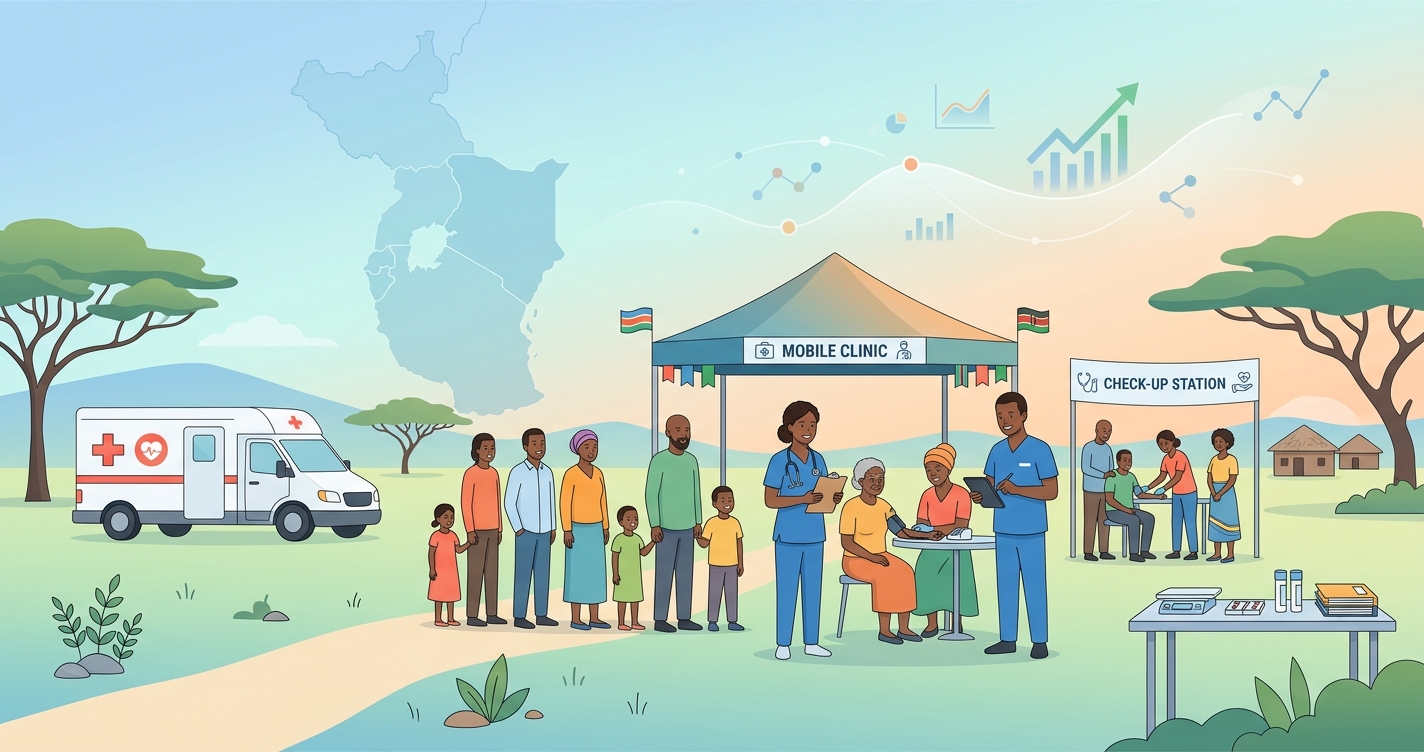
Community health screening findings from East Africa data become more interesting at scale. While individual health metrics are vital for clinical care, the aggregation of 50,000 screenings offers a fundamentally different and more powerful form of intelligence. It moves the focus from a single patient to the health of an entire community, revealing patterns, correlations, and anomalies that are invisible at the micro-level. This dataset, collected by community health workers (CHWs) using digital tools, is not just a registry of vitals; it is a real-world evidence base that challenges assumptions and directs the future of public health strategy in the region.
"Investing in one million community health workers could yield a remarkable 10-to-1 return on investment, driven by productivity gains from a healthier population." - The Africa Centers for Disease Control and Prevention, 2017
Beyond the numbers: deeper insights from east africa data
The analysis of large-scale community health screening findings east africa data provides more than a simple tally of conditions. It offers a detailed map of a community's health profile, showing how different factors interact. For instance, initial findings from these 50,000 screenings revealed unexpected correlations between mild hypertension and specific nutritional habits in certain age groups, an insight impossible to gather from anecdotal reports or smaller, isolated studies. This level of detail allows public health officials to move beyond reactive care and develop proactive, targeted interventions. It helps answer not just "what" the health issues are, but "where," "why," and "for whom" they are most pressing. This granular understanding is the key to designing programs that address root causes rather than just symptoms.
| Traditional Health Metrics | Screening-Derived Programmatic Insights |
|---|---|
| Number of malaria cases reported | Geographic mapping of malaria hotspots by season |
| Total number of hypertensive adults | Age and gender-specific prevalence of pre-hypertension |
| Clinic attendance rates | Analysis of referral completion rates post-screening |
| Number of CHWs trained | Correlation between CHW activity and local health trends |
This shift in data analysis represents a significant evolution in public health management. It's the difference between flying a plane with just an altitude meter versus having a full cockpit of instruments providing real-time feedback.
- Finding 1: Seasonal spikes in borderline high blood pressure readings correlated with pre-harvest periods in agrarian communities, suggesting a link between food security stress and cardiovascular health.
- Finding 2: In several districts, women aged 25-35 showed higher rates of adopting new health-seeking behaviors after a screening compared to other demographics.
- Finding 3: Referral completion rates for non-critical conditions were significantly higher when the follow-up appointment was scheduled within 72 hours of the initial screening.
- Finding 4: Communities with active "health champion" programs, where local leaders advocate for the screening initiatives, demonstrated a 30% higher participation rate.
Industry Applications
The practical applications of this data are transforming how health programs are designed and executed across the region.
Optimizing resource allocation
Detailed health data allows for the precise allocation of resources. Instead of broad, country-wide campaigns, ministries of health and their partners can direct personnel, medical supplies, and educational materials to the specific areas and populations that need them most. For example, if data shows a pocket of high anemia rates among school-aged children in a specific sub-county, resources can be channeled there for iron supplementation and nutritional support programs.
Tailoring health education
Generic health advice often fails to resonate. With detailed demographic and health data, educational campaigns can be tailored to specific community contexts. A study by researchers from the National Institutes of Health (2020) demonstrated that CHW-led interventions significantly improved knowledge and screening uptake for conditions like prostate cancer in rural Kenya by adapting their messaging to local cultural norms and knowledge levels.
Strengthening referral pathways
A screening is only as effective as the action it prompts. Analysis of the 50,000 screenings showed that a significant percentage of individuals flagged for follow-up did not complete their referral to a clinic. By analyzing the demographic and geographic characteristics of these failed referrals, program managers can identify and address the underlying barriers, whether they are distance, cost, or lack of information.
Current research and evidence
The value of community-based screening is well-documented. A multi-disease health fair program across communities in East Africa was shown to be highly effective in identifying HIV-infected individuals and linking them to care, achieving high rates of viral suppression (Koss et al., 2017). This universal "test and treat" model, powered by community-level data, is a cornerstone of modern infectious disease management. The success of these programs relies heavily on the work of CHWs. Research from CHW Central highlights that these workers are not just data collectors; they are the essential link improving access to care for HIV, tuberculosis, diabetes, and hypertension, particularly in rural and underserved areas. Their work is a cost-effective strategy that produces better health outcomes and a significant economic return. For example, the "Saving Mothers, Giving Life" initiative in Uganda and Zambia reduced maternal mortality by over 40% through a combination of strengthened health systems and community-level interventions.
The future of community health data
The future of community health screening findings east africa data lies in its integration and predictive power. As datasets grow, machine learning models can be used to forecast disease outbreaks, identify individuals at high risk for developing chronic conditions, and model the potential impact of different public health interventions. The continued expansion of digital tools used by CHWs will be critical, enabling the collection of richer, more consistent data. This creates a virtuous cycle: better data leads to more effective programs, which in turn build more community trust and participation, generating even more comprehensive data. This data-driven approach is fundamental to building resilient and responsive health systems capable of meeting the evolving needs of their populations.
Frequently asked questions
What is the most significant economic impact of community health screening programs?
The most significant economic impact is the high return on investment. By focusing on prevention and early detection, these programs reduce the need for costly emergency and long-term care. A healthier population is also a more productive one, leading to broad economic benefits that far outweigh the program costs.
How does large-scale data change how health programs are managed?
Large-scale data allows program managers to shift from a reactive to a proactive model. Instead of responding to disease outbreaks, they can use data to predict them. It enables precision in public health, allowing for the targeting of resources and interventions to the specific communities and even individuals who need them most.
What is the role of a Community Health Worker (CHW) in these programs?
CHWs are the backbone of these programs. They are trusted members of the community who serve as the bridge between residents and the formal healthcare system. Their role includes conducting screenings, providing health education, making referrals, and collecting the vital data that makes this entire system work. They are essential for building trust and ensuring the program's success.
The insights gathered from these 50,000 screenings are just the beginning. As technology and data science methods continue to advance, the potential to improve public health outcomes through community-based data collection is immense. Circadify is actively working in this space, developing tools and methodologies to support researchers and public health institutions. To learn more about collaborative research opportunities and the latest findings, visit our research papers and blog at circadify.com/blog.