Why do so many rural mothers miss warning signs before childbirth?
Investigating why critical maternal health warning signs are missed in rural settings and how community-level screening can improve program outcomes.
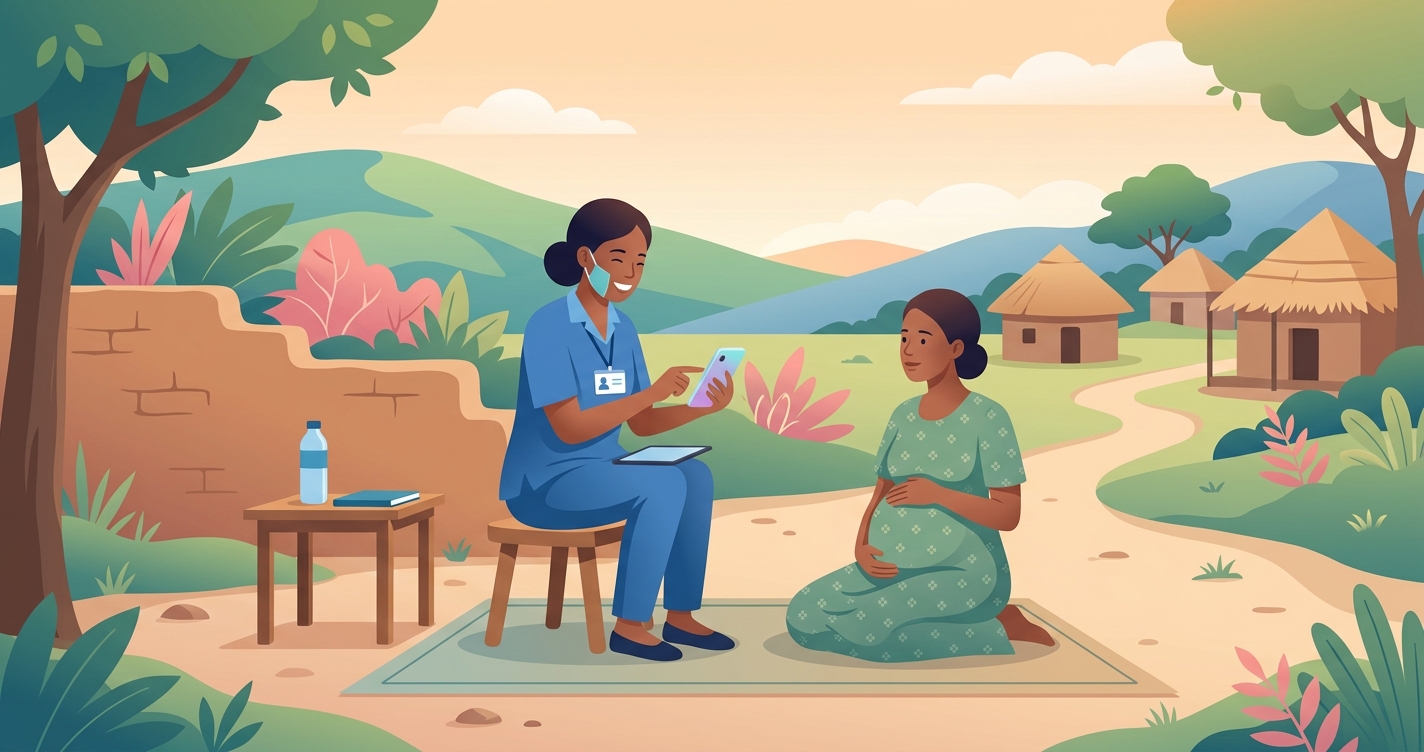
The greatest risks in maternal health are often silent. For a pregnant woman in a remote village, the journey to a healthy delivery is fraught with challenges, but the most dangerous are the ones she cannot see or feel. Conditions like preeclampsia and anemia develop quietly, becoming life-threatening before obvious symptoms appear. The gap in antenatal screening coverage is not just a logistical failure; it's an information failure. It represents a collective blind spot where early warning signs are missed, leading to preventable tragedies. Understanding why these signs are missed is the first step toward improving community health program outcomes and ensuring every mother has a chance to see her child's future.
"Sub-Saharan Africa alone accounted for around 70% of global maternal deaths in 2020. The lifetime risk of a 15-year-old girl dying from a maternal cause was 1 in 40." - World Health Organization (WHO), 2023.
Why warning signs are missed
The challenge in rural maternal health is rooted in the gap between when a condition becomes detectable and when it becomes symptomatic. A mother may feel perfectly fine while her blood pressure is rising to dangerous levels or her hemoglobin is falling. By the time she experiences headaches, blurred vision, or severe fatigue, the condition may have progressed to a critical stage, making emergency intervention far more difficult and less certain. This is where the concept of community health program outcomes requires a shift in perspective.
Historically, program success was often measured by outputs: the number of antenatal care (ANC) visits completed, the number of health workers trained, or the quantity of supplements distributed. While important, these metrics do not capture the most critical factor: whether at-risk mothers are being identified early enough. A high number of ANC visits is a hollow victory if those visits fail to detect the silent warning signs of hypertension or anemia.
The core problem is a lack of timely, accessible diagnostic data. In many rural settings, a pregnant woman's primary interaction with the health system is with a Community Health Worker (CHW). These CHWs are trusted members of the community but are traditionally underequipped to perform vital sign measurements. The nearest clinic with a blood pressure cuff or hemoglobinometer may be hours away, a journey that is often impractical due to cost, distance, and family responsibilities. Consequently, a mother may only have her vitals checked a handful of times, if at all, during her entire pregnancy. This leaves long periods where serious conditions can develop undetected. Digital tools are changing this dynamic by empowering CHWs to capture objective physiological data during routine home visits, transforming the quality and impact of community health programs.
| Feature | Traditional Antenatal Screening | Contactless, CHW-Led Screening |
|---|---|---|
| Location of Screening | Clinic or hospital | At the mother's home or village |
| Required Equipment | Manual BP cuff, thermometer, etc. | Smartphone or tablet with sensor tech |
| Screening Frequency | Infrequent (e.g., 2-4 formal visits) | High-frequency (e.g., weekly/bi-weekly) |
| Data for Triage | Delayed, based on clinic visits | Real-time, longitudinal data |
| Early Detection Window | Narrow; often detects late-stage issues | Wide; detects subtle changes early |
| Reliance on Symptoms | High (mother must feel unwell to seek care) | Low (identifies risk before symptoms) |
The barriers preventing women from attending formal ANC appointments are well-documented and persistent.
- Geographic Distance: Research consistently shows that long distances to health facilities are a primary deterrent for women in rural areas.
- Economic Factors: The direct costs of care, transportation expenses, and the indirect cost of lost work or time away from family duties create significant financial hurdles.
- Information Gaps: Many women are not fully aware of the importance of regular check-ups, especially when they feel healthy. They may not know what specific warning signs to look for.
- Sociocultural Beliefs: A preference for traditional birth attendants or a lack of autonomy in healthcare decisions can also limit access to formal care.
From data to action: applications for public health
The ability to gather physiological data at the village level has profound implications for how public health institutions manage maternal health programs. High-frequency data from the field moves the focus from lagging indicators (maternal deaths) to leading indicators (rising blood pressure trends).
### enhancing national health surveillance
Village-level screening data, when aggregated, provides an unprecedented real-time view of population health. Ministries of Health can track trends in maternal hypertension and anemia prevalence by region, district, or even village. This allows for the early identification of emerging hotspots and a more dynamic understanding of public health challenges, moving beyond reliance on infrequent national surveys.
### improving resource allocation
For a District Health Office, this data is transformative. Instead of dispatching outreach teams based on static population figures, they can direct resources to communities showing the highest risk profiles. If aggregated data shows a cluster of expectant mothers with elevated blood pressure readings in a specific area, officials can organize a targeted clinical camp or deploy skilled nurses to that community, optimizing the use of limited resources and improving community health program outcomes.
### informing research and policy
For academic researchers and grant-making bodies, this new data stream offers a wealth of opportunities. It allows for the evaluation of health interventions with a much higher degree of accuracy. Researchers can analyze how factors like seasonality, economic changes, or health education campaigns impact real physiological metrics in a population. This evidence is critical for developing policies and securing funding for programs that demonstrate a measurable impact on health outcomes.
Current research and evidence
The link between community-based screening and improved maternal health is increasingly supported by evidence. Studies have shown that a significant percentage of pregnant women in low-resource settings suffer from undetected conditions. For example, a 2023 study in rural Ethiopia found a preeclampsia prevalence of 10.3%, while a separate 2023 study in rural India reported that 58.7% of pregnant women were anemic (Kassa et al., 2023; Kumar et al., 2023).
The role of mHealth interventions in bridging this gap is a major area of current research. A systematic review published in Frontiers in Public Health confirmed that mHealth programs improve ANC attendance and the uptake of health services. Researchers at the University of Ghana, in a 2021 study, found that CHWs equipped with digital tools were more effective at identifying and referring at-risk pregnant women than their counterparts using paper-based protocols. The key finding is that empowering frontline health workers with the right technology fundamentally improves the efficiency and effectiveness of the entire health system.
The future of antenatal screening
The future of antenatal care in low-resource settings is decentralized, proactive, and data-driven. The model is shifting from one where the mother must travel to the health system to one where the health system meets the mother where she is. Contactless screening technologies that allow a CHW to take vital signs with a simple smartphone are at the forefront of this transformation. This approach Makes screening more accessible. Creates a continuous, longitudinal health record for each mother. This rich dataset allows for predictive risk modeling, enabling the health system to intervene not just early, but preemptively. As these technologies become more widespread, they will become a cornerstone of resilient and equitable community health programs.
Frequently asked questions
Q: How does village-level screening improve community health program outcomes? A: It shifts the focus from lagging indicators like visit counts to leading indicators like early risk detection. By identifying at-risk individuals before a crisis, programs can allocate resources more effectively, demonstrate measurable impact on conditions like hypertension and anemia, and ultimately reduce adverse maternal outcomes.
Q: What are the main challenges to implementing digital screening tools in rural areas? A: The primary challenges include ensuring adequate training for community health workers, managing device logistics like charging and connectivity, ensuring data privacy and security, and integrating the new data stream into existing national health information systems.
Q: Is contactless screening as accurate as traditional methods? A: The technology is designed to function as a highly effective triage tool for early risk detection at the community level. Positive screenings flag individuals who require further assessment in a clinical setting with standard diagnostic equipment. Its purpose is to identify at-risk individuals who would otherwise be missed entirely, bringing them into the formal care pathway sooner.
The work being done by organizations like Circadify in deploying these technologies in partnership with local health systems is critical to addressing these challenges. By focusing on building robust data platforms and supporting community health workers, they are helping to close the information gap that leaves so many mothers vulnerable. To learn more about the research and collaboration opportunities in this space, visit Circadify's research hub at circadify.com/blog.