
What Maternal Health Screening Results Reveal in Rural Africa
An analysis of maternal health screening outcomes from rural Africa deployments, exploring how mobile health tools and community workers improve risk detection.
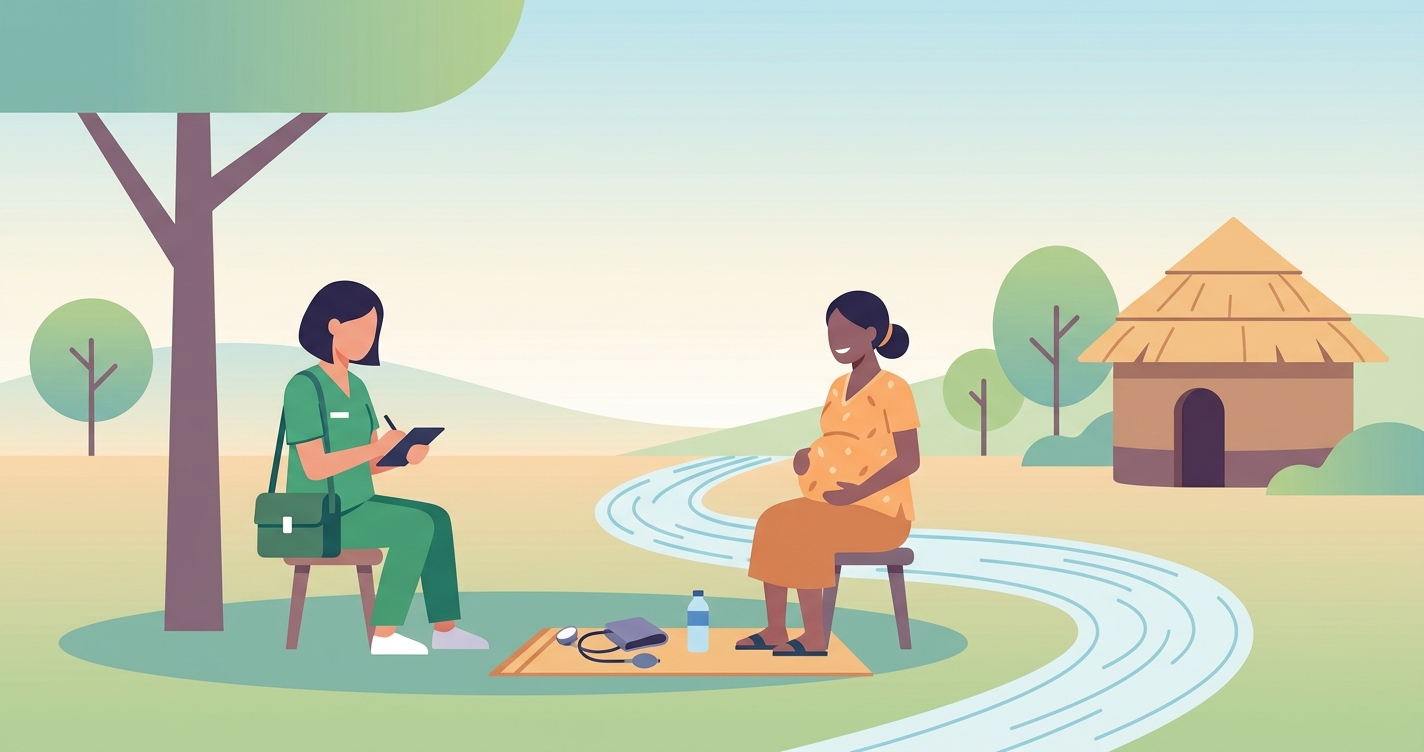
For public health institutions and grant-making bodies operating in sub-Saharan Africa, the focus on antenatal care has shifted from facility construction to community-level intervention. Historically, pregnant women in remote villages faced high geographical and financial barriers to accessing routine clinical observation. By the time complications were identified, they were often severe. Today, the deployment of digital health tools by community health workers is changing this reality. When evaluating the impact of these programs, maternal health screening outcomes provide the most robust metric for success. These outcomes reveal not just how many women were screened, but how field-based risk detection actually translates into clinical follow-through and safer deliveries.
"The implementation of mobile health technologies by community health workers was associated with a 22 percent immediate increase in facility-based births, demonstrating that field-based risk detection directly influences clinical care utilization."
- Susan E. Little and Sarah E. W. Smith, Global Health: Science and Practice, 2021
Understanding maternal health screening outcomes
Analyzing maternal health screening outcomes is critical for understanding the efficacy of decentralized health systems. Traditional public health metrics often count the number of digital devices distributed or the total volume of patient encounters. However, modern deployment data focuses on actionable health changes. When a community health worker conducts a prenatal screening using mobile health applications or contactless vital sign monitors, the true measure of success is whether that interaction led to a positive medical intervention.
These outcomes typically track several core indicators. The first is early antenatal care attendance. Digital reminders and home visits have proven effective at bringing women into the healthcare system during their first trimester. The second indicator is the identification of high-risk conditions, such as pregnancy-induced hypertension or severe anemia, which might otherwise go unnoticed until a crisis occurs. Finally, researchers look at the rate of skilled birth attendance. Screening programs that correctly identify risks and educate mothers consistently show higher rates of facility-based deliveries.
Evaluating maternal health screening outcomes also requires looking at the referral pathways. Identifying a risk in a remote village is only the first step. The subsequent steps involve the timely transfer of health data to a district clinic, the mobilization of emergency transport, and the successful admission of the patient. The friction in this pathway is where many traditional programs fail, but digital interventions are demonstrating clear, measurable improvements in closing the loop between remote villages and clinical facilities. By standardizing the data collected at the homestead, district health officers can allocate resources more efficiently, ensuring that clinics are prepared for incoming patients with specific complications.
Clinical versus community screening models
The transition from purely facility-based care to community health models requires a comparison of how screening outcomes differ across approaches.
| Metric | Traditional Clinical Screening | Community-Based mHealth Screening |
|---|---|---|
| Initial Contact | Often delayed until second or third trimester | Often occurs in the first trimester via home visits |
| Data Collection | Sporadic, reliant on patient travel | Continuous, localized, and digitally logged |
| Risk Detection | Dependent on symptomatic presentation | Proactive vital sign monitoring at the village level |
| Follow-Through | High drop-out rate due to travel distance | High compliance driven by localized tracking and reminders |
| Cost Efficiency | High burden on the patient | High operational efficiency for the public health program |
Key drivers of positive screening results
Field deployments across the continent highlight several consistent factors that improve outcomes when digital screening is introduced to rural populations.
- Immediate digital triage that automatically flags abnormal vital signs for review by remote clinicians.
- Reduced travel burden for routine check-ups, reserving facility visits for critical care and delivery.
- Structured data collection that builds a continuous medical history for women who previously lacked formal health records.
- Enhanced trust resulting from regular, localized engagement with familiar community health volunteers.
- Automated SMS and voice message reminders that keep patients informed about their upcoming clinical appointments.
- Integration of clinical decision support software that guides health workers through standardized symptom checklists.
Industry applications in the field
Wearable and contactless vitals
The introduction of advanced monitoring tools has expanded what is possible during a standard community health visit. In Zambia, feasibility studies have evaluated the use of wearable vital sign monitors, such as the neoSpot device, by community health workers during antenatal outreach. These devices capture critical metrics like heart rate, respiratory rate, oxygen saturation, and temperature. By moving these measurements out of the clinic and into the homestead, health workers can identify subtle changes in maternal health early, reducing the likelihood of undiagnosed pre-eclampsia or infections.
Similarly, researchers at the Mbarara University of Science and Technology in Uganda have investigated the functionality of wireless maternal vital sign monitors in rural settings. Their findings suggest that mobile tools are highly acceptable to pregnant women. The ability to measure vital signs without complex, heavy equipment allows district health teams to scale their screening efforts efficiently, resulting in stronger maternal health screening outcomes across broad geographical areas.
Digital referral pathways
Data collection is only as useful as the action it triggers. In rural Northern Ghana, the Community-Based Health Planning and Services model has heavily integrated digital referrals. Community health officers and volunteers use mobile platforms to log patient data and communicate directly with district hospitals. This system allows clinical staff to prepare for arriving patients, particularly those flagged with pre-eclampsia or other high-risk conditions. The digitization of these pathways reduces the administrative delay that historically plagued rural health systems. Furthermore, integrating traditional birth attendants into this digital communication loop has proven highly effective in bridging the gap between informal community care and formal clinical protocols.
Current research and evidence
The evidence supporting the expansion of digital maternal screening is grounded in rigorous, peer-reviewed studies. A 2021 study published in Global Health: Science and Practice by researchers Susan E. Little and Sarah E. W. Smith utilized a time series analysis to evaluate mobile health tools in rural Malawi. Their findings were highly specific: the use of these tools by community health workers led to a 22 percent immediate increase in facility-based births. This metric alone provides a powerful argument for funding bodies evaluating the return on investment for decentralized digital health programs. The study confirmed that equipping local workers with structured mobile tools directly correlates to mothers choosing formal clinical environments for delivery.
Additional research from rural Northern Ghana reinforces these findings. Studies tracking the Community-Based Health Planning and Services model documented a 15 percent increase in prenatal check-ups and a significant improvement in general health knowledge among 70 percent of expectant mothers. The data indicates that regular screening does not just capture vital signs; it actively changes patient behavior. When women understand their health status through clear, consistent screening, they are more likely to seek out skilled attendance for delivery.
While the data for antenatal care and facility births is strong, researchers note that postnatal care outcomes remain mixed. Some digital interventions have not shown the same immediate lift in postnatal utilization, suggesting that public health programs need to refine their protocols for following up with mothers after they return home from the clinic. The drop-off in data collection after delivery highlights a critical area for future grant funding and operational focus.
The future of maternal care tracking
Looking ahead to the next five years, the scope of maternal health screening in remote regions will expand through the integration of predictive analytics and more advanced contactless technologies. Currently, community health workers react to the vital signs they measure on the day of the visit. Future software systems will likely analyze longitudinal data to predict complications weeks before they present clinically. By mapping trends in blood pressure and weight gain against regional epidemiological data, algorithms could prompt community workers to arrange preventative clinic visits well ahead of an emergency.
Furthermore, contactless vital sign measurement using standard smartphone cameras is entering the public health discussion. If district health teams can deploy software that measures heart rate and respiratory rate simply by having a health worker hold a phone in front of a patient, the cost of scaling hardware-intensive programs will drop dramatically. This shift will allow grant-making bodies to reallocate funds from equipment procurement to workforce training and emergency transport infrastructure, creating a more resilient health system capable of sustaining long-term outcome improvements.
Frequently asked questions
What are maternal health screening outcomes?
Maternal health screening outcomes are specific metrics used to evaluate the success of antenatal and postnatal care programs. These metrics typically include the percentage of women attending early prenatal check-ups, the rate of facility-based deliveries, the successful detection of high-risk conditions like hypertension, and the efficiency of clinical referral pathways.
How do mobile health tools impact these outcomes?
Mobile health tools enable community health workers to record vital signs accurately, send automated appointment reminders, and immediately transmit high-risk data to clinical facilities. This continuous, structured approach reduces the delay in medical intervention and significantly increases the likelihood that a mother will deliver in a facility with skilled clinical staff.
Why is community-level screening important in rural Africa?
In rural and remote regions, geographical distance and financial constraints prevent many women from traveling to clinics for routine observation. Community-level screening brings the diagnostic capacity directly to the village, ensuring that complications are identified early without requiring the patient to bear the burden of travel until absolutely necessary.
What are the current challenges with digital screening deployments?
Despite the positive data, deployments face operational challenges including inconsistent cellular network connectivity, variable digital literacy among health volunteers, and the need for sustainable funding for device maintenance. Additionally, ensuring reliable emergency transport after a risk is detected remains a logistical hurdle for many district health offices.
As public health institutions and academic researchers look for sustainable ways to capture reliable deployment data, the need for robust software infrastructure becomes clear. Circadify is actively addressing this space by providing tools that help public health programs track the effectiveness of their field deployments and measure actual community health changes. To learn more about the research behind these impact metrics and explore collaboration opportunities, visit circadify.com/blog.