Before it's too late, how do health teams know who needs urgent care in a large population?
How rapid risk stratification and field screening drive population health screening outcomes, helping public health teams find high-risk people fast.
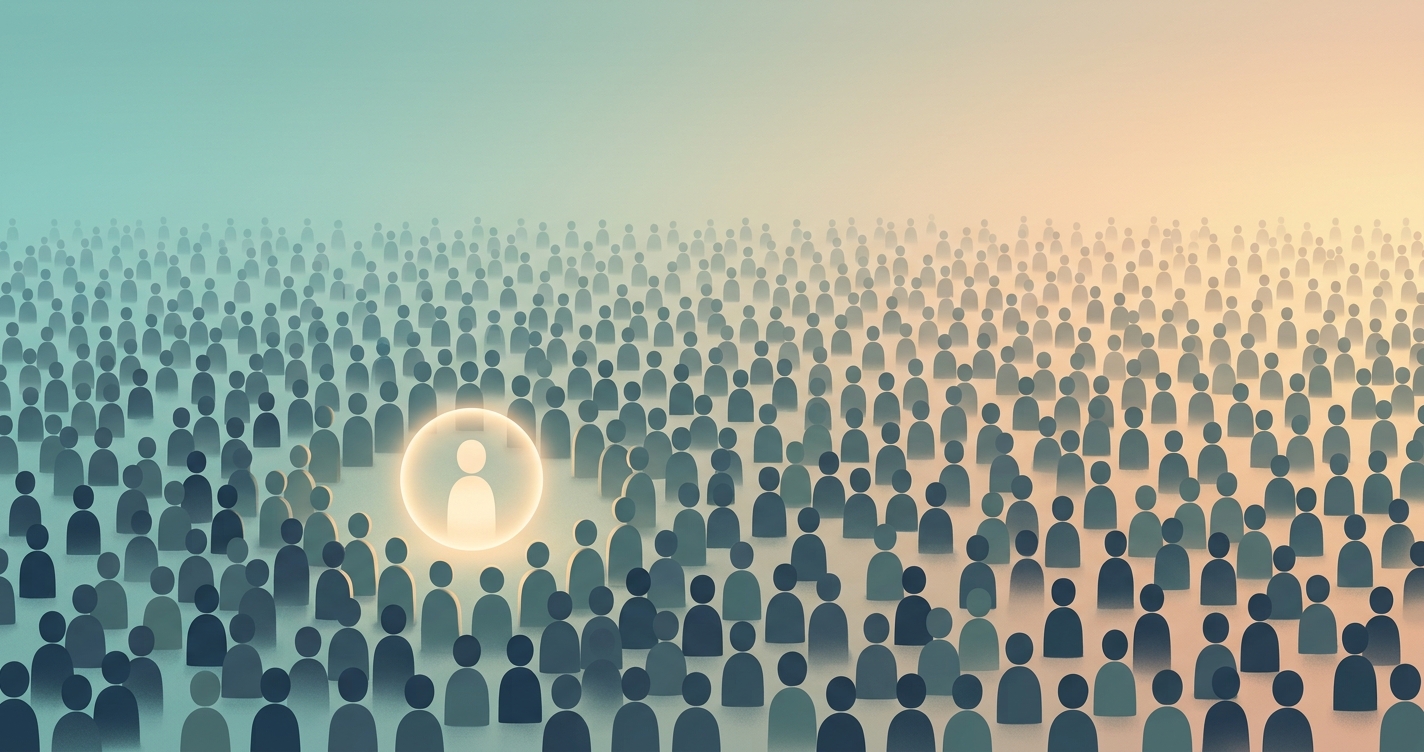
When a health team is responsible for fifty thousand people spread across a district with a single referral hospital, the central problem is not treatment. It is recognition. The handful of individuals who will deteriorate fastest, an undiagnosed hypertensive heading toward stroke, a febrile child sliding into severe illness, a pregnant woman with rising blood pressure, are statistically invisible inside a healthy-looking crowd until the moment they arrive in crisis. Improving population health screening outcomes depends on collapsing the time between when risk becomes detectable and when a frontline worker actually acts on it. For public health institutions and grant-making bodies, that timing gap is where preventable mortality lives, and where program design either succeeds or quietly fails.
Community health worker interventions produced a median increase of 11.5 percentage points in breast cancer screening, 12.8 for cervical, and 10.5 for colorectal screening, according to systematic reviews summarized for the US Community Preventive Services Task Force (Community Guide, 2023).
Why population health screening outcomes hinge on speed of identification
Population health screening outcomes are usually reported as coverage numbers, how many people were reached. But coverage alone says little about whether the right people were found in time. The discipline that turns raw reach into saved lives is risk stratification: sorting a population by likelihood of an adverse event so scarce clinical attention flows to those who need it first. The US National Association of Community Health Centers (NACHC) frames risk stratification as the practice of categorizing patients by anticipated health needs so care can be directed proactively rather than reactively.
In well-resourced systems this happens through electronic records and predictive algorithms. In a rural district with intermittent power and few diagnostic machines, the same logic has to run on whatever a frontline worker can carry. The question becomes practical: how do you generate a structured risk signal for hundreds of people per day, fast enough to act before deterioration?
A 2021 systematic review by Lewis and colleagues in BMJ Open found that population risk stratification tools for chronic disease in primary care showed promising but uneven effects on emergency visits and hospitalizations, with results depending heavily on whether stratification was actually linked to an intervention. The lesson for field programs is blunt: identifying risk is worthless unless a referral pathway acts on the flag.
Comparing approaches to finding high-risk individuals at scale
Health teams managing large populations choose among several screening models, each with different speed, cost, and accuracy tradeoffs. The table below compares the dominant approaches now used in low-resource and community settings.
| Approach | Speed per person | Equipment burden | Risk-flag quality | Best fit |
|---|---|---|---|---|
| Passive clinic walk-in | Slow, self-selected | High (fixed site) | Misses non-attenders | Urban facilities |
| Paper register surveys | Moderate | Low | Delayed, error-prone | Census-style baselines |
| CHW visit with manual vitals | Moderate | Medium (cuffs, thermometers) | Good if devices calibrated | Targeted households |
| Phone-based contactless screening | Fast (30 to 60 seconds) | Low (one smartphone) | Structured, instant triage | High-volume field drives |
| Symptom-only checklists | Fast | None | Subjective, low specificity | Outbreak triage |
No single method wins on every axis. The practical pattern emerging across field programs is layering: a fast, low-burden first pass to triage the whole population, followed by a higher-intensity confirmation step for those flagged.
Effective early-identification programs tend to share a few features:
- A first-pass screen that can run on equipment already in the field, not equipment that has to be shipped and calibrated.
- An explicit threshold that converts a measurement into an action, not just a number in a register.
- A referral pathway with a named destination and a way to confirm the person arrived.
- Feedback loops so missed cases and false alarms refine the thresholds over time.
Industry applications across public health programs
District-level surveillance and outbreak response
When a health office needs to know who is sick across many villages at once, the speed of the screening pass determines whether a cluster is caught while still containable. The UN Office for Disaster Risk Reduction (UNDRR), in its 2023 global status report on multi-hazard early warning systems, stressed that the weakest link is rarely detection technology and more often the chain that turns a signal into clear, actionable alerts reaching at-risk people. The same architecture applies to disease: a measurement is only as useful as the response it triggers.
Maternal and child health
In antenatal and child programs, the high-risk minority is well defined but hard to reach in time. A woman with elevated blood pressure or a child with a dangerous fever needs to be pulled out of the general flow within hours, not at the next monthly clinic. Rapid screening lets a community health worker convert a routine household visit into a triage decision on the spot.
Noncommunicable disease case-finding
The World Health Organization notes that community-based health workers effectively deliver services across maternal health, child health, and the management of communicable and noncommunicable diseases. For conditions like hypertension and diabetes, which are largely silent until a crisis, population-wide first-pass screening is often the only realistic way to surface undiagnosed cases before they present as stroke, kidney failure, or cardiac events.
Current research and evidence
The evidence base for community-driven early identification has matured. The WHO's 2018 guideline on optimizing community health worker programs documented their role in reducing inequities in access to essential services among underserved populations, and the WHO Health Workforce Support and Safeguards List 2023 identified 55 countries facing pressing workforce shortages, reinforcing why low-equipment, high-throughput screening matters when trained staff are scarce.
On the question of whether community workers actually move screening numbers, the Community Guide systematic reviews (2023) reported median increases of 11.5 percentage points for breast cancer screening, 12.8 for cervical, and 10.5 for colorectal screening when community health workers were engaged, with gains observed across income, insurance, and ethnicity groups. That consistency matters for grant-making bodies, because it suggests the effect is driven by the delivery model rather than by a favorable local population.
The cautionary thread runs through the risk-stratification literature. Lewis and colleagues (BMJ Open, 2021) and subsequent systematic reviews of population stratification tools, including a 2022 MDPI review of healthcare-needs mapping, converge on one finding: stratification improves outcomes only when it is tightly coupled to a follow-up intervention. A flag with no pathway is administrative overhead. This is the single most important design constraint for any program claiming to improve population health screening outcomes.
The future of population health screening outcomes
Three shifts are likely to define the next phase of this work. First, the first-pass screen is moving onto general-purpose devices already in workers' hands, lowering the equipment burden that has historically capped how many people a program can reach in a day. Second, funders are tightening what counts as a credible outcome, shifting from coverage counts toward measures of how quickly flagged individuals reached care and whether their trajectory changed. Third, village-level screening data is increasingly feeding national surveillance, so a single household visit can contribute both to an individual triage decision and to district-level early warning.
The UNDRR and UNESCO have set a target of protecting every person on Earth with early warning systems by 2027. Health is an obvious extension of that ambition, but the bottleneck identified in disaster systems applies equally here: the alert has to be fast, clear, and connected to an actor who can respond. Programs that solve the last-mile response problem, not just the detection problem, will be the ones that demonstrate durable outcomes.
Frequently asked questions
What does risk stratification mean in a large population screening program? Risk stratification is the practice of sorting a population by likelihood of a serious health event so that limited clinical resources reach the highest-need individuals first. In field settings it relies on a fast first-pass screen, an explicit action threshold, and a referral pathway, rather than on full diagnostic workups for everyone.
Why is speed of identification more important than total coverage? Coverage counts how many people were reached, but outcomes depend on whether the small number heading toward a crisis were found in time to intervene. A program can screen thousands and still fail if its highest-risk individuals are recognized only after they deteriorate.
Does community-based screening actually improve outcomes? Systematic reviews summarized by the Community Guide (2023) show community health worker engagement produced double-digit percentage-point gains in cancer screening rates across diverse populations. Broader risk-stratification research stresses that gains appear only when identification is linked to a real follow-up intervention.
What is the most common reason early-warning screening programs fail? The recurring failure is a disconnect between detection and response. UNDRR's 2023 analysis of early warning systems and primary-care risk-stratification reviews both find that flagging risk without a clear, acted-upon referral pathway produces little measurable benefit.
Circadify is working alongside public health institutions and researchers on exactly this challenge, building the fast first-pass screening and structured triage data that turn large-population reach into early, actionable identification. Research teams and grant-making bodies exploring collaboration or program evidence can review current studies and partnership opportunities at circadify.com/blog.