Can your phone really help prevent a child's deadly infection before it's too late?
How phone vital signs community health tools detect childhood pneumonia early. A research review of evidence, field accuracy, and implications for global health.
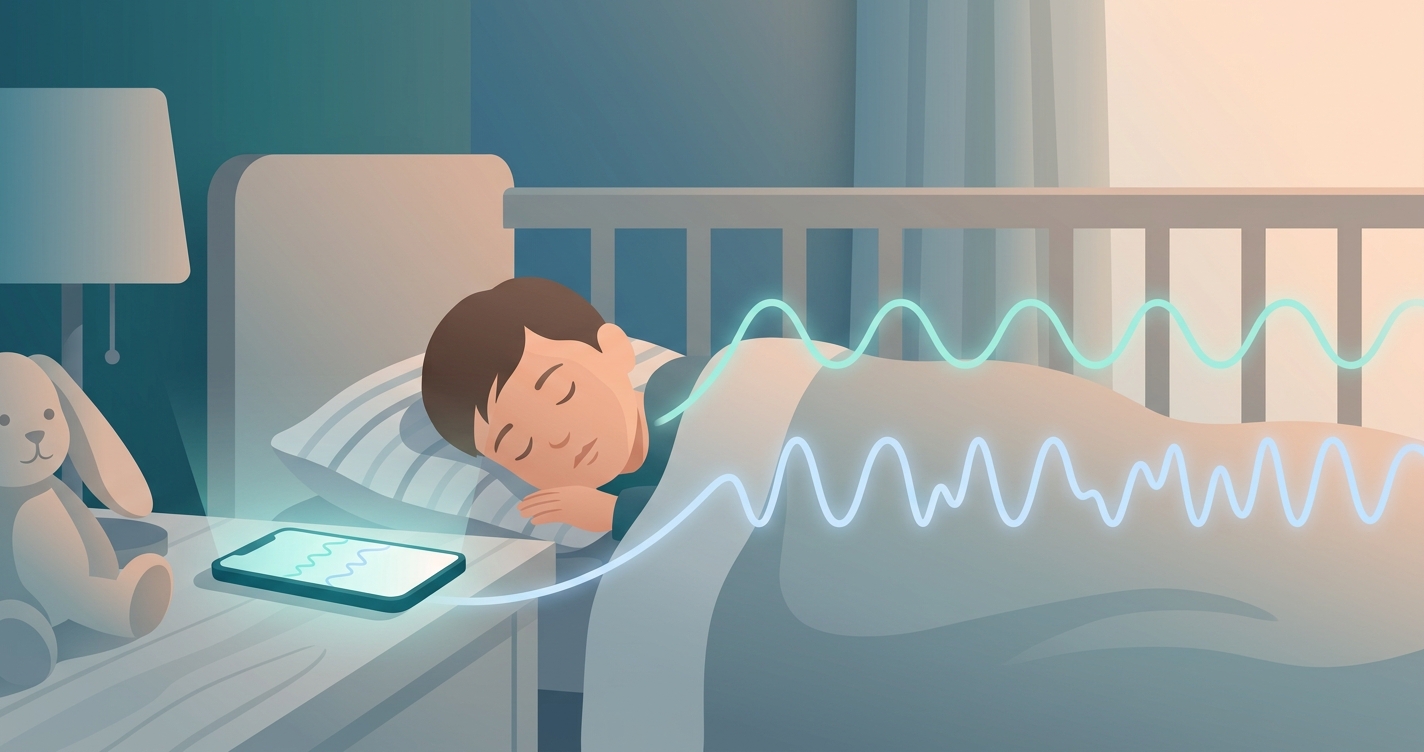
Few clinical events are as time-sensitive, or as quietly preventable, as a child slipping from a routine fever into severe respiratory infection. In the hours between "she seems a little off" and a medical emergency, the most useful signal is rarely visible to a worried parent. It is a number: how fast a child is breathing, how steadily the heart is beating, whether oxygen levels are falling. The question driving a growing body of research is whether ordinary smartphones, already in nearly every household, can surface those numbers early enough to matter. This is the premise behind phone vital signs community health programs now being tested across low-resource settings, where the gap between owning a phone and reaching a clinic is often measured in hours of walking.
An estimated 610,000 children under five died from pneumonia in 2023, a roughly 20% rise since 2021, keeping it the leading infectious cause of death in this age group, according to Global Burden of Disease estimates summarized by the international Stop Pneumonia coalition.
The tragedy embedded in that statistic is that pneumonia is treatable when caught in time. The World Health Organization's Integrated Management of Childhood Illness (IMCI) protocol hinges on signs that are physiological, not mysterious: fast breathing, lower chest wall indrawing, lethargy, inability to drink or breastfeed. The bottleneck is detection at the household level, before a child reaches the point of crisis. That is precisely the layer phone-based measurement is attempting to fill.
What phone vital signs community health tools actually measure
The phrase covers several distinct technical approaches, and they are not interchangeable. Understanding the differences matters for any institution evaluating where to direct funding or research attention, because each method carries its own accuracy profile, hardware needs, and failure modes.
The most mature approach targets respiratory rate, the single most predictive sign in WHO pneumonia classification. Tools such as the RRate app let a health worker tap the screen with each breath; researchers have reported reliable counts in an average of roughly 10 seconds, compared with the standard 60-second manual count that is prone to interruption and miscounting in a distressed, crying child. Other apps, including the semi-automated ALRITE counter, have shown acceptable accuracy for counting respiratory rate in infants with respiratory distress while remaining usable by frontline staff.
A second category uses the camera and microphone to extract signals the human eye cannot reliably judge. Remote photoplethysmography (rPPG) reads subtle color changes in facial skin to estimate heart rate and, in some implementations, respiratory rate, without any contact. Cough-analysis algorithms represent a third path: the SMARTCOUGH-C 2 trial design evaluated a phone-based algorithm analyzing cough audio and reported symptoms, with later work showing high agreement (above 86%) with clinical diagnoses of community-acquired pneumonia.
Below is a simplified comparison of the main approaches under field evaluation.
| Approach | Primary signal | Hardware needed | Reported strength | Main limitation |
|---|---|---|---|---|
| Tap-to-count apps (e.g. RRate) | Respiratory rate | Any smartphone | Fast, reliable counts (~10s) | Still operator-dependent |
| rPPG (camera-based) | Heart rate, respiration | Camera, decent lighting | Fully contactless, no consumables | Sensitive to motion and lighting |
| Cough/audio algorithms | Respiratory disease signature | Microphone | Works with a crying, moving child | Background noise interference |
| Smartphone pulse oximetry | Oxygen saturation (SpO2) | Camera or attachment | Detects hypoxemia directly | Calibration and accuracy debated |
The honest summary is that no single phone-based method replaces a clinical examination. What they share is a different value proposition: lowering the cost and skill threshold for a first screening, so that danger signs are flagged at the door of the home rather than discovered too late at the clinic.
Why early detection is a community health problem, not just a clinical one
A child's deterioration from infection is often nonlinear. Caregivers may not recognize tachypnea (abnormally fast breathing) because it looks, to an untrained eye, like ordinary distress. The structural problem is well documented:
- Households frequently delay care because early symptoms appear ambiguous.
- The nearest facility with diagnostic equipment may be hours away.
- Community health workers (CHWs) carry heavy caseloads and limited tools.
- Malnutrition compounds risk; it was a factor in roughly 60% of child pneumonia deaths in 2023.
- A small set of pathogens, led by Streptococcus pneumoniae, drives most deaths, meaning timely referral often changes the outcome.
Phone-based screening reframes the task. Instead of asking a parent to interpret symptoms, it gives a CHW a repeatable measurement to compare against a threshold. That shift, from subjective judgment to a structured reading, is the same logic that has driven other contactless vitals community health programs documented in field deployments across East Africa.
Industry Applications
Community health worker programs
The clearest application is equipping CHWs who already conduct household visits. A respiratory-rate app turns a routine check into a structured screening, and an abnormal reading becomes an objective trigger for referral. This matters for program design because it standardizes the decision point: referral is tied to a number, not to how convincing a parent sounds or how busy the worker is that day.
District triage and referral systems
When phone-captured readings are logged, they feed referral pathways and district surveillance rather than disappearing into memory. Several programs have found that structured screening data shortens the delay between symptom onset and clinical contact, the window where pediatric infections become dangerous.
Research and grant-funded evaluation
For academic researchers and grant-making bodies, phone-based vitals offer something rare: scalable, time-stamped, individual-level data from settings that historically produced only paper registers. That data supports both program evaluation and the kind of real-world evidence increasingly demanded alongside randomized trials.
Current research and evidence
The evidence base is real but uneven. On respiratory rate, the case is strongest. Validation work on apps like RRate and ALRITE has shown that smartphone-assisted counting can match or improve on the manual method's reliability while being faster and more usable, a meaningful gain given how often manual counts are mistimed in practice.
On oxygen saturation, studies testing smartphone applications at village level, including work presented through European Respiratory Society channels, have explored whether phones can measure both respiratory rate and SpO2 to improve pediatric pneumonia diagnosis. Results are promising but more cautious; hypoxemia detection demands accuracy that consumer hardware does not uniformly deliver, and calibration remains an open question.
On cough analysis, the SMARTCOUGH-C 2 program and related cohort studies reported high percentage agreement with clinical diagnoses of community-acquired pneumonia, suggesting audio signatures carry diagnostic information. The work also illustrated how background noise and recording conditions degrade performance, a reminder that laboratory accuracy and field accuracy are different metrics.
Across these strands, the consistent finding is that phone-based tools perform best as triage and screening aids that raise sensitivity to danger signs, not as standalone diagnostic devices. For institutions, the practical implication is to evaluate them on the outcome that matters most: do they shorten the time to appropriate care?
The Future of phone-based child infection screening
Three trends will shape the next phase. First, sensor fusion: combining respiratory rate, contactless heart rate via rPPG, and cough analysis in a single workflow is likely to outperform any one signal, because pediatric danger is multidimensional. Second, integration with existing IMCI protocols, so that a phone reading maps directly onto the established decision tree CHWs already use, rather than introducing a parallel system. Third, rigorous field validation in the exact populations of interest, since accuracy figures generated in well-lit clinics rarely survive contact with a crying toddler in a dim home.
The realistic near-term role is not a phone that diagnoses pneumonia. It is a phone that helps a frontline worker decide, faster and more consistently, that a particular child needs to be seen now. In a condition where outcomes turn on hours, narrowing that decision gap is where the measurable lives-saved potential sits.
Frequently asked questions
Can a phone diagnose pneumonia in a child? No. Current evidence supports phones as screening and triage aids that flag danger signs such as fast breathing, not as diagnostic devices. A confirmed diagnosis still requires clinical assessment. The value is in earlier, more consistent referral decisions.
Which vital sign matters most for detecting childhood infection early? Respiratory rate is the strongest single predictor in WHO pneumonia classification, which is why most validated phone tools focus on it. Oxygen saturation and cough patterns add information but are technically harder to capture reliably on consumer hardware.
Are these tools accurate enough for real community settings? Respiratory-rate apps show the strongest field evidence. Oxygen and cough-based methods are promising but more sensitive to lighting, motion, and noise. Accuracy should be judged on field performance and on whether the tool shortens time to care, not on lab figures alone.
Who benefits most from phone-based screening? Community health workers conducting household visits, district referral systems that gain structured data, and researchers studying pediatric health outcomes at scale in settings where traditional equipment is scarce.
Circadify is working in this space, building contactless vitals approaches aimed at exactly this detection gap, and publishing field results and methods for researchers and public health institutions evaluating digital health interventions. Explore the research and collaboration opportunities at circadify.com/blog.