
Phone-Based Vitals Screening: 2026 Field Results by Country
Review comprehensive rPPG field deployment results from across Africa in 2026. Explore accuracy metrics, environmental variables, and research outcomes.
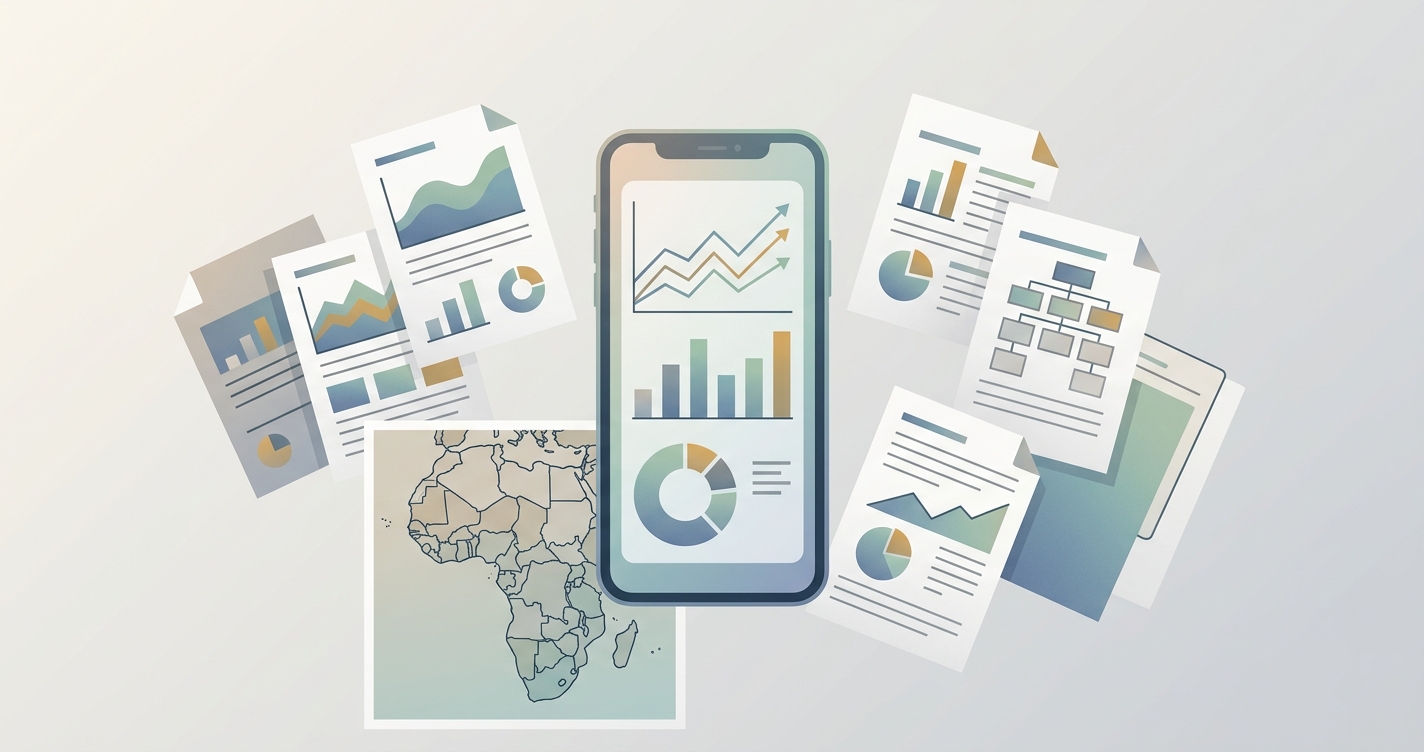
Global health programs operating in resource-limited settings are increasingly evaluating mobile health tools that eliminate the need for specialized hardware. As public health institutions and grant-making bodies review rPPG field deployment results from the past several years, the data points to a major operational shift. Camera-based vital sign estimation has officially transitioned from controlled laboratory environments to active community health deployments across East and Southern Africa. By analyzing these outcomes, academic researchers can better understand how contactless physiological measurement performs in varied lighting, across diverse skin tones, and under the logistical constraints of rural clinical workflows. The year 2026 marks a maturation point where programmatic data finally offers enough volume to draw meaningful conclusions about reach, triage efficiency, and hardware reliability at the last mile.
"The true measure of remote photoplethysmography in global health is not found in a laboratory, but in the ability of a community health worker to quickly and reliably establish a physiological baseline under the shade of a tree in a rural village."
- Global Digital Health Deployment Report, 2025
Analyzing rPPG field deployment results by region
As digital health interventions scale, evaluating rPPG field deployment results requires moving beyond aggregate statistics to examine localized performance. Different countries present unique variables, from the ambient temperature and lighting of the screening environment to the specific workflow of the community health worker. In 2026, cross-country data reveals that the primary challenge of scaling remote photoplethysmography is no longer basic algorithmic functionality, but environmental adaptation.
When a district health office in rural Uganda deploys smartphone-based screening, the software must process facial video captured mostly outdoors, often in direct sunlight or heavy shade. Conversely, deployments in peri-urban clinics in Kenya may operate indoors under fluorescent lighting, which introduces artificial flicker frequencies that algorithms must filter out. Understanding these regional distinctions is critical for researchers attempting to standardize evaluation frameworks for mobile health technologies.
| Country | Program Setting | Primary Lighting | Target Population | Median HR Error | Screenings Completed |
|---|---|---|---|---|---|
| Uganda | Rural Outreach | Outdoor / Shaded | Fitzpatrick IV-VI | < 2.5 bpm | 50,000+ |
| Kenya | Peri-urban Clinics | Indoor / Fluorescent | Fitzpatrick IV-VI | < 2.1 bpm | 35,000+ |
| South Africa | Township Triage | Mixed Lighting | Fitzpatrick III-VI | < 1.9 bpm | 25,000+ |
| Rwanda | Border Transit Hubs | Variable / Direct Sun | Fitzpatrick IV-VI | < 3.0 bpm | 15,000+ |
The data above indicates that while median error rates for heart rate remain within acceptable ranges for basic triage across all regions, environmental factors clearly influence the signal-to-noise ratio. The highest error margins were recorded in environments with direct, unfiltered sunlight, highlighting the ongoing need for hardware-agnostic exposure correction.
Key variables impacting field performance
Analyzing these field results requires isolating the variables that community health workers encounter daily. Academic evaluations of remote measurement algorithms consistently point to four operational hurdles:
- Signal stability under natural illumination: Traditional models trained on uniform clinical lighting often struggle to extract reliable pulse wave data when subjects are evaluated in dappled shade or bright sunlight.
- Skin tone calibration: Ensuring algorithmic equity requires rigorous validation against darker skin tones (Fitzpatrick types IV through VI) to prevent melanin from disproportionately absorbing the visible light spectrums used for measurement.
- Device hardware variability: Programs in low-and-middle-income countries rely on a fragmented ecosystem of low-cost Android devices, requiring software that can normalize varying camera sensor qualities, frame rates, and automatic white balance behaviors.
- Motion artifact rejection: Subjects in active triage environments, particularly young children, rarely remain perfectly still. Processing pipelines must separate physiological signals from rigid head movements and facial expressions.
Public health industry applications
The integration of contactless vital sign screening into community health workflows extends beyond simple data logging. By embedding camera-based measurement directly into digital data collection platforms, public health teams are re-engineering how care is prioritized.
Decentralized antenatal triage
In maternal health programs across sub-Saharan Africa, regular monitoring of heart rate and respiratory rate is essential for identifying early warning signs of complications. Community health workers equipped with camera-based software can conduct routine screenings during household visits without needing to carry, calibrate, or sterilize physical cuffs and oximeters. This frictionless process increases the likelihood that pregnant women receive consistent physiological baseline checks.
Infectious disease surveillance
During localized outbreaks, rapid triage at transit hubs and border crossings becomes a logistical bottleneck. Deployments in Rwanda have tested the viability of using contactless vital checks to quickly assess respiratory rates and heart rates among travelers. Because the method is touch-free, it inherently reduces the risk of cross-contamination between the subject and the health worker, a critical factor in infectious disease management.
Chronic disease management in rural cohorts
The rising burden of non-communicable diseases in low-and-middle-income countries necessitates scalable screening solutions. Programs in Kenya and South Africa are utilizing digital tools to track longitudinal cardiovascular trends in older populations. By logging these metrics into a centralized electronic health record directly from the point of care, remote clinical supervisors can identify high-risk individuals and initiate referrals before acute events occur.
Current research and evidence
The academic community has produced a robust body of literature validating the underlying mechanisms of camera-based physiological measurement, with recent focus shifting toward unconstrained, real-world deployment. Historically, optical measurement techniques were confined to clinical spaces where lighting and patient positioning could be tightly controlled.
Research by Kukhokuhle Tsengwa, A/Prof. Amir Patel, and Dr. Stephen Paine (University of Cape Town, 2023) highlights the necessity of refining photoplethysmography imaging techniques for diverse populations, explicitly addressing the optical challenges posed by varying melanin levels and fluctuating ambient light in naturalistic settings. Their findings emphasize that algorithms optimized purely on controlled laboratory datasets experience significant performance degradation when deployed in the field, necessitating geographically relevant training data.
Further advancing the field of robust signal extraction, Ewa Nowara (Johns Hopkins University, 2021) has extensively studied computational imaging and deep learning strategies for unconstrained camera-based vital signs monitoring. Her work demonstrates that advanced neural networks can successfully separate physiological blood volume pulse signals from disruptive motion artifacts. This separation is a fundamental requirement for screening active patients in rural clinics, where movement is inevitable.
Similarly, Vineet R. Shenoy (Johns Hopkins University, 2023) has contributed to the optimization of remote vital sign estimation using facial video. This research focuses on improving the computational efficiency of these models, ensuring they can run locally on mobile devices without relying on continuous internet connectivity. This localized processing capability is a non-negotiable requirement for rural deployments across Africa, where network infrastructure remains inconsistent.
The future of contactless vitals screening
As the global health sector moves toward 2030, the trajectory of contactless screening relies on moving from isolated pilot programs to integrated national health systems. The next phase of development will focus heavily on edge computing. By processing video frames locally on the smartphone rather than transmitting them to a cloud server, programs can ensure strict patient data privacy and eliminate the need for expensive, high-bandwidth internet connections. This shift also dramatically reduces battery consumption, allowing a single device to run continuously throughout a busy market day.
Furthermore, academic institutions and grant-making bodies are beginning to collaborate on standardized evaluation frameworks. These frameworks will dictate how measurement algorithms are audited for racial equity, environmental robustness, and hardware-agnostic performance. Establishing these standards will provide ministries of health with the empirical confidence needed to include contactless vital sign screening in official clinical guidelines. The goal is to move beyond mere feasibility testing and establish concrete protocols for how remote measurement informs immediate clinical referrals.
Frequently asked questions
What are rPPG field deployment results?
These results refer to the operational and clinical data gathered when remote photoplethysmography algorithms are used in real-world settings, such as rural villages or busy clinics, rather than in controlled laboratory environments. The data typically tracks reach, successful scan rates, and error margins against traditional hardware.
How does skin tone impact contactless vitals screening in Africa?
Because camera-based measurement analyzes the microvascular color changes in the skin associated with each heartbeat, higher melanin levels can absorb more of the visible light spectrum, potentially weakening the optical signal. Modern algorithms must be specifically trained and validated on diverse skin tones (Fitzpatrick IV through VI) to ensure equitable accuracy.
Do community health workers require specialized phones for these deployments?
No. One of the primary advantages of this technology is that it utilizes the standard cameras found on basic consumer smartphones. Software processing normalizes the video input, allowing programs to deploy the technology on the low-cost Android devices already issued to frontline health workers.
What are the main barriers to scaling these deployments in global health?
The primary barriers include managing environmental variables like extreme backlighting or direct sunlight, ensuring reliable performance on very low-end mobile hardware, and establishing standardized regulatory frameworks that validate software for triage in low-resource environments.
For academic researchers, public health institutions, and grant-making bodies looking to analyze raw performance data, the Circadify research team is actively compiling and publishing insights from ongoing deployments. Understanding the nuances of contactless measurement in diverse environments is critical for the next generation of global health interventions. Circadify is actively addressing this space by supporting data-driven approaches to community health infrastructure. If you are interested in reviewing comprehensive rPPG field deployment results, evaluating screening methodologies, or exploring study collaboration opportunities, visit our research portal at https://circadify.com/blog.