How Village-Level Screening Data Feeds National Health Surveillance Systems
An analysis of how granular data from village-level health screenings is aggregated to inform and empower national health surveillance systems and public health strategy.
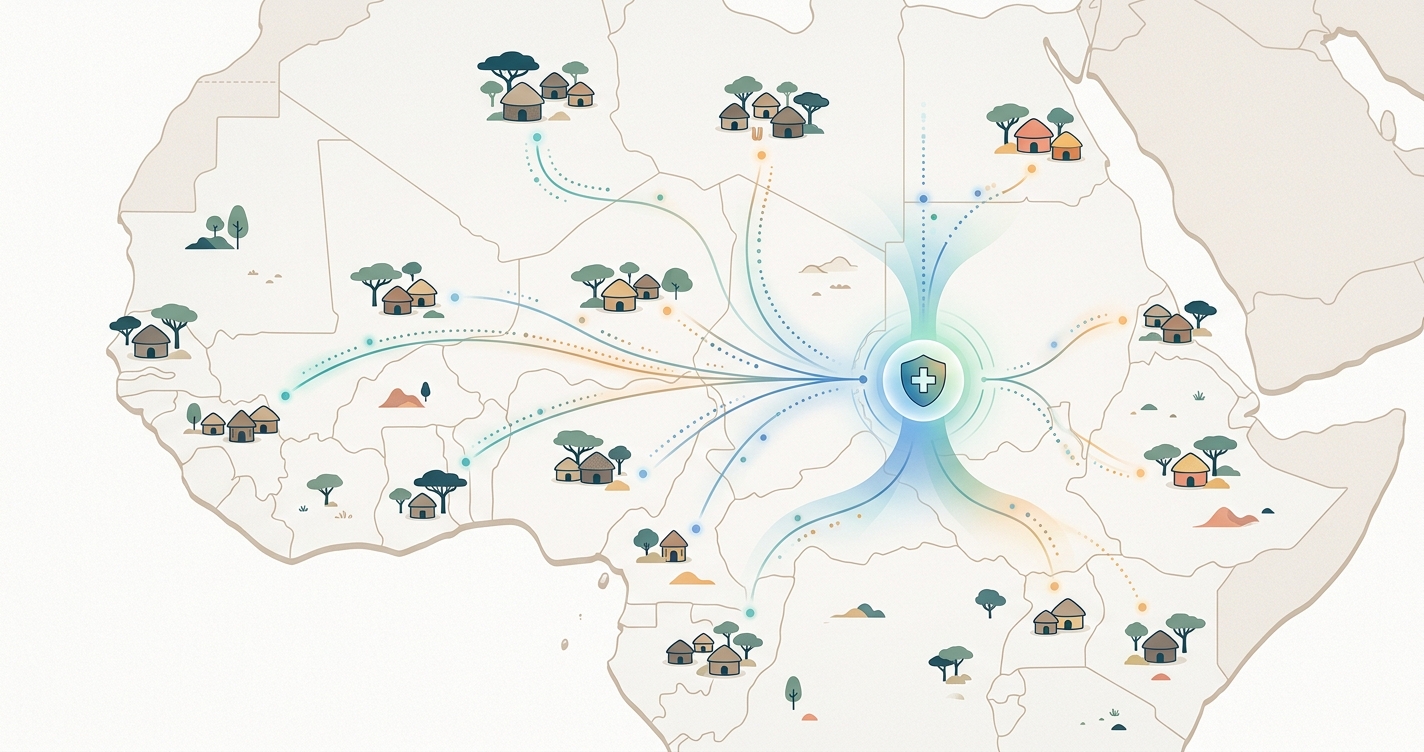
The aggregation of local health data into a national surveillance apparatus is one of the most significant undertakings in public health. The flow of information, from a single blood pressure reading taken in a remote village to a trend analysis dashboard in a ministry of health, represents a complex system of technology, process, and people. Understanding how village-level screening data national health surveillance systems are built and maintained is crucial for academics, policymakers, and grant-making bodies focused on global health outcomes. This is not just a data pipeline; it is the central nervous system of a country's public health strategy.
"In many settings, the most pressing health threats are first detected at the community level. A well-structured surveillance system that incorporates data from these frontline sources can provide the early warnings needed to prevent outbreaks and manage population health effectively." - Dr. Chikwe Ihekweazu, World Health Organization (2023)
The unseen data pipeline: from village to national view
The journey of village-level screening data to a national health surveillance system is fraught with challenges, but also immense potential. At its core, this process is about transforming millions of individual data points, a blood pressure reading in a Kenyan village, a malnutrition screening in rural Uganda, into a coherent, actionable national picture of public health. This transformation is not merely technical; it requires navigating complex social, logistical, and political landscapes. A critical challenge identified by multiple public health bodies is the fragmentation of data systems. Often, data is collected on paper or in disparate digital formats that do not communicate, creating "data silos" that prevent a holistic view. A 2021 global survey on surveillance system integration highlighted that a lack of standardized data submission methods is a primary barrier to effective national surveillance (World Health Organization, 2021). Furthermore, the technical infrastructure and expertise required to manage and analyze large volumes of data are often concentrated in urban centers, leaving rural and village-level operations under-resourced. When these fragmented data points are successfully aggregated, they can reveal subtle but significant patterns in non-communicable diseases (NCDs), maternal health indicators, and child nutrition. This allows for the strategic allocation of resources, such as deploying mobile clinics to a region with rising hypertension rates or launching targeted nutritional support programs.
| Data Aggregation Model | Description | Strengths | Weaknesses |
|---|---|---|---|
| Centralized | All data is sent directly to a single national server for processing and analysis. | High data consistency; simplified national-level analysis. | Can be slow; creates a single point of failure; requires significant connectivity. |
| Federated | Data is processed and stored at the district or regional level. Only aggregated insights are sent to the national level. | Faster local analysis; reduces national server load; more resilient. | Risk of inconsistent data definitions; complex to maintain. |
| Hybrid | A mix of centralized and federated models. Raw data is stored regionally, with key indicators pushed to a central system in near-real-time. | Balances local needs with national oversight; flexible. | Most complex to design and implement; requires clear data governance. |
Key considerations for integrating village-level data include:
- Interoperability: Ensuring that different software and data collection tools can "speak" to each other is foundational. This often involves adopting standards like FHIR (Fast Healthcare Interoperability Resources).
- Data Governance: Clear policies are needed to define who owns the data, who can access it, and for what purpose. This is essential for maintaining patient privacy and data security.
- Incentive Structures: Community health workers and local administrators must see the value in collecting and submitting high-quality data. Their feedback must be incorporated into program design.
- Scalability: The system must be able to grow from a small pilot in a few villages to a nationwide deployment without a complete overhaul.
Industry Applications
National health ministries
National health ministries are the primary consumers of aggregated surveillance data. They use it to monitor disease prevalence, track progress toward public health goals, and allocate budgets. For example, by analyzing screening data, a ministry can identify hotspots for a specific condition and direct resources accordingly.
Grant-Making Bodies & NGOs
Organizations funding public health initiatives rely on this data to assess the impact of their investments. Real-world data from village-level programs provides concrete evidence of whether an intervention is working, allowing for accountability and data-driven funding decisions.
Academic and research institutions
Researchers use anonymized, aggregated data to study population health trends, evaluate the effectiveness of different health interventions, and develop new public health strategies. Access to large-scale, longitudinal data from community screenings is invaluable for producing high-impact research.
Current research and evidence
The academic and public health communities are actively studying the best methods for this data-to-insight pipeline. A 2021 study by researchers at the Heidelberg Institute of Global Health in Germany analyzed DHIS2 (District Health Information Software 2) data from 47 countries. They found that while the platform has become a de facto standard for health data aggregation, its effectiveness is highly dependent on the quality of the initial data entry at the community level (Gisore, et al., 2021). This highlights the "garbage in, garbage out" principle; national systems are only as reliable as the village-level data that feeds them. Further evidence supports the value of integrating different types of health services. A Gavi, the Vaccine Alliance, report from 2022 showed that when services like childhood immunizations were offered alongside other humanitarian aid or routine health screenings, uptake increased significantly. This integrated approach Improves efficiency. Builds community trust. Similarly, the Social Science in Humanitarian Action Platform has published findings on the effectiveness of Community-Based Surveillance (CBS), which extends monitoring beyond formal health facilities. This approach uses local knowledge and social networks to provide a more resilient and responsive surveillance system.
The future of village-level data integration
The future of this field lies in real-time data flows and predictive analytics. As mobile connectivity improves and low-cost sensor technology becomes more widespread, the delay between data collection and national-level analysis will shrink. The ultimate goal is to create a system where a concerning trend detected in a cluster of villages can trigger an alert and a localized public health response within hours, not weeks or months. This requires Technological advancements. A continued focus on building the human capacity to manage and interpret data at all levels of the health system.
Frequently asked questions
Q: What is the biggest challenge in using village-level screening data for national health surveillance? A: The primary challenge is data quality and standardization. Data collected at the village level can be inconsistent, incomplete, or recorded in formats that are difficult to digitize and aggregate, which can compromise the reliability of the national-level insights.
Q: How is patient privacy protected when health data is aggregated? A: Patient data is typically anonymized or de-identified at the source before being transmitted to regional or national systems. Strong data governance policies, access controls, and encryption are used to ensure that individual identities are protected throughout the process.
Q: Can this data be used to predict disease outbreaks? A: Yes, that is a key goal. By analyzing real-time or near-real-time screening data for specific symptoms or biometric markers (e.g., fever clusters), public health officials can identify potential outbreaks earlier than with traditional reporting methods, enabling a faster and more effective response.
The insights generated from village-level data are fundamental to building responsive and equitable health systems. Circadify is actively working in this space, developing technologies that bridge the gap between community-level screening and national data infrastructure. To learn more about the latest research and collaborative opportunities, visit our research blog at circadify.com/blog.