How do remote clinics catch dangerous fevers without a single machine?
Discover how community health workers are using contactless mobile technology to detect fever and other vital signs, bridging the diagnostic gap in global health.
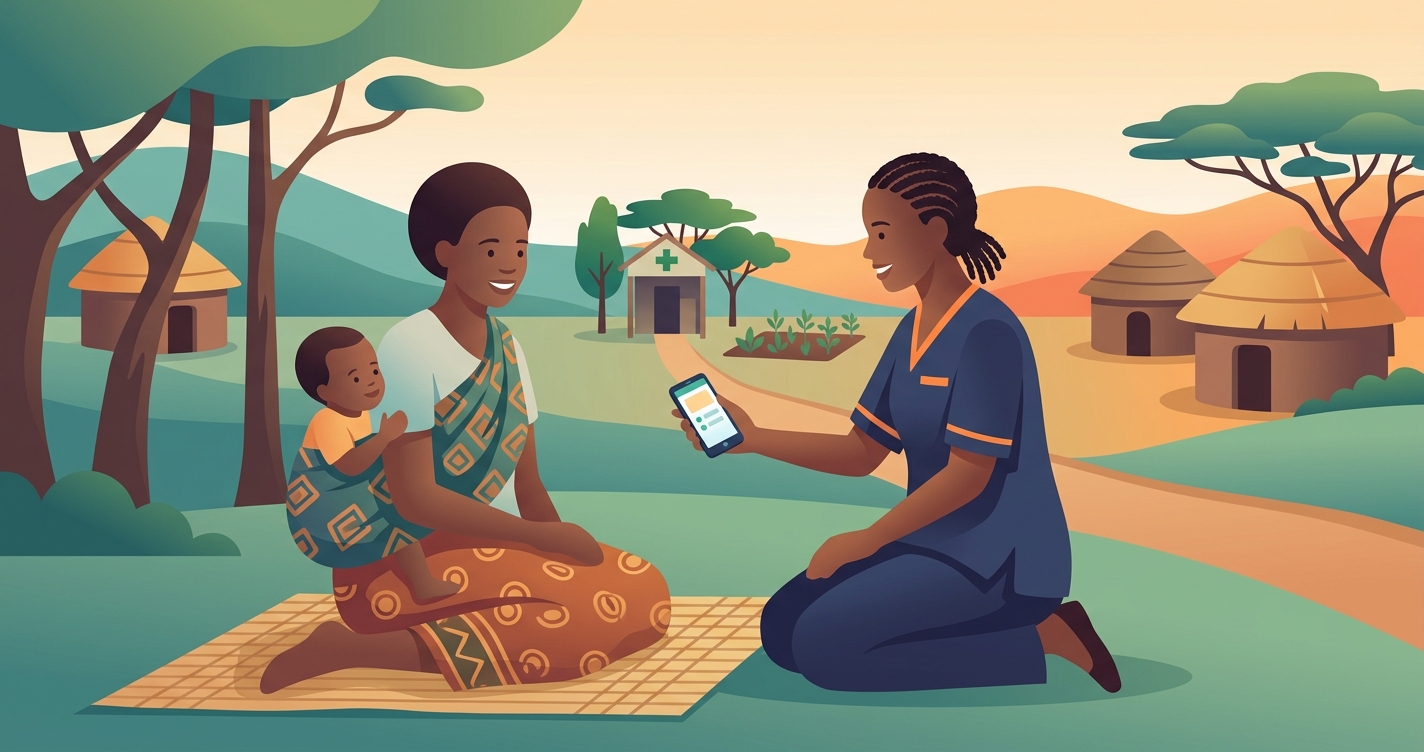
The ability to identify a dangerously high fever is a foundational component of frontline healthcare. In well-equipped clinical settings, a digital thermometer provides a definitive answer in seconds. But in thousands of remote and low-resource clinics globally, access to even basic diagnostic equipment is not a given. The challenge this presents is immense: How can a community health worker (CHW) or a clinic nurse accurately triage a sick patient, especially a child, when they cannot measure temperature? This diagnostic gap has profound consequences, leading to delayed treatment for serious infections like malaria and pneumonia. However, the proliferation of mobile technology is creating a new paradigm, showcasing a significant global health technology impact by turning ubiquitous smartphones into powerful screening tools.
"In many African settings, a child with a fever is presumptively treated for malaria, yet studies have shown that more than 50% of these children have a negative test for malaria parasites. This highlights the critical need for better diagnostic tools to differentiate febrile illnesses." - Dr. Jane Achan, et al., Malaria Journal, 2011.
The diagnostic gap and global health technology impact
For decades, the primary method for fever assessment without a thermometer has been tactile evaluation, a hand on the forehead. While intuitive, this method is notoriously unreliable. A 2018 study published in the Journal of Tropical Medicine and International Hygiene by Seidu et al. found a low sensitivity and specificity of tactile assessment for detecting fever in children in Ghana. This unreliability forces a difficult choice on health workers: either over-prescribe medications like antimalarials, contributing to drug resistance, or risk sending a seriously ill patient home without treatment. This is the critical gap where the global health technology impact is most visible.
New approaches use remote photoplethysmography (rPPG), a technology that uses the standard camera on a mobile phone to detect subtle changes in skin color caused by blood pulsating through vessels. From a short video of a person's face, algorithms can derive essential vital signs such as heart rate and respiratory rate. While a phone's camera cannot directly measure core body temperature like a thermometer, it can detect proxies for fever. Increased heart rate and changes in facial blood flow patterns are physiological responses to fever, and rPPG can quantify these changes, providing a reliable indication of a febrile state. This allows a CHW to move from a subjective guess to an objective, data-driven assessment.
Comparing fever screening methods
| Feature | Traditional Assessment (Tactile) | Contactless Vital Sign Screening (rPPG) |
|---|---|---|
| Primary Indicator | Subjective warmth of skin | Heart rate, respiratory rate, facial blood flow changes |
| Accuracy | Low to moderate; operator dependent | High correlation with clinical measurements |
| Objectivity | Low (subjective perception) | High (algorithmic analysis) |
| Data Capture | None; reliant on memory or manual entry | Automatic digital record, GPS-tagged, time-stamped |
| Scalability | Limited by human training and fatigue | Highly scalable; software-based |
| Equipment Cost | Zero (requires no equipment) | Requires a basic smartphone |
| Training Required | Minimal, but prone to variability | Moderate; focused on proper use of the application |
Deployment models in community health
The use of contactless screening is not a single, monolithic solution. Its flexibility allows for several effective deployment models that are already showing a positive global health technology impact.
- Proactive Household Screening: CHWs equipped with smartphones can move door-to-door, performing rapid health checks on entire families. This is particularly effective for early identification of infectious disease clusters.
- Triage at Primary Care Facilities: At the clinic level, a quick contactless scan can help a busy nurse prioritize patients, ensuring those with the most alarming vital signs are seen first.
- Antenatal Care Monitoring: For pregnant women, regular monitoring of vital signs is crucial. Contactless screening allows for more frequent and accessible check-ins, even between formal clinic visits.
- School Health Programs: Screenings at schools can identify illness in children who may not be able to articulate their symptoms, helping to prevent outbreaks and inform parents.
Current research and evidence
The evidence base for contactless vital sign monitoring is growing rapidly. A systematic review by Unmanned Systems in 2020 analyzed numerous studies on vision-based vital sign monitoring, confirming the strong correlation between rPPG-derived measurements and those from conventional medical devices. Researchers from institutions like the University of South Australia and the University of Washington have published key papers on the accuracy of camera-based heart rate and respiratory rate.
In the context of fever, a 2021 study in the journal Sensors by Lewis et al. demonstrated that thermal imaging combined with rPPG could effectively screen for febrile individuals in a non-contact manner. While thermal cameras are not as common as standard RGB cameras, the research validates the underlying principle that physiological data from the face can be used to detect fever. The most significant advance for low-resource settings remains the ability to extract these proxies from the standard cameras already in millions of people's pockets.
The future of remote diagnostics
The trajectory of this technology is pointing towards more comprehensive, AI-driven analysis. In the near future, it is conceivable that a single 30-second video could provide not just vital signs, but also assess for other physical indicators of illness, such as jaundice or respiratory distress. As these algorithms are trained on more diverse datasets from global populations, their accuracy and utility will only increase. This represents a fundamental shift from a reactive to a proactive model of community health, powered by accessible technology. The long-term global health technology impact will be measured in faster referrals, more appropriate treatments, and ultimately, lives saved.
Frequently asked questions
Q: Can a phone camera really measure my temperature?
A: Not directly like a thermometer. Instead of measuring absolute temperature, the technology uses the camera to measure vital signs that are strong proxies for fever, such as elevated heart rate and changes in blood flow patterns in the face. It provides a reliable indication that a person is febrile.
Q: What kind of training do community health workers need?
A: Health workers need training on how to properly position the person, how to initiate the scan using the mobile application, and how to interpret the results provided by the software. The focus is less on the complex physiology and more on standardized, repeatable use of the tool to ensure quality data.
Q: How does this data help the broader health system?
A: Each scan can be logged with a time and location stamp. When aggregated, this data provides public health officials with a real-time map of a region's health, allowing them to spot potential outbreaks, allocate resources more effectively, and understand health trends at a population level.
Circadify is at the forefront of addressing these challenges, developing and deploying technologies that empower frontline health workers. Our work focuses on turning real-world evidence from community deployments into robust, scalable solutions that have a meaningful impact on global health outcomes. For academic researchers, public health institutions, and grant-making bodies interested in collaborating or learning more from our extensive field research, we invite you to explore our findings and publications at circadify.com/blog (research).