
How can a village clinic spot a sick child before it's too late?
Exploring the impact of early warning systems and mobile health technology used by community health workers to identify and triage sick children in low-resource settings.
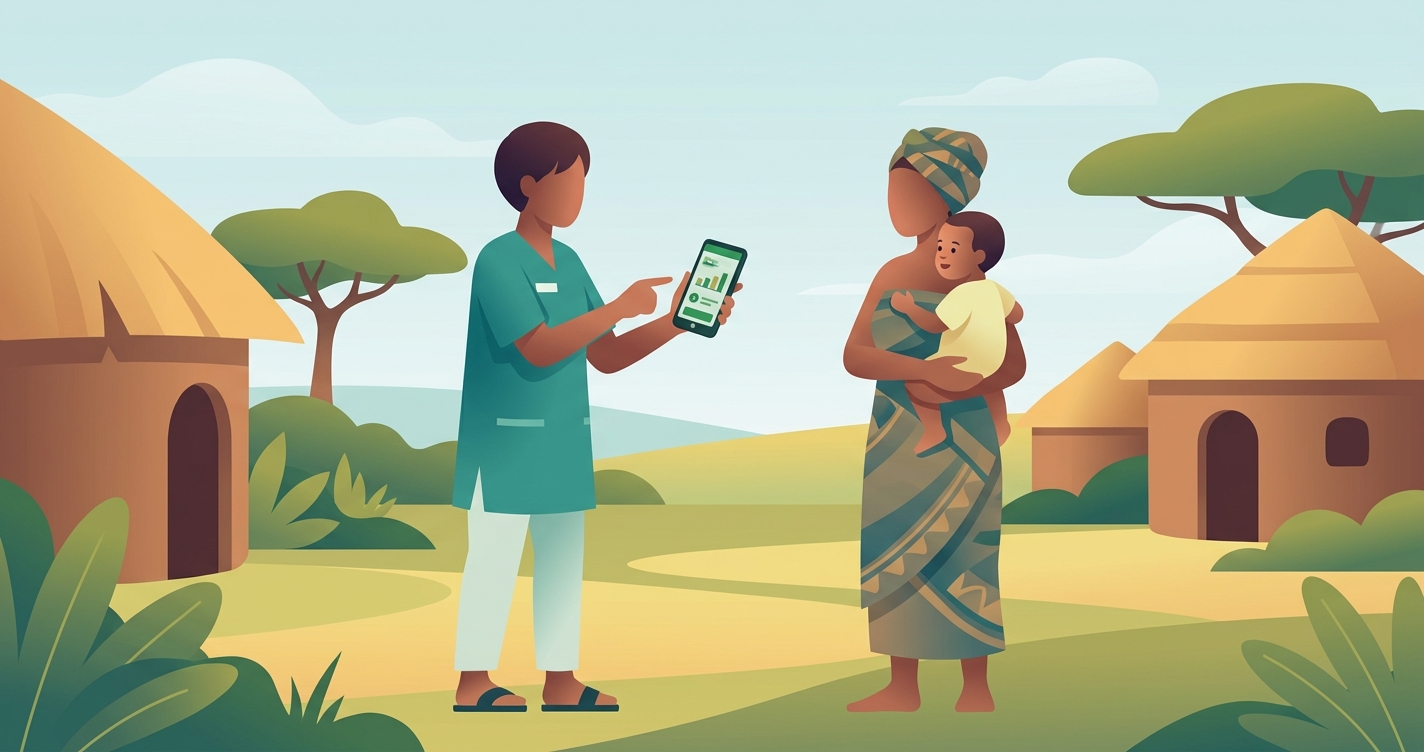
In many rural and under-resourced regions, the tragedy of preventable child mortality is often not a failure of treatment, but a failure of timely recognition. A child who presents at a local clinic with what appears to be a common illness can deteriorate rapidly, and the subtle physiological signs of this decline are easy to miss. For community health workers and clinic staff working with limited resources and high patient loads, the ability to quickly and accurately identify a child in need of urgent, higher-level care is a daily challenge. This gap in early identification represents one of the most critical use points for improving pediatric outcomes in global health.
"Globally, an estimated 75% of deaths in children under 5 years of age are preventable. A significant portion of these are due to delays in diagnosing the severity of an illness and initiating appropriate care." - World Health Organization (2023)
The challenge of early detection and the global health technology impact
The physiological signs of a child's rapid decline into sepsis or severe respiratory distress can be subtle and easily confused with less severe illnesses. A slightly elevated heart rate, a faster respiratory rate, or a small change in circulation might not be immediately alarming when assessed in isolation. Without a systematic framework for evaluating these signs together, frontline health workers rely on subjective judgment, which can vary widely based on experience and training. This is where the global health technology impact is most profound, shifting the paradigm from subjective assessment to objective, data-driven triage. Structured systems like Pediatric Early Warning Scores (PEWS) provide a standardized method for recognizing at-risk children before a crisis occurs. These systems aggregate vital signs and clinical observations into a single score that immediately flags a child's risk of deterioration, prompting a more urgent clinical response.
| Feature | Traditional Assessment | Standardized PEWS Assessment |
|---|---|---|
| Objectivity | Highly subjective; based on individual clinician's experience. | Objective; based on a validated scoring system of vital signs. |
| Consistency | Varies significantly between different health workers and shifts. | High; provides a common language and consistent benchmark for risk. |
| Early Detection | Often identifies deterioration only after clear signs have emerged. | Designed to detect subtle, early signs of decline hours before a crisis. |
| Referral Trigger | Based on "gut feeling" or obvious signs of severe distress. | A specific score threshold triggers an immediate, clear referral protocol. |
| Data Utility | Anecdotal; difficult to aggregate for program evaluation. | Generates structured data for monitoring quality and public health trends. |
Industry Applications
The true potential of early warning systems is realized when they are deployed beyond hospital walls and into the community. This is made possible by empowering community health workers (CHWs) with simple, robust digital tools.
- Point-of-Care Screening: CHWs equipped with smartphone apps can administer a modified PEWS assessment during home visits or at community health posts.
- Guided Triage: The application can guide the CHW through the assessment, calculate the risk score automatically, and provide a clear directive, such as "Refer to clinic immediately" or "Monitor and follow up in 24 hours."
- Reduced Referral Delays: By providing objective evidence, these tools empower CHWs to make confident referral decisions, reducing the critical time between the onset of severe illness and the start of treatment.
- Improved Data Flow: Screening data is transmitted in near real-time to central health information systems, giving district health managers an unprecedented view of population health and illness patterns.
### Equipping CHWs with Digital Tools
The proliferation of mobile phones across Africa and South Asia has created a platform for deploying powerful clinical tools. An app-based PEWS system requires minimal hardware beyond a basic smartphone and, potentially, a low-cost pulse oximeter. This approach turns every CHW into a node in a sophisticated health surveillance network, extending the reach of the formal health system directly into the homes of vulnerable families.
### streamlining referral pathways
A significant global health technology impact is seen in the optimization of referral pathways. When a CHW refers a child with a high PEWS score, the receiving clinic is alerted and can prepare. This data-driven process ensures that the sickest children are prioritized, and that clinic resources are used more efficiently. It replaces a system where all sick children may arrive at a clinic at once with little to no pre-arrival information.
Current research and evidence
The effectiveness of PEWS, including modified versions for low-resource settings, is well-documented. A scoping review by researchers at the University of British Columbia and BC Children's Hospital (2020) analyzed implementations of PEWS and found they were feasible and could lead to improved interdisciplinary communication and patient care. Studies in Uganda on digital triage platforms like "Smart Triage" have shown that these tools help healthcare providers, including those at the community level, more rapidly and accurately identify critically ill children. For instance, research published in PLOS One highlighted how a digital platform combined with a quality improvement initiative improved pediatric care in a Ugandan referral hospital by structuring the triage process and providing immediate, data-driven risk categorization. This work underscores that the global health technology impact is not just about the tool itself, but about coupling it with strong implementation and quality improvement processes.
The future of pediatric screening technology
The next frontier in pediatric early warning systems is the integration of contactless monitoring technologies. Using remote photoplethysmography (rPPG), a health worker could obtain vital signs like heart rate and respiratory rate from a child simply by capturing a short video on their smartphone. This removes the need for physical contact, which can be challenging with a distressed child, and reduces the requirement for additional hardware. When combined with machine learning algorithms, these systems could offer even more predictive power, identifying patterns in vital sign data that are imperceptible to human observers. This technology promises to further scale the ability of community-based programs to screen large populations of children with minimal friction.
Frequently asked questions
Q: What is a Pediatric Early Warning Score (PEWS)? A: A PEWS is a standardized tool used to assess a child's risk of clinical deterioration. It combines several vital signs (like heart rate, respiratory rate) and clinical observations into a single number. A higher score indicates a higher risk and triggers a more urgent clinical response or referral.
Q: Can community health workers really use this kind of technology effectively? A: Yes. Research and field deployments show that when digital tools are designed for simplicity and coupled with focused training, community health workers are highly effective at using them. App-based workflows guide them through the process, minimizing the chance of error and increasing their confidence.
Q: How does this technology improve on what clinics already do? A: It standardizes and adds objectivity to the triage process. In many busy clinics, assessment can be subjective and inconsistent. A digital PEWS tool ensures every child is assessed against the same criteria, creating a safety net to catch subtle signs of deterioration that might otherwise be missed. It also provides valuable data for health system management.
The ability to spot a sick child before it's too late is a cornerstone of a resilient health system. As the research shows, the global health technology impact is greatest when it empowers frontline health workers with tools that are simple, scalable, and directly address a critical gap in care. Circadify is actively working in this space, developing and deploying technologies that help partners identify at-risk individuals and strengthen referral pathways. For academic researchers, public health institutions, and grant-making bodies interested in collaborating on publication-ready field research and program outcomes, we encourage you to explore our work and connect with our team at circadify.com/blog.