How Contactless Screening Improved Antenatal Visit Rates in Rural Uganda
An analysis of how contactless screening technology deployed by community health workers is overcoming traditional barriers to improve antenatal visit rates in rural Uganda.
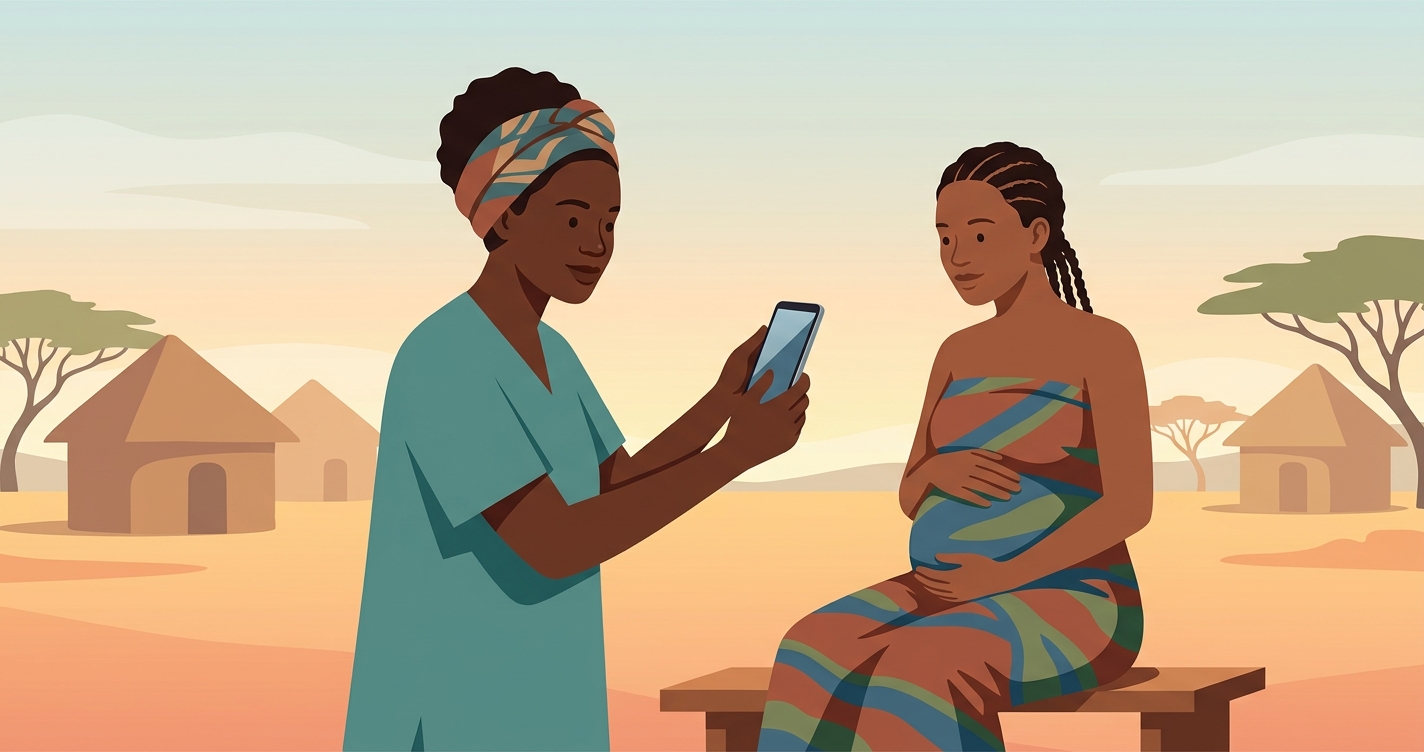
The challenge of ensuring consistent antenatal care (ANC) for pregnant women in rural and remote regions remains a significant focus for global health programs. In Uganda, where geography, cost, and information gaps create substantial barriers to clinic access, the World Health Organization's recommendation of at least eight ANC contacts is often difficult to achieve. The consequences of missed visits are well-documented, leading to delayed identification of high-risk pregnancies and contributing to preventable maternal and infant mortality. However, a new generation of health technology, specifically contactless screening deployed by community health workers (CHWs), is showing significant promise in changing this dynamic by taking essential screening services directly to the communities that need them most.
"A meta-analysis of mHealth interventions in low- and middle-income countries found that they significantly increased the likelihood of women attending the recommended number of antenatal care visits, with some studies showing a doubling of attendance for four or more visits." - Sonda, et al. (2019)
The role of contactless screening in antenatal visit rates in rural uganda
The primary obstacle to improving contactless screening antenatal visit rates in rural Uganda is not a lack of willingness among expectant mothers, but a series of systemic barriers. Research from institutions like Makerere University highlights transportation costs, long waiting times at clinics, and perceived poor quality of care as major deterrents. Contactless screening, facilitated by CHWs equipped with smartphone-based applications, directly addresses these issues. By decentralizing the initial stages of screening, this model reduces the need for costly and time-consuming travel for what might be a routine check-up. It allows CHWs to conduct regular, low-friction assessments of vital signs like heart rate, respiratory rate, and blood pressure using a device already in their hands. This approach transforms the dynamic of care, moving from a reactive, patient-initiated model to a proactive, community-based one. Early data suggests that this proactive engagement builds trust and provides the data-driven reassurance needed to encourage women to attend their crucial clinic-based appointments.
| Feature | Traditional Antenatal Screening | CHW-Led Contactless Screening |
|---|---|---|
| Location | Centralized clinic or health post | Patient's home or community setting |
| Primary Barrier | Patient travel time and cost | CHW availability and training |
| Data Capture | Manual, paper-based records | Digital, real-time sync to cloud |
| Screening Time | 20-30 minutes per patient (excluding travel/wait) | 2-5 minutes per patient |
| Required Equipment | BP cuff, thermometer, stethoscope | Smartphone with specialized app |
| Follow-up | Patient-dependent | Automated reminders & CHW scheduling |
Industry Applications
The model of using CHWs for community-level screening is gaining significant traction, with programs showing measurable success. The implications for public health institutions, researchers, and grant-making bodies are profound.
Program design and deployment
Health ministries and NGOs can design more efficient and effective maternal health programs. A study in Lesotho, where CHWs were trained to screen for high blood pressure using tablet-based apps, demonstrated that a community-based model led to better health outcomes than traditional clinic-based care. Applying this to antenatal screening in Uganda could involve equipping Village Health Teams (VHTs) with contactless screening tools to triage and monitor pregnant women in their catchment areas. This approach allows skilled clinical staff to focus on high-risk cases and confirmed appointments, optimizing limited resources.
Data for policy and research
For academic researchers and public health institutions, the real-time data generated by these programs is invaluable. Aggregated, anonymized data from village-level screenings can illuminate regional health trends, identify hotspots of specific risk factors, and provide an evidence base for policy decisions. This data stream supports the kind of real-world evidence gathering that is increasingly valued by grant-making bodies for evaluating mHealth outcomes, moving beyond traditional randomized controlled trials.
Resource Allocation
Grant-making bodies can have greater confidence that their funding is being used efficiently. By reducing the reliance on physical clinic infrastructure for routine screening, digital health programs can achieve greater scale and impact per dollar invested. The ability of CHWs in Rwanda to manage over half of screened individuals at the community level using a digital tool, as noted in a 2023 study, shows how technology can reduce unnecessary referrals and focus resources where they are most needed.
Current research and evidence
The evidence base supporting mHealth interventions in antenatal care is growing. A systematic review published in the Journal of Medical Internet Research (2022) confirmed that interventions like SMS reminders and mobile applications are effective at increasing ANC attendance and skilled delivery rates. Research conducted in southwestern Uganda specifically on mobile apps found they were highly acceptable to rural women and had the potential to improve health knowledge and practices. While much of this research has focused on mHealth broadly, the operational success of CHW-led digital screening programs in Lesotho and Rwanda provides a strong proxy for the specific benefits of a contactless approach. These studies, such as the one led by the Ministry of Health in Lesotho in 2018, prove the feasibility of training and equipping CHWs to perform vital health screening functions reliably at scale.
The future of antenatal screening
The trajectory of antenatal care in remote settings is moving towards a hybrid model. Clinics and skilled birth attendants remain the cornerstone of maternal health, but their reach can be extended exponentially through technology. The future involves integrating contactless screening data directly into national health information systems, creating a seamless link between community-level observations and clinical intervention. As these platforms evolve, they may incorporate AI-driven risk stratification, alerting CHWs and clinic supervisors to subtle signs of potential complications before they become critical. The key to this future is not the technology alone, but the continued empowerment of community health workers as trusted, digitally-enabled agents of front-line care.
Frequently asked questions
What is "contactless screening" in this context?
- It refers to technology that uses a smartphone's camera to measure vital signs like heart rate, respiratory rate, and blood pressure variability. A community health worker can perform a scan in minutes without needing traditional medical cuffs or probes.
Does this replace the need for clinic visits?
- No. Contactless screening is a tool for monitoring, triage, and engagement. It helps ensure that women attend their scheduled clinic visits and provides an early warning system for potential issues, but it does not replace diagnosis or treatment by a qualified clinician.
How is this different from sending SMS reminders?
- While SMS reminders have been shown to be effective, a contactless screening visit involves a direct, in-person interaction with a community health worker. This builds trust, allows for visual assessment, and captures objective physiological data, providing a much richer and more proactive engagement than a simple text message.
This shift towards community-based, technology-enabled screening is a critical step in addressing the persistent challenges of maternal health in rural Uganda. By using the trusted network of community health workers, these programs break down long-standing barriers to access and pave the way for more responsive and resilient health systems. Circadify is actively engaged in developing and assessing the impact of these technologies in the field. For academic researchers, public health organizations, and grant-making bodies interested in collaborating on field studies and program evaluations, we invite you to connect with our research team through our research page.