
How do health programs track thousands of people's well-being without touching anyone?
How contactless health screening outcomes are measured at population scale, the logistics of non-invasive monitoring, and what the field evidence shows.
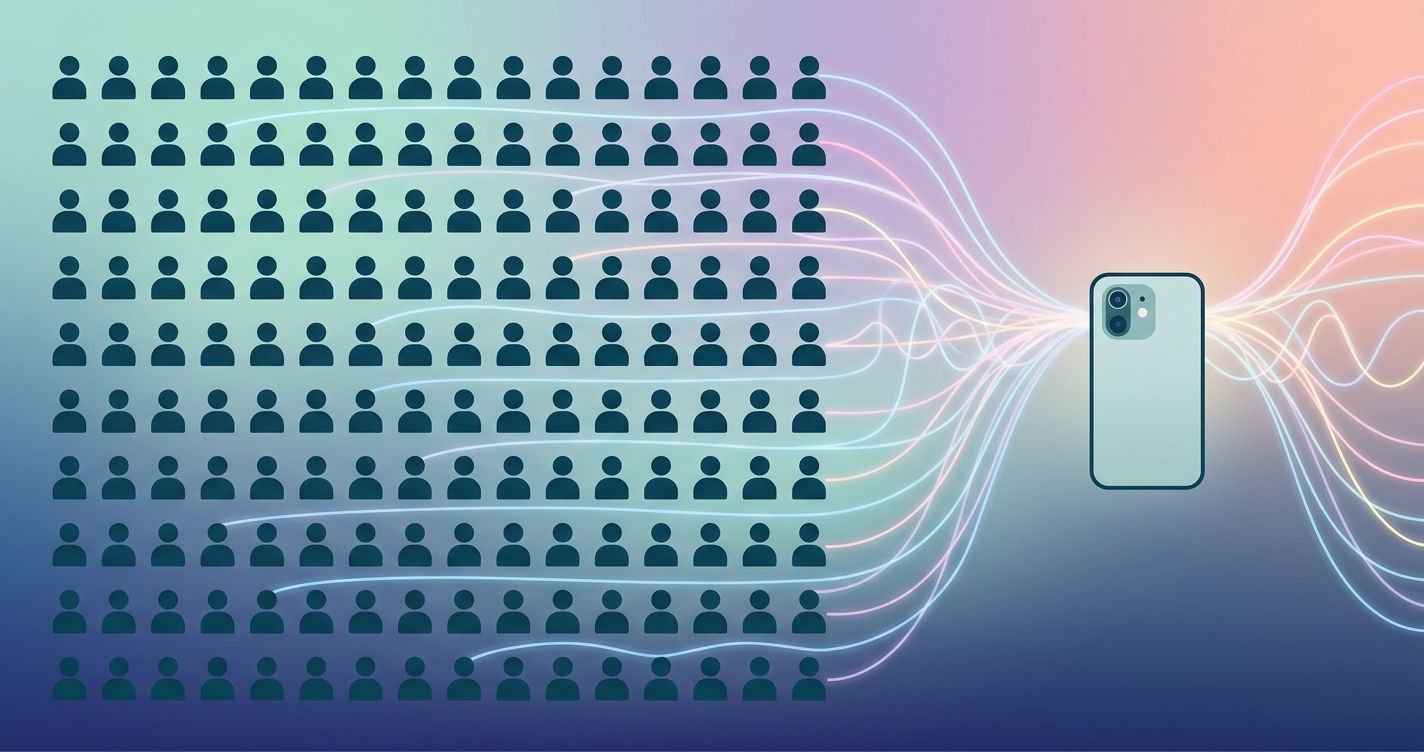
A district health team in rural East Africa can now register, screen, and triage several hundred people in a single market day without unwrapping a blood pressure cuff or sterilizing a single probe. That sentence would have read as fantasy a decade ago. Today it describes a working logistics model, and the question every program officer eventually asks is a practical one: how do you measure contactless health screening outcomes across thousands of people when no clinician ever touches a patient? The answer is less about a single camera-based measurement and more about the operational chain that turns a thirty-second face scan into a referral, a data point, and eventually a population-level signal that funders and ministries can act on.
"Remote photoplethysmography utilizes standard cameras to capture subtle skin color changes caused by blood flow, with heart rate measurements demonstrating mean absolute errors as low as 1.061 bpm in controlled studies." - Non-Contact Vision-Based Techniques of Vital Sign Monitoring, systematic review, MDPI Sensors, 2023
What contactless health screening outcomes actually measure
The phrase "without touching anyone" points to a specific class of technology: remote photoplethysmography, or rPPG. A standard smartphone or tablet camera records minute color shifts in facial skin caused by the cardiac pulse. Signal processing converts those shifts into heart rate, respiration rate, heart rate variability, and in some implementations an estimate of oxygen saturation. No cuff, no probe, no consumable that has to be reordered, sterilized, or carried up a hill.
For a population health program, the outcome of interest is rarely a single person's pulse. It is the aggregate: how many people were reached, how many flagged values were caught, how many of those flagged people completed a referral, and whether any of this shifted a measurable indicator such as antenatal visit rates or hypertension follow-up. Contactless screening changes the unit economics of all four. When the measurement device is a phone the worker already carries, the marginal cost of one more screening approaches zero, and the binding constraint shifts from equipment to the human and data systems around it.
This is the part that surprises new programs. The camera is the easy part. The hard part is the chain that connects a reading to an action and then to verifiable evidence of impact.
| Screening approach | Cost per added person | Throughput per worker-day | Consumables and maintenance | Data captured automatically | Primary failure point |
|---|---|---|---|---|---|
| Manual cuff and thermometer | Moderate, recurring | Low to moderate | Cuffs, batteries, calibration | Rare, paper registers | Equipment supply and transcription error |
| Wearable distribution | High upfront per unit | Continuous but limited cohort | Charging, replacement, loss | High, but device-bound | Device loss and cohort attrition |
| Contactless rPPG via phone | Very low | High | None beyond the phone | High, geotagged and timestamped | Lighting, motion, referral follow-through |
| Hybrid (rPPG plus selective confirmatory) | Low to moderate | High | Minimal | High | Coordination between tiers |
The table makes the logistical case plain. Contactless screening removes the consumable and transcription bottlenecks that quietly cap traditional programs. What it does not remove is the need for a referral pathway and a data pipeline. Those determine whether a screening becomes an outcome or just a number in a register.
The logistics of touching no one at scale
Reaching thousands of people non-invasively breaks down into a handful of repeatable operational components. Each one is where programs either succeed or stall.
- Enrollment and identity: every screening needs a durable identifier so repeat visits and referrals can be linked. Without this, longitudinal outcomes are impossible to compute.
- Capture conditions: rPPG accuracy is sensitive to ambient light, motion, and elevated heart rates. Field protocols that standardize shade, seating, and a brief rest period materially improve signal quality.
- Edge processing and connectivity: many deployments run the analysis on the device and sync later, because rural connectivity is intermittent. The data architecture has to assume offline-first operation.
- Triage thresholds: a flagged reading is only useful if the cutoff is calibrated to the population and to the capacity of the referral system to absorb the people it flags.
- Referral and confirmation: contactless screening is a sorting tool, not a diagnosis. The outcome that matters to funders is what happens after the scan.
The reason this matters for measurement is that contactless health screening outcomes are produced by the whole chain, not the sensor. A program can have an excellent camera algorithm and still report poor outcomes if referrals evaporate after the scan. Several existing field analyses in this blog, including our look at referral pathways and at how district offices reduced referral delays with screening data, point to the same conclusion: the post-scan workflow is where impact is won or lost.
Industry Applications
Maternal and antenatal programs
Contactless vitals fit naturally into antenatal outreach, where the goal is to bring more pregnant women into the care system earlier and more often. A non-invasive screen lowers the friction of a first contact and creates a data trail that links a community encounter to a clinic visit. Programs tracking antenatal visit completion can attribute changes to the screening touchpoint when enrollment identifiers are consistent.
School and youth health surveillance
Schools offer dense, repeatable cohorts. A single worker can screen an entire class in the time a manual approach would handle a handful of students. The outcome metric here is coverage and the detection of values that warrant a parent notification, with throughput being the decisive advantage.
Population surveillance and outbreak monitoring
Aggregated, geotagged vitals collected over weeks become a low-cost surveillance layer. Respiration rate and heart rate distributions across a district can hint at clusters worth investigating, feeding the kind of village-to-national data flow that several public health systems are now formalizing.
Current research and evidence
The measurement science behind contactless screening has matured quickly. A 2023 systematic review of non-contact vital sign monitoring published in MDPI Sensors reported heart rate mean absolute errors as low as 1.061 bpm and oxygen saturation errors near 1.64 percent under controlled conditions, while cautioning that accuracy degrades with motion, variable lighting, skin tone diversity, and elevated heart rates. A 2024 review informed by clinical rPPG work, indexed in PubMed and Frontiers, reached a similar split verdict: heart rate and oxygen saturation are strong, while blood pressure and respiration estimates remain moderate and depend heavily on the deployment environment.
The deployment evidence is equally instructive. Frost and Sullivan Institute analysis from 2024 documented India's eSanjeevani telehealth platform surpassing 200 million teleconsultations, with 71 percent of users in rural areas, demonstrating that digital-first health logistics scale in exactly the settings traditional infrastructure underserves. A 30-country survey reported in 2024 also found digital health literacy was highest in several low- and middle-income countries, undercutting the assumption that scalable digital screening only works where wealth is concentrated.
Two cautions recur across this literature. First, controlled-lab accuracy is an upper bound, not a field guarantee, which is why real-world deployment data matters more than benchmark numbers. Second, equity in performance across skin tones and conditions is an open research priority that any serious population program must monitor in its own data rather than assume.
The Future of contactless health screening outcomes
The next phase is less about new sensors and more about evidence infrastructure. Three shifts are visible. Confirmatory hybrid models will pair high-throughput contactless triage with selective, targeted confirmatory measurement, optimizing both reach and reliability. Standardized outcome reporting will let programs compare apples to apples, moving the field past activity counts toward referral completion and indicator change. And continuous population dashboards will turn one-off screening campaigns into persistent surveillance assets that grant-making bodies can fund as durable infrastructure rather than discrete pilots.
For institutions evaluating where to invest, the strategic insight is that the camera has commoditized; the differentiator is the measured chain from scan to outcome. Programs that instrument that whole chain will own the evidence base the next funding cycle demands.
Frequently asked questions
How can a program measure outcomes if no one is physically examined? Outcomes are computed from the operational chain, not the touch. Each contactless screening generates a timestamped, identified data point. Linking those points to referrals and to clinic-level indicators such as visit completion or follow-up rates produces measurable outcomes without any physical contact.
Is contactless screening accurate enough for population programs? For heart rate and oxygen saturation, peer-reviewed reviews report strong agreement with reference devices under good conditions. Blood pressure and respiration estimates are more variable. For population screening, the relevant standard is reliable triage and sorting, not diagnosis, which contactless methods support well when field protocols control lighting and motion.
What is the biggest logistical risk at scale? Referral follow-through. The screening itself is cheap and fast, but a flagged reading only becomes an outcome if the person reaches confirmatory care. Programs that under-invest in referral pathways report high screening counts and weak impact.
How do funders verify impact rather than activity? By requiring outcome metrics beyond headcount: referral completion rates, time-to-follow-up, and movement in a defined health indicator, all traceable through consistent participant identifiers and offline-first data capture.
Circadify is working alongside public health institutions and researchers to build the measured, end-to-end evidence base that contactless population screening requires, from field protocol to outcome reporting. Institutions and grant-making bodies seeking scalable, non-invasive monitoring with verifiable impact can explore the research and collaboration opportunities at circadify.com/blog.