Community Health Program Outcomes in 2026: What the Data Shows
A research-based look at how community health program outcomes will be measured in 2026, focusing on the shift from activity metrics to data-driven impact.
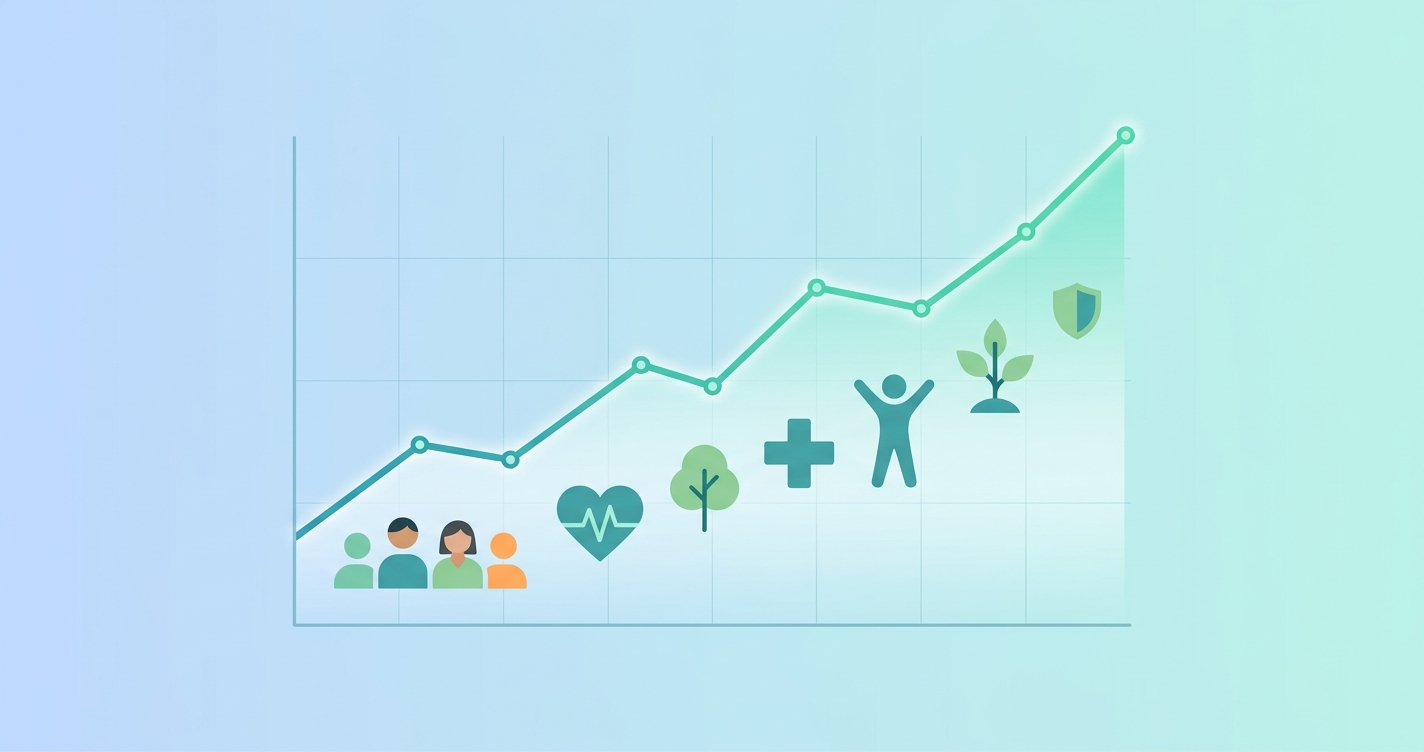
The conversation around global health program evaluation is undergoing a significant transformation. For decades, the primary metrics of success were based on inputs and activities: the number of health workers trained, clinics supplied, or educational pamphlets distributed. While essential, these figures stop short of measuring tangible health outcomes. As we look toward the near future, the focus is shifting from if a program is running to how it is performing, driven by an unprecedented wave of data from the field. Understanding the future of community health program outcomes 2026 data is critical for anyone involved in funding, implementing, or studying these vital initiatives.
"A 2023 analysis of digital health maturity across 67 countries revealed that while infrastructure is growing, only a minority of nations have developed formal guidance on how to evaluate digital health interventions, a critical step for ensuring their quality and safety." - Adapted from the World Health Organization's 2023 reporting.
The emerging landscape of community health data
The core change in evaluating community health programs lies in the transition from analog, activity-based tracking to digital, outcome-oriented measurement. Historically, a program's success might be demonstrated by tallying patient visits or the number of screenings conducted. These are useful operational metrics but provide limited insight into whether the health of the community is actually improving. The analysis of community health program outcomes 2026 data will rely on a new generation of tools and methodologies that capture the entire patient journey, from initial screening to referral and treatment adherence.
This shift is not merely about replacing paper forms with tablets. It represents a fundamental change in what we choose to measure. Instead of simply noting that a person was screened, new systems can track whether their detection of high blood pressure led to a clinical follow-up, if they received a prescription, and whether their condition is being managed over time. This longitudinal visibility is the cornerstone of modern program evaluation, allowing for a much richer and more accurate assessment of a program's true impact.
| Metric Type | Traditional Measurement (c. 2020) | Data-Driven Measurement (c. 2026) |
|---|---|---|
| Program Reach | Number of people screened | Demographic and geographic coverage analysis; identification of underserved populations. |
| Referral Success | Number of referral slips issued | Percentage of completed referrals confirmed by clinic records; average time-to-treatment. |
| Health Worker Performance | Number of shifts completed; attendance logs | Patient load management; accuracy of data collection; adherence to clinical pathways. |
| Health Outcomes | Anecdotal reports; periodic surveys | Longitudinal health metric tracking (e.g., blood pressure reduction); disease prevalence mapping. |
Key performance indicators are becoming more sophisticated, moving beyond simple counts to nuanced, data-rich insights.
- Referral Completion Rates: Tracking the full loop from a field-based screening to a confirmed facility visit.
- Time-to-Intervention: Measuring the delay between initial detection of a health issue and the start of a treatment plan.
- Patient Adherence: Monitoring if patients are following prescribed health protocols over weeks or months.
- Population Health Trends: Aggregating anonymized data to map disease hotspots and allocate resources more effectively.
Industry Applications
This new paradigm for measuring community health program outcomes has distinct implications for different stakeholders across the global health ecosystem.
For grant-making bodies
Funders are increasingly demanding robust evidence of impact. The ability to present clear, data-backed outcomes rather than just activity logs will become the standard for securing and renewing grants. Organizations that can demonstrate a measurable reduction in hypertension in a specific district, for example, will be far more competitive than those who can only report the number of screenings they performed.
For public health institutions
Ministries of Health and other public bodies can use granular outcome data to inform policy and resource allocation. If data shows that referral pathways are breaking down in a particular region, they can intervene with targeted training or logistical support. This real-time feedback loop allows for more agile and responsive public health management, a stark contrast to relying on annual, often outdated, reports.
For academic researchers
The rise of real-world evidence (RWE) from community health programs is a significant development for academic research. While randomized controlled trials (RCTs) remain a gold standard for specific clinical questions, RWE provides invaluable insight into how interventions perform in uncontrolled, real-world settings. This data is essential for understanding the dozens of contextual factors that influence program success.
Current research and evidence
The academic and institutional groundwork for this data-centric future is already being laid. Researchers are actively developing and validating new models for evaluating digital health interventions. A key challenge, highlighted in recent work, is the need for standardized evaluation frameworks. According to a 2023 flagship report from the WHO Regional Office for Europe, "Digital Health in the WHO European Region," many countries still lack a dedicated entity for the oversight and evaluation of mobile health applications, which impedes consistent quality assessment.
Further emphasizing this trend, "The State of Digital Health 2023" report, a global analysis supported by the WHO, noted a significant expansion in digital health monitoring. The Global Digital Health Monitor (GDHM), a tool for assessing country-level digital health maturity, grew its participation from 22 countries in 2018 to 67 in 2023. This expansion reflects a growing global commitment to data-driven health systems. However, the report also implicitly highlights the gap that remains: as more data is collected, the need for rigorous, standardized methods to analyze community health program outcomes 2026 data becomes more urgent. The research community is focused on closing this gap, developing best practices for everything from data privacy in low-resource settings to the statistical methods required to infer causality from observational data.
The future of community health data analytics
Looking ahead, the analytics applied to community health data will likely move from descriptive to predictive. By analyzing large-scale datasets collected over time, it may become possible to forecast disease outbreaks, identify at-risk individuals before they present symptoms, and model the likely impact of different health interventions. This requires robust data infrastructure, interoperability between different digital health systems, and the continued refinement of analytical methods, goals outlined in the WHO's "Global strategy on digital health 2020-2025."
The ethical considerations surrounding data ownership, privacy, and algorithmic bias will also become even more central to the conversation. Ensuring that the benefits of data-driven health are distributed equitably and that patient trust is maintained will be just as important as the technology itself.
Frequently asked questions
What is the main challenge in measuring community health program outcomes? The primary challenge is moving beyond activity metrics (e.g., number of screenings) to true outcome metrics (e.g., a change in health status). This requires tracking a patient's journey over time, which has historically been difficult due to fragmented, paper-based data systems.
How does technology improve the accuracy of program data? Digital tools reduce manual data entry errors, enable real-time data submission from the field, and can automatically link different data points, such as a screening result and a subsequent clinic visit. This creates a more complete and reliable dataset for analysis.
Why is real-world evidence becoming more important than controlled trial data? While controlled trials are crucial for establishing clinical efficacy, real-world evidence (RWE) shows how an intervention works in a complex, uncontrolled environment. For community health programs, where social, economic, and logistical factors heavily influence success, RWE provides a more holistic and practical measure of a program's overall impact.
Circadify is actively contributing to this evidence base through its work in the field. For academic researchers and institutions interested in the latest findings and potential collaborations, our research publications offer a deeper look into the data shaping the future of community health. Explore our work and contact our research team at circadify.com/blog.