
Community Health Data Collection Without Internet: A Field Guide
An analysis of how reliable health data is captured, stored locally, and synced in low-connectivity regions using offline-first architectures.
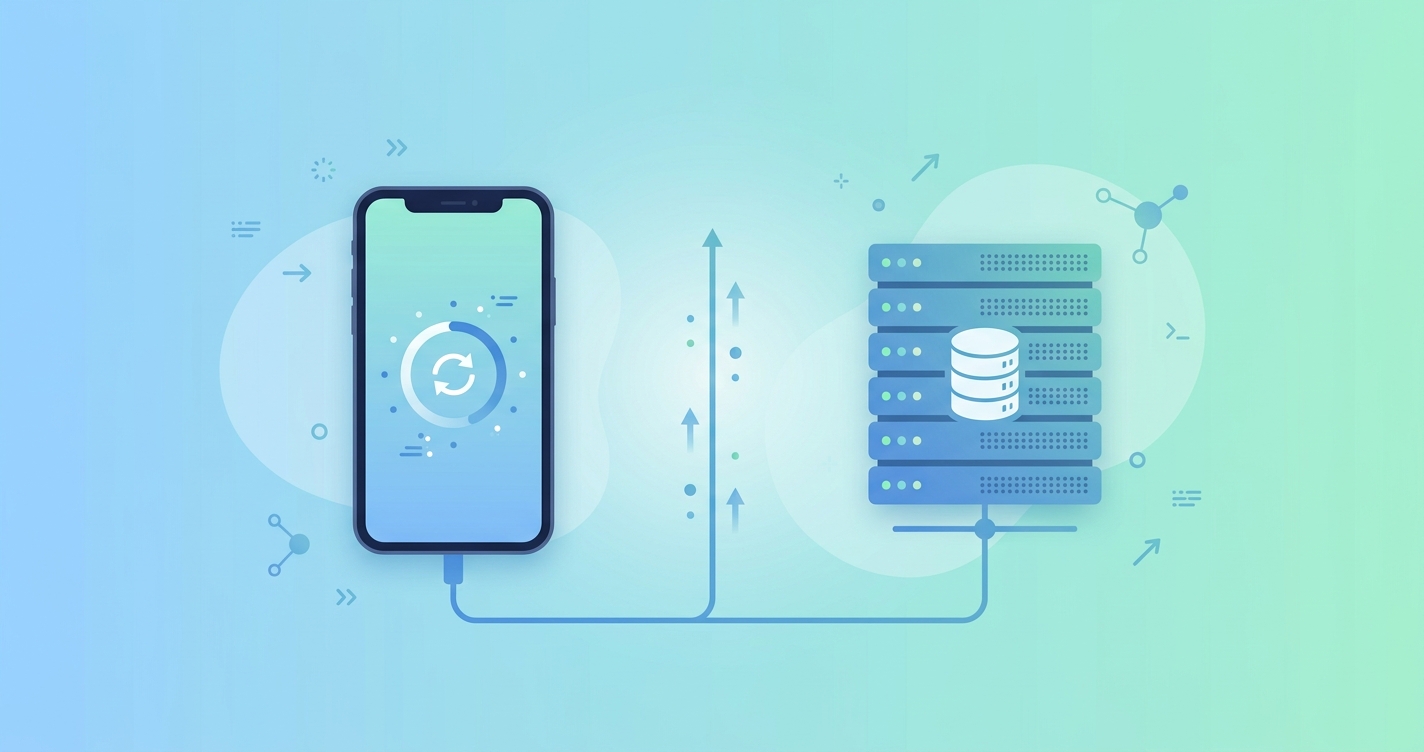
A public health intervention is only as effective as the data it produces. For grant-making bodies and academic researchers running field programs in sub-Saharan Africa or Southeast Asia, the technical reality of the field often collides with theoretical program design. A district health office can procure modern smartphones and train hundreds of field staff, only to find that data drops into a void the moment a worker steps past the reach of a local cell tower. Successfully managing community health data collection without internet requires a fundamental shift in software architecture. Instead of treating connectivity as a default state, systems must treat it as an occasional luxury.
"The absolute prerequisite for any community health worker application in sub-Saharan Africa is an offline-first architecture; programs that rely on continuous connectivity routinely see up to 40% data loss during routine fieldwork in remote settings." , Dr. Smisha Agarwal, Johns Hopkins Bloomberg School of Public Health (2020)
The architecture of asynchronous health data
When a community health worker conducts a household visit in a rural village, the digital tool they use must function seamlessly regardless of the network status. In the context of community health data collection without internet, this continuous functionality is achieved through an "offline-first" design philosophy.
Unlike traditional web applications that query a cloud server for every action, offline-first applications house a localized database directly on the mobile hardware. The application reads and writes to this local storage environment. The data is then managed using a "store-and-forward" mechanism. When the device detects a stable connection, whether via a return to a Wi-Fi enabled clinic or catching a transient 3G signal on a transit route, a background synchronization protocol is triggered automatically.
This is not a matter of simply caching a web page. A true offline-first system must handle complex, relational data interactions on the device. If a worker registers a new pregnancy, updates an immunization record, and logs a malnutrition screening, those individual data points must relate to one another locally before they ever reach a central server.
Core requirements for offline systems
Building a resilient offline system requires specific technical infrastructure:
- Local Relational Databases: Utilizing lightweight database engines (such as SQLite) that run on standard Android or iOS devices, allowing workers to search past patient records without a server query.
- Conflict Resolution Protocols: Algorithms that determine which version of a patient record is accurate if two different workers update the same profile while offline, and then attempt to sync simultaneously.
- Encrypted Local Storage: Security measures that encrypt health data at rest on the device, ensuring that if a tablet is lost or stolen in the field, patient confidentiality is maintained.
- Payload Compression: Methods to shrink data packets so that when a weak 2G or 3G signal is established, the backlog of collected data can be transmitted in seconds before the connection drops.
- Battery Optimization: Database operations are power-intensive. Offline applications must be highly optimized to ensure the device battery survives a full day of field screenings.
Comparing data capture methods
Evaluating the optimal approach for field data requires looking at historical constraints and modern technical realities. The transition from paper forms to digital inputs was the first step, but the transition from online-dependent tools to offline-first architectures represents the current frontier.
| Feature | Paper-Based Systems | Online-Dependent Mobile | Offline-First Mobile |
|---|---|---|---|
| Data Loss Risk | High (physical damage, loss) | High (dropped connections) | Low (stored on encrypted local disk) |
| Sync Delay | Weeks to months | Immediate (if connected) | Hours to days (based on sync intervals) |
| Hardware Requirements | None | High-end devices + continuous data plans | Mid-tier Android + intermittent data |
| Field Utility | Reliable but difficult to search | Often freezes or crashes offline | Fully functional UI without network |
| Analytical Readiness | Requires manual data entry | Immediate | Immediate upon sync completion |
Industry applications in resource-constrained environments
The deployment of offline-first mobile tools has fundamentally altered how public health organizations track disease and allocate resources.
Immunization and EPI Tracking
The Expanded Programme on Immunization (EPI) requires precise tracking of vaccine dosages across dispersed populations. Using offline-capable mobile tools like Open Data Kit (ODK), health ministries in East and Southern Africa have conducted comprehensive reviews of immunization coverage. Because the data is stored locally and validated on the device, supervisors receive complete datasets at the end of the week, eliminating the transcription errors historically associated with transferring paper logs to national databases.
One health surveillance
Monitoring zoonotic diseases requires field workers to operate in deeply rural environments, often in agricultural or forested areas with zero telecom infrastructure. Recent implementations of offline-first reporting systems for One Health surveillance allow veterinary and human health workers to log potential outbreaks. The application holds the geolocation and clinical notes securely until the worker returns to a base station, ensuring rapid but asynchronous alerts for emerging health threats.
Maternal and antenatal care follow-ups
Managing a continuum of care for pregnant women requires access to historical health records. In an offline-first system, a community health worker syncs their tablet at the clinic in the morning, downloading the updated profiles of every patient in their assigned sector. When they arrive at a household miles away, they can view the patient's previous vitals and screening history without a network, providing context-aware care rather than starting from scratch at every visit.
Current research and evidence
The academic literature consistently demonstrates the superiority of offline-first models in global health deployments. A systematic review of mHealth for community health workers by Agarwal et al. (2020) from Johns Hopkins University highlighted that interventions reliant on constant connectivity face severe adoption barriers, whereas those designed for asynchronous operation significantly improve worker performance and data accuracy.
Further validating this approach, a 2023 study by researchers Gideon Apako and colleagues evaluated an offline-first mobile reporting system for One Health surveillance. The study recorded a System Usability Scale (SUS) score of 78.4, indicating excellent usability among field workers operating in resource-constrained environments. The researchers noted that the localized architecture eliminated the reporting latency that previously plagued their surveillance efforts.
Similarly, research out of the University of Benin by Edoghogho Olaye (2022) examined the rollout of electronic medical records in mobile clinics across Nigeria. The findings indicated that "store-and-forward" mechanisms were the only viable path for sustaining digital health records in rural areas, citing grid instability and patchy cellular networks as insurmountable barriers for traditional cloud-based web applications.
The future of offline health data
The next phase of offline health data collection moves beyond simple text and numeric data entry into localized processing and edge computing.
As mobile processors become more powerful, machine learning models are being compressed to run directly on smartphones without communicating with a cloud server. This means that a community health worker could use an application to analyze an image of a diagnostic test strip or process a health screening locally, receiving immediate, algorithmically generated decision support in the field. The heavy processing happens "on the edge" (on the device), and only the final text-based result is stored to be synced later.
Additionally, peer-to-peer mesh networking is emerging as a viable solution for completely disconnected regions. Hardware pilots like the ThunderPlug have been tested in Uganda and Senegal, creating local area networks within a village. Health workers can sync data with a central, battery-powered hub in the village. That hub then compacts the data and transmits it via SMS or waits for a monthly physical collection, completely removing the dependency on individual mobile data plans.
Frequently asked questions
What is the difference between caching and offline-first? Caching saves a temporary copy of a web page so it loads faster, but usually requires an internet connection to perform new actions. Offline-first architecture builds a full, functioning database on the device itself, allowing users to create, read, update, and delete records without any network connection.
How are software updates handled in offline-first systems? Software updates and form changes must be downloaded when the device is connected to a reliable network. Program managers typically require health workers to return to a central clinic with Wi-Fi once a month to sync core application updates, while daily patient data can sync over weak cellular connections.
Does storing data locally pose a security risk? It can, which is why encrypted local storage is a mandatory feature for health applications. Data stored on the device must be encrypted at rest, and the application should require user authentication. If the device is lost, the data remains inaccessible to unauthorized users.
What happens if a data sync is interrupted? Modern store-and-forward systems are designed to handle interrupted connections gracefully. They utilize payload chunking, meaning the data is sent in small packets. If the connection drops, the system remembers which packets were successfully received by the server and resumes from that exact point when the connection returns.
Research teams and program evaluators understand that the infrastructure layer is just the beginning. The ultimate goal is to generate actionable, high-quality data to drive better health outcomes. For academic researchers and public health institutions looking to layer novel, contactless screening metrics into these offline-capable field programs, collaborative opportunities exist. To explore how localized data architecture pairs with advanced health measurement in the field, visit circadify.com/blog to read about our research partnerships and deployment models.