Can a busy health worker check vital signs for 50 people quickly?
How contactless, camera-based screening lets a single health worker capture phone vital sign results for dozens of people in one community session.
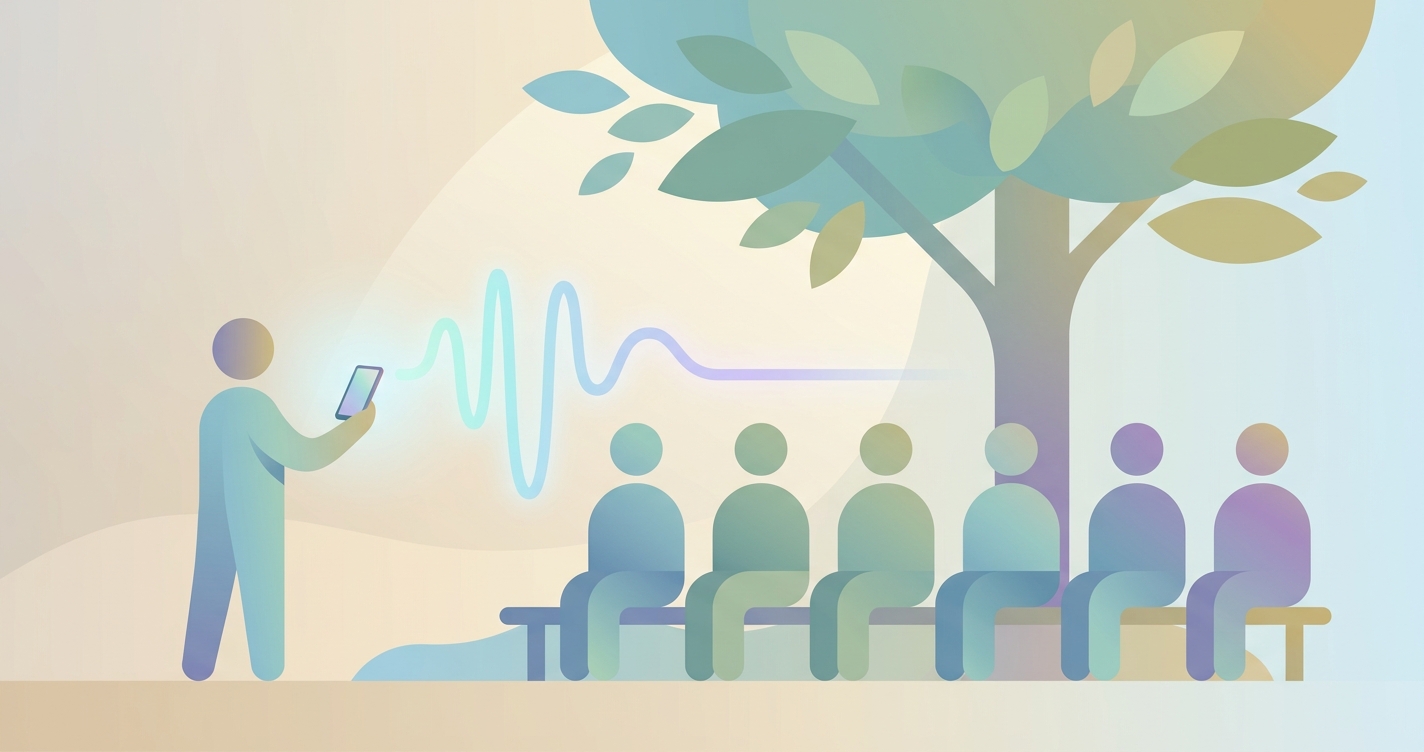
A community health worker arriving at a market town on a screening day faces a simple arithmetic problem. There may be 50, 80, or more people waiting, one cuff, one thermometer, and a few hours of daylight before the long walk home. Traditional vital sign collection, where each blood pressure reading and pulse count is taken manually and written into a paper register, simply does not scale to that queue. The growing interest in phone vital sign results, where a smartphone camera estimates heart rate and other measures without touching the body, comes directly from this throughput bottleneck. For public health institutions and grant-making bodies evaluating scalable screening, the question is no longer whether contactless capture is possible, but how much real-world capacity it adds per worker per day.
A 2024 updated systematic review and meta-analysis led by researchers at Lancaster University found resting heart rate from smartphone photoplethysmography agreed with electrocardiography at correlations ranging from r = 0.98 to 1.0, establishing the measurement foundation that high-volume screening depends on.
What phone vital sign results actually measure at scale
The technology behind contactless capture is remote photoplethysmography, or rPPG. A standard front-facing camera detects tiny color changes in facial skin caused by blood flowing with each heartbeat. Software converts that signal into a heart rate, and increasingly into respiratory rate and other estimates. The appeal for high-volume work is that the measurement is passive: the person sits still and looks at the screen for roughly 30 seconds while phone vital sign results are generated, logged, and time-stamped automatically.
This matters because the slowest parts of manual screening are not the clinical judgment but the mechanics. Wrapping and unwrapping a cuff, waiting for an oscillometric device to inflate and deflate, counting respirations for a full minute, and transcribing numbers by hand all add up. A 2024 Google Research team reporting on its Passive Heart Rate Monitoring system documented a mean absolute error of 4.39 beats per minute against reference standards, and noted it was the first rPPG method to meet heart rate accuracy targets across all skin tones in uncontrolled conditions. That last point is decisive for deployments across African and South Asian populations, where earlier camera-based methods underperformed on darker skin.
The throughput gain is best understood by comparing how a single worker spends a screening session under different approaches.
| Screening approach | Time per person (capture) | Approx. people per 4-hour session | Manual transcription | Skin-tone reliability | Equipment per worker |
|---|---|---|---|---|---|
| Manual cuff plus thermometer | 4 to 6 minutes | 40 to 60 | Yes, error-prone | Not applicable | Cuff, thermometer, register |
| Portable digital devices | 3 to 4 minutes | 60 to 80 | Partial | Device-dependent | Multiple devices, batteries |
| Camera-based rPPG on a phone | 30 to 60 seconds | 200 to 400 (capture limited) | No, auto-logged | Improving with diverse training data | One smartphone |
The right-hand column tells the operational story. The capture step shrinks from minutes to under a minute, and the data is structured from the moment it is recorded. In practice, total session throughput is rarely limited by capture alone. Registration, consent, queue management, and counseling still take time. But removing the measurement and transcription bottleneck shifts the constraint from the worker's hands to the program's logistics, which is exactly where planners want it.
Key operational advantages reported across field-oriented studies include:
- One device replaces several pieces of equipment, reducing procurement and battery-charging burden
- Results are digital from capture, eliminating a separate data-entry stage and the transcription errors it introduces
- Contactless capture lowers infection-control concerns during outbreaks and increases acceptance in communities wary of invasive procedures
- Time-stamped, geotagged records support real-time triage and later program evaluation
- Lower per-worker equipment cost makes it feasible to equip more screeners with the same budget
Industry applications for high-volume screening
Community outreach and campaign days
Mass campaign days, where a district team screens an entire market town or village cluster, are where the throughput math is most visible. A 2023 pilot feasibility trial in Zambia tested community health workers using portable devices for vital sign and blood pressure monitoring of pregnant women during outreach, confirming that frontline workers can reliably operate measurement tools outside a clinic. Camera-based capture extends that feasibility by cutting the time each measurement consumes, letting one worker move through a larger queue without sacrificing the structured record that makes the day count for later analysis.
Hypertension and chronic disease case-finding
The American Heart Association, in a 2023 review in Circulation: Cardiovascular Quality and Outcomes, described community health workers as key allies in the global battle against hypertension, citing their role in improving blood pressure control in underserved populations. Rapid heart rate and rhythm screening from a phone can serve as a first-pass filter, flagging individuals who need a confirmatory cuff reading. In a population where most people are normotensive, triaging quickly with phone vital sign results concentrates the slower manual confirmation on those who actually need it.
Antenatal and maternal-child programs
In antenatal outreach, repeated contact is the goal. Faster capture means a worker can see more pregnant women per visit and maintain a longitudinal digital record across visits, which supports both individual follow-up and program-level reporting on coverage and attendance.
Current research and evidence
The measurement evidence base for camera-based vitals has strengthened markedly. Beyond the Lancaster University meta-analysis, a prospective validation study published in PMC reported strong agreement for smartphone-based heart rate and respiratory rate algorithms, and a 2024 clinical validation of rPPG-enabled contactless pulse rate monitoring in cardiovascular disease patients added evidence from a clinical population rather than only healthy volunteers. One mobile application using rPPG received FDA 510(k) clearance for contactless pulse rate measurement within 30 seconds, signaling that regulators are beginning to recognize the category.
Researchers are appropriately cautious about two points. First, many published accuracy figures come from controlled conditions with good lighting and cooperative, still subjects, so field performance under harsh sun, movement, and variable phone hardware needs continued real-world validation. Second, while heart rate from rPPG is well established, contactless blood pressure and oxygen saturation remain less mature and should be treated as screening signals rather than diagnostic values. For grant evaluators, the practical takeaway is to fund deployments that pair contactless capture with clear referral pathways and periodic confirmation against reference devices, rather than treating any single phone reading as definitive.
The throughput evidence is more operational than clinical. Tools such as the CHW Coverage and Capacity (C3) Tool, hosted by CHW Central, help planners estimate how many workers a population needs for a given intervention. When the per-measurement time drops by an order of magnitude, those staffing models change, and the cost-per-person-screened falls accordingly. This is the metric most directly relevant to funders comparing scalable approaches.
The future of phone vital sign results in community health
The trajectory points toward broader measurement panels and tighter integration. As respiratory rate, oxygen saturation, and blood pressure estimation mature and accumulate field validation across diverse skin tones, a single 30-second capture could return a fuller picture of a person's status. Equally important is what happens to the data after capture: structured, geotagged records feed directly into district dashboards and national surveillance, turning a screening queue into a real-time picture of community health.
The realistic near-term role is triage at scale. Contactless capture lets one worker quickly sort a large group into those who are fine, those who need a confirmatory manual reading, and those who need urgent referral. That sorting function, applied across thousands of people, is where the largest public health value lies. The promise is not to replace clinical measurement but to multiply how many people a limited workforce can reach in a day.
Frequently asked questions
Can one health worker really screen 50 people in a session with a phone? The capture step itself is fast enough, at roughly 30 to 60 seconds per person, that 50 measurements fit comfortably within a session. Real session totals depend on registration, consent, and counseling time, but the measurement bottleneck that limits manual screening is largely removed.
Are phone vital sign results accurate enough to act on? For heart rate, multiple 2024 studies report strong agreement with ECG and reference monitors. These readings work well as a first-pass screening and triage signal. Blood pressure and oxygen estimates are less mature and should be confirmed with calibrated devices before clinical decisions.
Does the technology work across different skin tones? Earlier rPPG methods underperformed on darker skin, but 2024 work, including Google Research's Passive Heart Rate Monitoring, reports meeting accuracy targets across all skin tones by training on more diverse datasets. Continued field validation in target populations remains important.
What equipment does a worker need? A single smartphone with a functioning front camera can replace a cuff, thermometer, and separate data-entry process for the capture and logging steps, reducing both cost and the logistical burden of carrying and charging multiple devices.
Circadify is working on contactless, camera-based vital sign capture designed for exactly these high-volume community settings, where one worker, one phone, and a large queue define the day. Researchers and program teams evaluating scalable screening can explore the underlying methods and collaboration opportunities at circadify.com/blog.