Can a phone scan really replace a heart monitor in a rural clinic?
Exploring the accuracy and field validation of contactless vitals in community health. We compare smartphone-based scans to clinical reference devices in rural and low-resource settings.
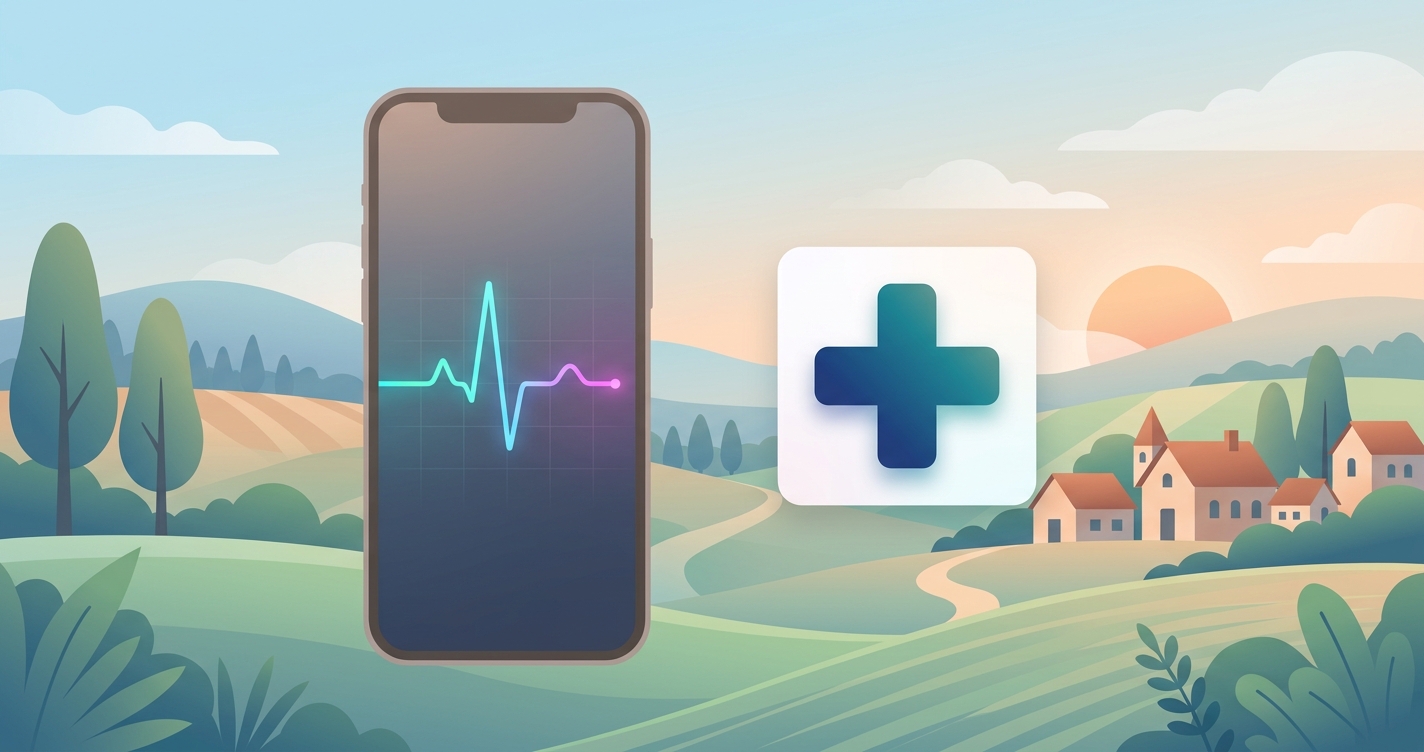
The proliferation of mobile phones in remote and rural areas has outpaced nearly every other form of infrastructure, including clinical facilities. This reality presents a fundamental question for public health program designers and academic researchers: can the ubiquitous smartphone become a reliable medical device? Specifically, when a community health worker (CHW) is miles from the nearest clinic, can a phone-based scan for vital signs offer the same actionable information as a traditional heart monitor? The answer depends on rigorous validation, an understanding of the technology's limitations, and the specific context of deployment.
"A systematic review and meta-analysis of remote photoplethysmography (rPPG) studies found a high correlation with ECG for heart rate measurement, though accuracy can be influenced by motion and lighting." - Wang et al., 2022.
The rise of contactless vitals in community health
The core technology enabling a smartphone to measure vitals is typically remote photoplethysmography (rPPG). This technique uses the phone's camera to detect minute changes in the color of a person's skin as blood flows through the underlying vessels. These changes, imperceptible to the human eye, can be analyzed by sophisticated algorithms to calculate physiological parameters like heart rate, respiratory rate, and even blood pressure. The potential for contactless vitals community health programs is immense, offering a way to conduct screenings at scale without the cost, logistical burden, and infection risk of traditional contact-based equipment. For a CHW conducting household visits, the ability to perform a health check using only the device they already carry is a significant operational advantage. This shifts the point of screening from the clinic to the community, enabling earlier detection of potential health issues.
| Feature | Smartphone Contactless Scan (rPPG) | Clinical Heart Monitor (ECG/Pulse Oximeter) |
|---|---|---|
| Portability | Extremely high; uses existing smartphones. | Varies; portable units exist but are dedicated devices. |
| Cost per unit | Near-zero if using existing phones. | $50 - $1,500+ per device. |
| Training Required | Minimal for basic operation; focus on patient positioning. | Moderate; requires understanding of sensor placement and device maintenance. |
| Infection Control | Zero contact; inherently low risk. | Requires sterilization of probes and sensors between patients. |
| Power Dependency | Relies on smartphone battery. | Often requires dedicated charging or batteries. |
| Data Connectivity | Can store scans offline and sync when connected. | Often requires manual data entry or specialized software. |
Industry Applications
The application of this technology in the field is moving beyond pilot studies and into structured public health programs. These deployments often focus on areas where frequent, low-cost screening can have the greatest impact.
Antenatal care screening
In many rural settings, regular monitoring of pregnant women is a challenge. Smartphone-based vitals allow CHWs to check a mother's heart rate and blood pressure trends during home visits, creating a longitudinal health record. This data can provide early warning for conditions like pre-eclampsia, prompting a referral to a clinical facility for definitive diagnosis and care. It transforms the ability of a health system to monitor at-risk pregnancies between formal clinic appointments.
Pediatric Health
Screening children for signs of respiratory distress or fever is a cornerstone of community health. Contactless methods are particularly advantageous for pediatric populations, as they are non-intrusive and can be performed quickly without causing distress to the child. A rapid heart rate or elevated respiratory rate can be an early indicator of illness, allowing a CHW to recommend that the family seek care.
Chronic disease management
For adults, particularly the elderly, regular monitoring for hypertension and other cardiovascular conditions is critical. The ability to perform frequent, low-cost blood pressure and heart rate screenings in a community setting helps identify individuals who may be unaware of their condition. This "opportunistic screening" model is a powerful tool for connecting at-risk individuals to the formal healthcare system.
Current research and evidence
The academic and research community is actively working to validate and understand the performance of smartphone-based vital signs. A systematic review published in 2022 by Wang et al. confirmed that rPPG measurements of heart rate show a strong correlation with the gold-standard electrocardiogram (ECG) under controlled conditions. However, the researchers noted that accuracy can be affected by user motion, variations in lighting, and skin tone, highlighting the need for robust algorithms and standardized operating procedures in field deployments.
Further evidence comes from a 2021 study by a team including researchers from the University of California, San Francisco, who validated a smartphone application for blood pressure in diverse community settings in South Africa and Tanzania. The study found the application performed well against international accuracy standards, demonstrating its potential to enhance hypertension monitoring in low-resource settings. They noted, however, that deployment strategies must account for disparities in mobile phone ownership and digital literacy. These studies represent a growing body of evidence supporting the careful integration of contactless vitals community health initiatives.
The future of contactless vitals in community health
The trajectory of this technology points toward greater accuracy and an expanded range of measurable parameters. Future iterations will likely incorporate more sophisticated algorithms that are less susceptible to environmental variables and user-generated artifacts. We may see the integration of new measurements, such as blood oxygen saturation (SpO2) and even hemoglobin levels, performed through a simple video scan of a person's face.
The ultimate goal is not to replace clinical-grade monitors in all scenarios but to extend the reach of health screening into a new domain: the home and community. By creating a reliable, low-cost, and scalable method for identifying potential health risks, this technology serves as a powerful triage and referral tool. It empowers CHWs, informs district-level health surveillance systems, and ultimately connects more people to the care they need.
Frequently asked questions
Q: How accurate is a heart rate measurement from a phone camera compared to a hospital device? A: Recent validation studies show a high degree of accuracy. A meta-analysis found a strong correlation between heart rate measured by camera-based rPPG and gold-standard ECGs. For resting heart rate in controlled conditions, the difference is often statistically insignificant. However, accuracy can be lower during movement or in poor lighting.
Q: Can this technology be used for formal diagnosis of a medical condition? A: No. Smartphone-based screening tools are not diagnostic devices. They are intended for screening and triage to identify individuals who may be at risk and require further assessment in a clinical setting with diagnostic-grade equipment.
Q: What are the main challenges to deploying contactless vitals in the field? A: The primary challenges are not just technological. They include ensuring consistent user training for CHWs, managing device battery life, dealing with variable internet connectivity for data synchronization, and building trust in the technology among community members. Furthermore, algorithm performance must be robust across diverse populations and varied environmental conditions.
Q: Does this work on all skin tones? A: This is a critical area of research and development. Early rPPG algorithms sometimes showed performance degradation on darker skin tones due to differences in light absorption. However, newer algorithms are being specifically designed and trained on diverse datasets to ensure equitable performance across the full range of human skin tones.
As a research-focused organization, Circadify is actively contributing to and learning from the body of evidence in this field. We believe that technology, when rigorously validated and thoughtfully deployed, can be a powerful force for health equity. For academic researchers and institutions interested in collaboration or learning more about the data from large-scale field deployments, we welcome you to explore our work at circadify.com/blog (research).