Can a nurse in a remote village take vitals using just a phone?
Exploring how smartphones are used by community health workers to capture vital signs in remote villages, assessing accuracy and impact on global health programs.
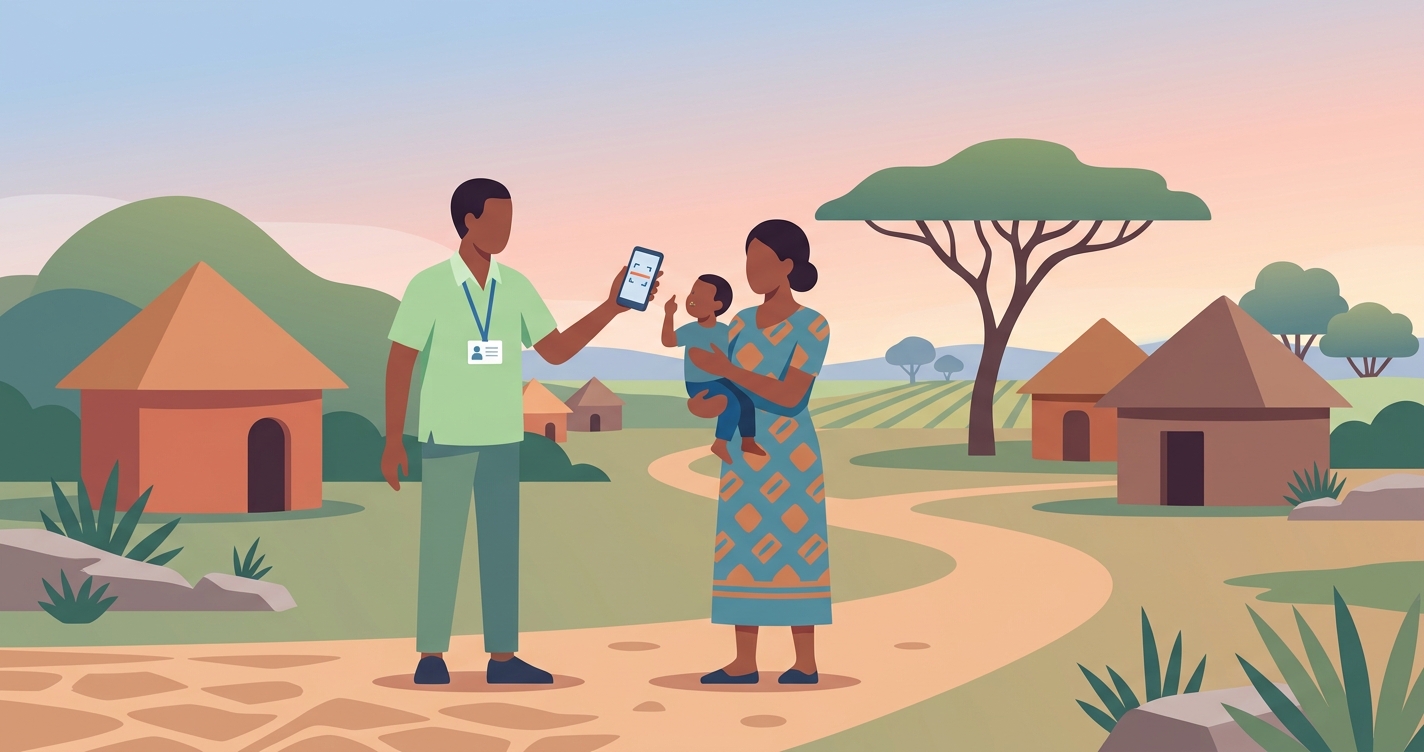
The proliferation of mobile phones across Africa and South Asia has far outpaced the distribution of traditional medical equipment. This reality presents a fundamental challenge for global health programs: how can a community health worker (CHW) assess a patient's condition in a remote village without access to a blood pressure cuff or pulse oximeter? The answer may lie in the very device already in their pocket. Using built-in smartphone cameras, a new generation of software allows for the measurement of vital signs like heart rate, respiratory rate, and blood pressure, creating new possibilities for decentralized healthcare.
"With mobile subscriptions in sub-Saharan Africa expected to reach 1 billion by 2025, the mobile platform has become the single most powerful and accessible channel for delivering essential health services at scale."
- GSMA, "The Mobile Economy Sub-Saharan Africa," 2022
The rise of contactless vitals in community health
The technology enabling this shift is remote photoplethysmography (rPPG). In simple terms, rPPG uses a smartphone's camera to detect minute changes in the color of a person's face, which correspond to the pulse of blood flowing through their vessels. Advanced algorithms then analyze this video stream to calculate heart rate and other physiological parameters. For a nurse or CHW, the process is as simple as having a patient sit still for 30-60 seconds while the phone's camera records their face. This approach to contactless vitals community health screenings removes significant barriers posed by traditional hardware, such as cost, portability, and maintenance.
By embedding this capability into a mobile application, health programs can equip their frontline workers with a powerful diagnostic tool that requires no extra hardware. Data is captured digitally, time-stamped, and geo-tagged, eliminating the transcription errors common with paper-based records and providing program managers with real-time visibility into field operations.
| Feature | Traditional Equipment (Cuffs, Oximeters) | Smartphone-Based Contactless Vitals |
|---|---|---|
| Portability | Multiple devices, often bulky and fragile | Single device (the existing smartphone) |
| Upfront Cost | Moderate to high per worker kit | Very low (software on low-cost phones) |
| Training | Requires hands-on training for each device | Minimal; software-guided process |
| Power Source | Relies on disposable batteries or separate charging | Uses the phone's own battery |
| Data Capture | Manual logging, prone to human error | Automatic, digital, and instantly available |
| Consumables | Cuffs and batteries require replacement | None |
Industry applications in global health
The ability to conduct hardware-free vitals assessments is not a theoretical concept; it is being actively deployed in various community health settings. The impact is most profound where equipment is scarcest and travel is most difficult.
Enhancing antenatal and postnatal care
In rural settings, consistent monitoring of pregnant women for conditions like pre-eclampsia (indicated by high blood pressure) is a major challenge. CHWs equipped with smartphone-based vitals can perform these checks during home visits, creating a safety net for mothers who may be hours away from the nearest clinic. Early detection of hypertension can trigger a referral, preventing severe complications. Researchers from the University of Ghana have noted the potential for such mHealth tools to improve adherence to antenatal care schedules (A-T. Baiden et al., 2021).
Managing non-communicable diseases
As life expectancy increases in developing nations, so does the prevalence of chronic diseases like hypertension and diabetes. Contactless vitals community health programs allow for routine, low-cost screening of at-risk populations. A CHW can screen dozens of people in a single village outing, identifying individuals who need further clinical assessment and helping those already diagnosed to monitor their condition. This model shifts care from a reactive, clinic-based approach to a proactive, community-based one.
Pediatric health screenings
An elevated respiratory rate is a key indicator of pneumonia in young children, a leading cause of child mortality. Traditionally, this is measured by a trained clinician counting breaths for a full minute, a method prone to error in a busy or noisy environment. Contactless solutions can derive respiratory rate from the same video capture used for heart rate, providing a more consistent and objective measurement that can be performed by any trained CHW.
Current research and evidence
The core question for researchers and public health institutions is one of trustworthiness: are the measurements accurate enough for field use? A growing body of research is addressing this. Studies have compared the performance of rPPG algorithms against gold-standard clinical devices.
- Feasibility: Research conducted in rural Kenya and Nigeria has demonstrated that CHWs with minimal training can successfully use smartphone-based tools to capture vital signs. A 2022 study published in BMJ Global Health involving health workers in Bangladesh found high usability and acceptance for mHealth tools in maternal health screenings.
- Performance: While not a replacement for medical-grade diagnostic equipment, performance has been validated for screening and monitoring purposes. Research by W. J. Karlen and his team at ETH Zurich has extensively documented the development and validation of rPPG for use in low-resource settings, showing strong agreement with conventional devices like pulse oximeters and ECGs for heart rate measurement. The accuracy of blood pressure measurement continues to be a major focus of academic and commercial research, with ongoing studies showing promising results for identifying hypertensive individuals in field conditions.
- Challenges: The same research also highlights operational challenges. Factors like poor lighting, patient movement, and variations in skin tone can affect the signal quality. Successful deployments depend on software that can guide the user to achieve a quality reading and provide immediate feedback.
The future of community-based vitals
As smartphone penetration deepens and algorithmic accuracy improves, the use of contactless vitals is set to become a standard component of digital health programs. The future lies in integration. The data captured at the village level can be fed directly into national health information systems like DHIS2, giving ministries of health unprecedented insight into population health trends. This allows for more targeted resource allocation, faster response to disease outbreaks, and a more resilient healthcare system built from the community up.
For grant-making bodies and academic partners, this technology offers a new layer of verifiable, high-fidelity data to measure program impact. Instead of relying solely on self-reported outcomes or infrequent surveys, organizations can access continuous, objective health metrics from the field.
Frequently asked questions
How does a phone measure vital signs without contact? It uses a technology called remote photoplethysmography (rPPG). The phone's camera records a short video of a person's face. Software algorithms then analyze the video to detect subtle changes in skin color caused by blood flowing through the vessels under the skin. This signal is used to calculate heart rate, respiratory rate, and other parameters.
Is this technology a replacement for doctors and clinical equipment? No. It is a screening and monitoring tool designed to extend the reach of healthcare professionals, not replace them. Its purpose is to help community health workers identify individuals who may be at risk and need to be referred to a clinic for a full diagnosis with medical-grade equipment.
What are the main challenges to deploying this in the field? The primary challenges are operational. They include ensuring CHWs have access to reliable smartphones and power sources, providing effective training on how to achieve a quality scan, and managing data synchronization in areas with poor or intermittent internet connectivity.
As this technology matures, organizations are actively exploring its potential in global health. For academic researchers, grant-making bodies, and public health institutions interested in the data and outcomes from large-scale field deployments, Circadify's ongoing research provides valuable insights. To learn more about collaborative opportunities and the latest findings, visit our research hub at circadify.com/blog.